

- Trending
- Comments
- Latest

Albuquerque has banned crypto ATMs, ordering operators to shut down machines immediately and remove them by December 5 or face fines of $500 a day. City officials say the kiosks have become a favourite tool for impersonation scams that leave victims, often older adults, with little chance of getting their money back.
The city’s decision reflects growing concern about scams in which criminals pressure victims into converting cash into cryptocurrency and transferring it to addresses controlled by fraudsters. Such schemes may involve impersonating government officials, threatening arrest, fabricating unpaid bills or creating a false sense of urgency to force immediate payment.
Crypto ATMs can make these schemes particularly damaging because victims may deposit cash directly into a kiosk and send the resulting digital assets to an external wallet. Once a blockchain transaction is confirmed, reversing it is generally difficult without the recipient’s cooperation or intervention by relevant authorities.
Older adults and other vulnerable residents are among the groups city officials say are disproportionately affected. The city argues that removing the kiosks will eliminate one channel through which scammers persuade victims to send money.
“Scammers are constantly finding new ways to separate people from their money, and these kiosks have become another tool they can use,” Keller said in the city’s announcement. He added that the city was removing that tool while introducing safeguards for residents most frequently targeted by financial schemes.
The ordinance was sponsored by City Councilors Stephanie Telles and Tammy Fiebelkorn. The City Council approved the measure on September 9, and Keller signed it on October 2 before it came into effect later that month.
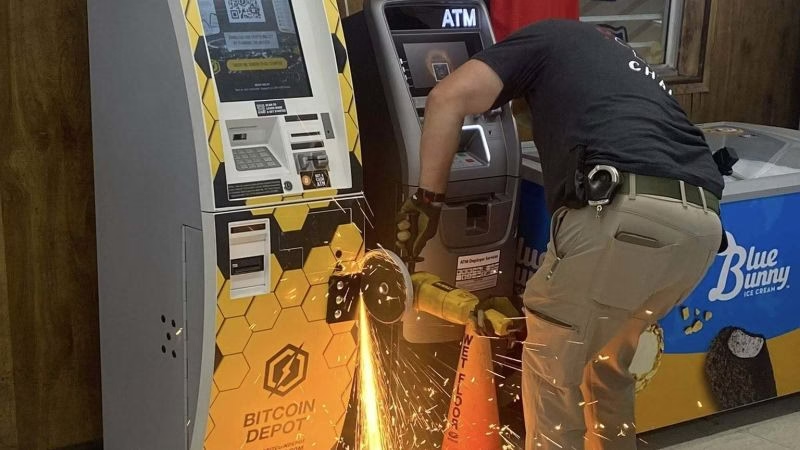
Under the new rules, operators must immediately deactivate existing Crypto ATMs and ensure the machines are physically removed no later than December 5. The restrictions extend beyond kiosk operators: property owners, landlords and retailers are also prohibited from hosting the machines within Albuquerque city limits.
That broader scope places responsibility on businesses and property holders that might otherwise allow third-party operators to maintain kiosks on their premises.
Noncompliance could result in fines of $500 per day, while businesses that permit prohibited activity may also face license revocation. The city can pursue enforcement measures to compel the removal of machines, according to the ordinance.
Planning Department Director Alan Varela issued a direct warning to businesses that continue operating the equipment.
“Anyone with a virtual currency ATM needs to shut it down and get rid of it ASAP or we will revoke your business license and close your entire business,” Varela said.
He also said city and state authorities are coordinating enforcement efforts to prevent residents from being defrauded. The warning makes clear that the deadline is not simply a request to remove the machines but part of an enforceable local prohibition.
For kiosk operators, retailers and landlords, the immediate priority is to stop prohibited transactions and arrange removal before the deadline. The financial consequences could extend beyond the cost of dismantling the equipment, particularly for businesses whose licenses are revoked.
Despite the sweeping restrictions on physical kiosks, Albuquerque has not banned cryptocurrency itself. Residents can continue to own, possess and mine digital assets, develop blockchain software and transfer cryptocurrency privately or through internet-based platforms, provided those activities do not involve prohibited kiosks or cashier-facilitated transactions covered by the ordinance.
The distinction is important for investors and ordinary users who rely on exchanges and self-custody wallets to manage their digital assets. The measure focuses on particular transaction channels rather than eliminating the legal use of blockchain-based currencies.
Consequently, residents can continue using permitted online services to buy, sell or transfer digital assets. The law does not prohibit private crypto transfers simply because they involve Bitcoin or another cryptocurrency.
The crackdown nevertheless marks a significant change for businesses offering cash-to-crypto services in the city. Crypto ATMs provide a physical entry point to digital assets, but the same accessibility can be exploited when criminals direct victims to make urgent, irreversible payments.
Albuquerque’s approach prioritizes preventing those transactions before money disappears, rather than relying solely on investigations after a scam has occurred. Whether the ban substantially reduces fraud will depend on enforcement, public awareness and how effectively criminals are prevented from shifting their schemes to other payment channels.
For now, kiosk operators must comply with the shutdown order, while residents retain access to lawful cryptocurrency activities through permitted alternatives. The city’s message is clear: physical crypto kiosks and cashier-assisted transactions are prohibited, but cryptocurrency itself remains legal.



Copyright © 2025 - The Bit Gazette.