
- Trending
- Comments
- Latest

A Johnston County, North Carolina, woman lost her savings after scammers posing as police told her to pay for her “release” at a crypto ATM. A new state law could have helped her recover the money, but it does not take effect until January 1, 2027. WRAL reported the case.
“I just set up an appointment with a counselor, so I’d have somebody to talk to, because it’s really hurt me financially and hurt me mentally,” she told WRAL.
The incident comes as North Carolina introduces legislation designed to regulate cryptocurrency kiosks, limit transactions and establish conditions under which customers may recover money lost to fraud. However, victims will have to wait until the law takes effect before the new protections become available.
Cryptocurrency kiosks resemble conventional automated teller machines but allow customers to exchange cash for digital assets. Once the cryptocurrency is transferred to a wallet controlled by a scammer, recovering the funds can be difficult because blockchain transactions are generally irreversible.
Fraudsters exploit these characteristics by pressuring victims to transfer money under false pretences, often impersonating law enforcement officers, government representatives or other trusted authorities.
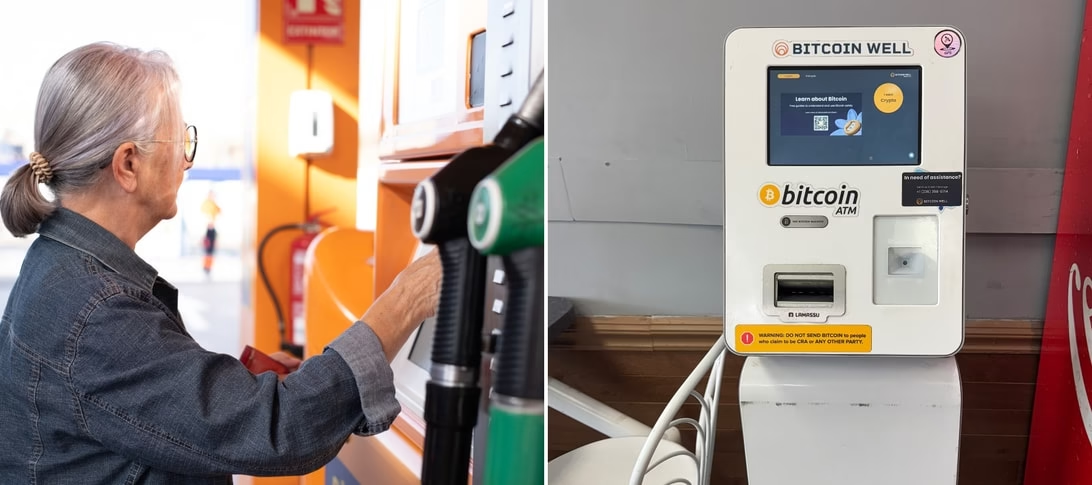
In the North Carolina case, the scammers allegedly convinced the woman that paying money through a cryptocurrency kiosk was necessary to secure her release from custody. Rather than making a conventional bank transfer, she deposited her savings through a machine at a gas station, allowing the perpetrators to receive cryptocurrency.
The growing number of complaints has attracted attention from federal and state authorities.
North Carolina Attorney General Jeff Jackson confirmed that federal investigators were examining companies operating cryptocurrency kiosks.
“Investigation [is] underway as we speak,” Jackson told WRAL, referring to the US Department of Justice’s investigation into kiosk companies.
The Federal Bureau of Investigation’s figures illustrate the scale of the problem. In 2025, the agency recorded more than 13,400 complaints involving cryptocurrency kiosks, representing a 23% increase from 2024. Reported losses exceeded $388 million, up 58% from the previous year.
More than half of the complaints involved people over the age of 50. In North Carolina alone, the FBI recorded 491 complaints associated with approximately $12.6 million in losses.
The figures represent a substantial increase from 2023, when the agency recorded more than 5,500 complaints and $189 million in reported losses.
The Federal Trade Commission has also reported a sharp rise in losses associated with bitcoin ATMs. According to the agency’s findings cited in the original report, losses grew almost tenfold between 2020 and 2023. During the first half of 2024, the median reported loss reached $10,000, while adults aged 60 and older were more than three times as likely as younger adults to report losing money through these machines.
North Carolina Governor Josh Stein signed House Bill 920 into law in July 2026, introducing a regulatory framework for virtual currency kiosks operating within the state.
The legislation is intended to strengthen consumer protection by requiring kiosk operators to obtain licences and comply with state regulations. It also introduces transaction limits, mandatory fraud warnings, live customer support, receipts and a mechanism for cancelling transactions that have not been completed.
The law is scheduled to take effect on January 1, 2027, meaning customers remain exposed to existing risks until the new requirements become operational.
Under the legislation, new customers will face a daily transaction limit of $2,000, alongside a mandatory 48-hour hold on transactions. Existing customers will be permitted to transact up to $7,500 daily.
The law also caps transaction fees at 12%, placing a limit on the charges operators can impose on customers using cryptocurrency kiosks.
The restrictions are intended to reduce the amount victims can lose in a single day and give them additional time to reconsider suspicious transactions.
One of the legislation’s most significant provisions is the possibility of refunds for customers who lose money through fraudulent transactions involving regulated cryptocurrency kiosks.
However, eligibility depends on several conditions, including when the customer reports the incident and whether state authorities determine that fraud occurred.
Victims must report suspected fraud to the state banking commissioner within 30 days. The commissioner must then determine that the transaction was fraudulent before the refund provisions can apply.
The amount recoverable also depends on whether the customer is classified as new or existing.
New customers may qualify for a refund of the full amount deposited through a fraudulent transaction, while existing customers may recover transaction fees rather than the entire amount lost.
These distinctions could significantly affect how much compensation victims receive, even when they have fallen for similar scams.
The delayed implementation also means the woman in Johnston County cannot automatically rely on the forthcoming legislation to recover her savings. The new protections are not scheduled to take effect until January 2027, and the law’s refund conditions will determine which transactions qualify once the rules become operational.
Until then, authorities continue to advise consumers to approach unsolicited demands for cryptocurrency payments with caution.
The FBI has warned that legitimate law enforcement officers and government officials do not demand payments through cryptocurrency kiosks.
“No legitimate law enforcement or government official will call to demand payment via a cryptocurrency kiosk,” the agency said in its warning.
Consumers should be particularly cautious when callers claim that immediate cryptocurrency payments are necessary to avoid arrest, resolve a legal problem or protect their money.
The FBI also advises against sending payments to individuals known only through online interactions or scanning QR codes supplied by strangers. Customers should stop a transaction if a kiosk operator warns that the payment may be fraudulent.
Keeping transaction receipts and records can also help victims provide investigators with information needed to trace suspicious transfers.
Anyone who suspects they have been defrauded should contact local police and report the incident to the FBI’s Internet Crime Complaint Center at IC3.gov. Reports should include available details, such as the transaction identification number, wallet address and kiosk location. Victims can also submit complaints to the Federal Trade Commission through ReportFraud.ftc.gov.



Copyright © 2025 - The Bit Gazette.