
• Trending
  • Comments
  • Latest
Ian Issa explains how HashNet turned Zcash's $50-to-$600 rally into Bitcoin without holding a coin

Ian Issa explains how HashNet turned Zcash’s $50-to-$600 rally into Bitcoin without holding a coin

07/18/2026 - Updated on 07/19/2026
Leaked Chainalysis Video Raises Concerns Over Monero Traceable Transaction Claim

Chainalysis sues US government over $94.66 million ICE contract awarded to TRM Labs

08/18/2026
Sanctioned Russian payment network A7 unveils USDT-to-SWIFT service 12 days after US Treasury blacklisting

Sanctioned Russian payment network A7 unveils USDT-to-SWIFT service 12 days after US Treasury blacklisting

10/13/2026 - Updated on 10/14/2026
Polygon Discord Channel Hacked, Throws Crypto Community in Turmoil

Polygon Discord Channel Hacked, Throws Crypto Community in Turmoil

2
Bitcoin reclaims $107,000 as Iran-Israel ceasefire cools market tensions

Bitcoin reclaims $107,000 as Iran-Israel ceasefire cools market tensions

2

Hello world!

1
North Carolina woman lost her savings to fake police at a crypto ATM, and the new law that could refund victims doesn't start until 2027

North Carolina woman lost her savings to fake police at a crypto ATM, the new law that could refund victims doesn’t start until 2027

10/27/2026
Sterling Liquidity Fund

Aviva Investors puts £50m into a second tokenized money market fund on the XRP Ledger, lifting its total past £86m

10/27/2026
Jewelbug hackers ran government espionage and crypto fraud from single control panel, Symantec finds

Electrum bug let malicious servers turn a routine fee bump into a bitcoin theft, at least one user lost funds

10/27/2026
  • Trending
  • Comments
  • Latest
Ian Issa explains how HashNet turned Zcash's $50-to-$600 rally into Bitcoin without holding a coin

Ian Issa explains how HashNet turned Zcash’s $50-to-$600 rally into Bitcoin without holding a coin

07/18/2026 - Updated on 07/19/2026
Leaked Chainalysis Video Raises Concerns Over Monero Traceable Transaction Claim

Chainalysis sues US government over $94.66 million ICE contract awarded to TRM Labs

08/18/2026
Sanctioned Russian payment network A7 unveils USDT-to-SWIFT service 12 days after US Treasury blacklisting

Sanctioned Russian payment network A7 unveils USDT-to-SWIFT service 12 days after US Treasury blacklisting

10/13/2026 - Updated on 10/14/2026
Polygon Discord Channel Hacked, Throws Crypto Community in Turmoil

Polygon Discord Channel Hacked, Throws Crypto Community in Turmoil

2
Bitcoin reclaims $107,000 as Iran-Israel ceasefire cools market tensions

Bitcoin reclaims $107,000 as Iran-Israel ceasefire cools market tensions

2

Hello world!

1
North Carolina woman lost her savings to fake police at a crypto ATM, and the new law that could refund victims doesn't start until 2027

North Carolina woman lost her savings to fake police at a crypto ATM, the new law that could refund victims doesn’t start until 2027

10/27/2026
Sterling Liquidity Fund

Aviva Investors puts £50m into a second tokenized money market fund on the XRP Ledger, lifting its total past £86m

10/27/2026
Jewelbug hackers ran government espionage and crypto fraud from single control panel, Symantec finds

Electrum bug let malicious servers turn a routine fee bump into a bitcoin theft, at least one user lost funds

10/27/2026
Tuesday, October 27, 2026
  • Login
The Bit Gazette
  • Home
  • Crypto News
  • Expert Analysis
  • Finance
  • Tech
  • Sponsored
  • Press Release
  • Opinion
No Result
View All Result
The Bit Gazette
No Result
View All Result
Home Crypto News

North Carolina woman lost her savings to fake police at a crypto ATM, the new law that could refund victims doesn’t start until 2027

A new North Carolina law will introduce stricter rules for cryptocurrency kiosks, including transaction limits and conditional refunds, as authorities investigate rising fraud losses.

by Moses Edozie
50 minutes ago
in Crypto News
Written by Moses EdozieEdited by Ayuba Haruna
Add us on GoogleMake us a preferred source
Reading Time: 4 mins read
0
North Carolina woman lost her savings to fake police at a crypto ATM, and the new law that could refund victims doesn't start until 2027

North Carolina woman lost her savings to fake police at a crypto ATM, and the new law that could refund victims doesn't start until 2027

Share on FacebookShare on Twitter

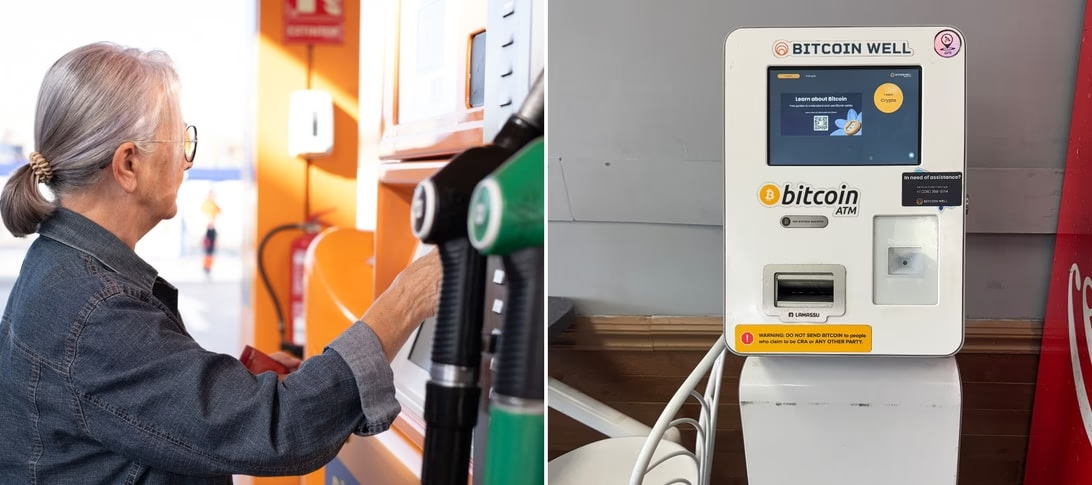
A Johnston County, North Carolina, woman lost her savings after scammers posing as police told her to pay for her “release” at a crypto ATM. A new state law could have helped her recover the money, but it does not take effect until January 1, 2027. WRAL reported the case.

“I just set up an appointment with a counselor, so I’d have somebody to talk to, because it’s really hurt me financially and hurt me mentally,” she told WRAL.

The incident comes as North Carolina introduces legislation designed to regulate cryptocurrency kiosks, limit transactions and establish conditions under which customers may recover money lost to fraud. However, victims will have to wait until the law takes effect before the new protections become available.

Crypto ATM scams prompt growing concern

Cryptocurrency kiosks resemble conventional automated teller machines but allow customers to exchange cash for digital assets. Once the cryptocurrency is transferred to a wallet controlled by a scammer, recovering the funds can be difficult because blockchain transactions are generally irreversible.

Fraudsters exploit these characteristics by pressuring victims to transfer money under false pretences, often impersonating law enforcement officers, government representatives or other trusted authorities.

In the North Carolina case, the scammers allegedly convinced the woman that paying money through a cryptocurrency kiosk was necessary to secure her release from custody. Rather than making a conventional bank transfer, she deposited her savings through a machine at a gas station, allowing the perpetrators to receive cryptocurrency.

The growing number of complaints has attracted attention from federal and state authorities.

North Carolina Attorney General Jeff Jackson confirmed that federal investigators were examining companies operating cryptocurrency kiosks.

“Investigation [is] underway as we speak,” Jackson told WRAL, referring to the US Department of Justice’s investigation into kiosk companies.

The Federal Bureau of Investigation’s figures illustrate the scale of the problem. In 2025, the agency recorded more than 13,400 complaints involving cryptocurrency kiosks, representing a 23% increase from 2024. Reported losses exceeded $388 million, up 58% from the previous year.

More than half of the complaints involved people over the age of 50. In North Carolina alone, the FBI recorded 491 complaints associated with approximately $12.6 million in losses.

The figures represent a substantial increase from 2023, when the agency recorded more than 5,500 complaints and $189 million in reported losses.

The Federal Trade Commission has also reported a sharp rise in losses associated with bitcoin ATMs. According to the agency’s findings cited in the original report, losses grew almost tenfold between 2020 and 2023. During the first half of 2024, the median reported loss reached $10,000, while adults aged 60 and older were more than three times as likely as younger adults to report losing money through these machines.

North Carolina introduces new Crypto ATM rules

North Carolina Governor Josh Stein signed House Bill 920 into law in July 2026, introducing a regulatory framework for virtual currency kiosks operating within the state.

The legislation is intended to strengthen consumer protection by requiring kiosk operators to obtain licences and comply with state regulations. It also introduces transaction limits, mandatory fraud warnings, live customer support, receipts and a mechanism for cancelling transactions that have not been completed.

The law is scheduled to take effect on January 1, 2027, meaning customers remain exposed to existing risks until the new requirements become operational.

Under the legislation, new customers will face a daily transaction limit of $2,000, alongside a mandatory 48-hour hold on transactions. Existing customers will be permitted to transact up to $7,500 daily.

The law also caps transaction fees at 12%, placing a limit on the charges operators can impose on customers using cryptocurrency kiosks.

The restrictions are intended to reduce the amount victims can lose in a single day and give them additional time to reconsider suspicious transactions.

Refunds come with conditions for victims

One of the legislation’s most significant provisions is the possibility of refunds for customers who lose money through fraudulent transactions involving regulated cryptocurrency kiosks.

However, eligibility depends on several conditions, including when the customer reports the incident and whether state authorities determine that fraud occurred.

Victims must report suspected fraud to the state banking commissioner within 30 days. The commissioner must then determine that the transaction was fraudulent before the refund provisions can apply.

The amount recoverable also depends on whether the customer is classified as new or existing.

New customers may qualify for a refund of the full amount deposited through a fraudulent transaction, while existing customers may recover transaction fees rather than the entire amount lost.

These distinctions could significantly affect how much compensation victims receive, even when they have fallen for similar scams.

The delayed implementation also means the woman in Johnston County cannot automatically rely on the forthcoming legislation to recover her savings. The new protections are not scheduled to take effect until January 2027, and the law’s refund conditions will determine which transactions qualify once the rules become operational.

Until then, authorities continue to advise consumers to approach unsolicited demands for cryptocurrency payments with caution.

How consumers can avoid cryptocurrency kiosk fraud

The FBI has warned that legitimate law enforcement officers and government officials do not demand payments through cryptocurrency kiosks.

“No legitimate law enforcement or government official will call to demand payment via a cryptocurrency kiosk,” the agency said in its warning.

Consumers should be particularly cautious when callers claim that immediate cryptocurrency payments are necessary to avoid arrest, resolve a legal problem or protect their money.

The FBI also advises against sending payments to individuals known only through online interactions or scanning QR codes supplied by strangers. Customers should stop a transaction if a kiosk operator warns that the payment may be fraudulent.

Keeping transaction receipts and records can also help victims provide investigators with information needed to trace suspicious transfers.

Anyone who suspects they have been defrauded should contact local police and report the incident to the FBI’s Internet Crime Complaint Center at IC3.gov. Reports should include available details, such as the transaction identification number, wallet address and kiosk location. Victims can also submit complaints to the Federal Trade Commission through ReportFraud.ftc.gov.


Tags: Bitcoinconsumer protectioncryptocrypto ATMCryptocurrencydigital assetsFBIfraudNorth CarolinarefundsRegulationscams
Share197Tweet123
Moses Edozie

Moses Edozie

Moses Edozie is a writer and storyteller with a deep interest in cryptocurrency, blockchain innovation, and Web3 culture. Passionate about DeFi, NFTs, and the societal impact of decentralized systems, he creates clear, engaging narratives that connect complex technologies to everyday life.

  • Trending
  • Comments
  • Latest
Ian Issa explains how HashNet turned Zcash's $50-to-$600 rally into Bitcoin without holding a coin

Ian Issa explains how HashNet turned Zcash’s $50-to-$600 rally into Bitcoin without holding a coin

07/18/2026 - Updated on 07/19/2026
Leaked Chainalysis Video Raises Concerns Over Monero Traceable Transaction Claim

Chainalysis sues US government over $94.66 million ICE contract awarded to TRM Labs

08/18/2026
Sanctioned Russian payment network A7 unveils USDT-to-SWIFT service 12 days after US Treasury blacklisting

Sanctioned Russian payment network A7 unveils USDT-to-SWIFT service 12 days after US Treasury blacklisting

10/13/2026 - Updated on 10/14/2026
Polygon Discord Channel Hacked, Throws Crypto Community in Turmoil

Polygon Discord Channel Hacked, Throws Crypto Community in Turmoil

2
Bitcoin reclaims $107,000 as Iran-Israel ceasefire cools market tensions

Bitcoin reclaims $107,000 as Iran-Israel ceasefire cools market tensions

2

Hello world!

1
North Carolina woman lost her savings to fake police at a crypto ATM, and the new law that could refund victims doesn't start until 2027

North Carolina woman lost her savings to fake police at a crypto ATM, the new law that could refund victims doesn’t start until 2027

10/27/2026
Sterling Liquidity Fund

Aviva Investors puts £50m into a second tokenized money market fund on the XRP Ledger, lifting its total past £86m

10/27/2026
Jewelbug hackers ran government espionage and crypto fraud from single control panel, Symantec finds

Electrum bug let malicious servers turn a routine fee bump into a bitcoin theft, at least one user lost funds

10/27/2026
The Bit Gazette

Copyright © 2025 - The Bit Gazette.

Navigate Site

  • About
  • Advertise
  • Privacy & Policy
  • Contact

Follow Us

Welcome Back!

Login to your account below

Forgotten Password?

Retrieve your password

Please enter your username or email address to reset your password.

Log In
No Result
View All Result
  • Home
  • Crypto News
  • Expert Analysis
  • Finance
  • Tech
  • Sponsored
  • Press Release
  • Opinion

Copyright © 2025 - The Bit Gazette.