

- Trending
- Comments
- Latest

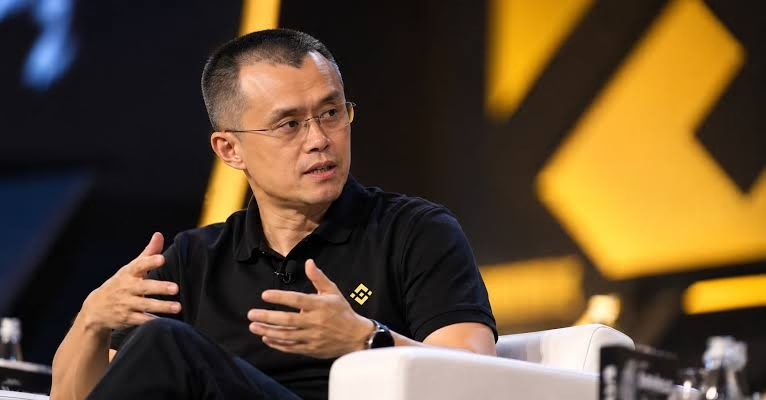
Binance cofounder Changpeng Zhao says AI is helping hackers move faster than crypto firms can defend, and he wants exchanges to pool security intelligence in an industry-wide alliance.
Speaking on the Talking Tokens podcast on November 3, 2026, days after the $6.3 billion Binance breach, Zhao said the industry “has not invested enough in security”. There is no evidence AI was used in the attack itself.
Zhao, widely known as CZ, said the Binance security breach demonstrated how closely the cryptocurrency industry has become connected to traditional financial infrastructure.
During his first public interview following the attack, the former Binance CEO argued that major cryptocurrency thefts can no longer be viewed as isolated problems affecting individual trading platforms.
The growth of stablecoins, tokenized securities, and real-world assets has created stronger financial connections between blockchain companies, commercial banks, and government debt markets.
Consequently, a major disruption involving a large cryptocurrency exchange could have implications for institutions operating outside the digital asset industry.
“It impacts the company, it impacts industry, it impacts global finance,” — Changpeng Zhao, Binance founder, speaking on the Talking Tokens podcast.
Zhao added that the interconnected nature of these markets made the incident significant enough to warrant attention from national security authorities.
His comments follow the FBI’s attribution of the October 29 breach to North Korean hackers associated with the TraderTraitor operation.
Although North Korea has denied responsibility, American investigators have continued efforts to trace and recover the stolen cryptocurrency.
Zhao said he had not discussed the incident directly with U.S. President Donald Trump or other Washington officials.
However, he expressed support for assistance from both the United States and China in addressing sophisticated cyber threats.
The call for international cooperation reflects his concern that existing crypto defenses may be insufficient against increasingly coordinated attacks.
He also suggested that governments have a broader interest in protecting cryptocurrency infrastructure because of its growing connections to conventional financial markets.
Artificial intelligence emerged as a central concern during Zhao’s discussion of the security breach.
According to the Binance founder, cybercriminals are gaining access to increasingly powerful tools that allow them to automate activities previously requiring substantial technical expertise and manual effort.
These capabilities include identifying software vulnerabilities, conducting reconnaissance, and developing phishing campaigns aimed at employees and financial institutions.
Zhao suggested that the frequency of serious cryptocurrency attacks has increased as technological capabilities have improved.
Where major incidents previously occurred weeks or months apart, multiple platforms can now face attacks within much shorter periods, he argued.
The accelerating threat creates an imbalance between attackers capable of rapidly identifying weaknesses and companies responsible for securing complex financial infrastructure.
Zhao believes the cryptocurrency industry must respond by incorporating similar technologies into its cybersecurity operations.
“The only way to fight a monster is to kind of become that monster,” — Changpeng Zhao, Binance founder, speaking on the Talking Tokens podcast.
He explained that the industry needs stronger artificial intelligence capabilities to identify suspicious activity, detect potential vulnerabilities, and respond to threats before attackers can exploit them.
The warning comes after Binance disclosed that its recent security breach involved a compromised employee device and weaknesses affecting internal systems.
The exchange also reported that fraudulent job interviews and compromised AI tooling contributed to the intrusion.
These developments have intensified concerns about cybercriminals exploiting both human vulnerabilities and emerging technology.
However, the involvement of compromised AI tools does not establish that autonomous artificial intelligence independently planned or executed the attack.
Zhao’s broader argument is that crypto defenses must evolve alongside the tools available to cybercriminals.
He also warned that traditional financial institutions remain exposed because banks and cryptocurrency exchanges rely on many of the same technologies, including employee devices, software systems, and digital credentials.
Without stronger protection, repeated security incidents could undermine confidence in cryptocurrency infrastructure and potentially slow wider institutional adoption.
Beyond improving individual companies’ security systems, Zhao called for greater cooperation among cryptocurrency exchanges, blockchain developers, and cybersecurity providers.
He proposed establishing an industry-wide alliance that would allow participating organizations to share information about vulnerabilities, previous attacks, and effective security practices.
The initiative could also support coordinated responses when stolen cryptocurrency moves between exchanges and blockchain networks.
According to Zhao, companies could benefit from exchanging audit findings, identifying common attack patterns, and sharing lessons learned from major security incidents.
Such cooperation could reduce the likelihood of individual platforms repeating security failures already encountered elsewhere in the industry.
The proposed alliance would also help participants coordinate efforts to freeze stolen cryptocurrency before attackers can transfer or exchange the assets.
Zhao acknowledged that cryptocurrency companies have not invested sufficiently in protecting their infrastructure.
“Binance, the industry as a whole, has not invested enough in security,” — Changpeng Zhao, Binance founder, speaking on the Talking Tokens podcast.
He further noted that many advanced AI security products are not yet widely available to cryptocurrency businesses.
The shortage creates additional challenges for exchanges and decentralized protocols attempting to respond to rapidly evolving threats.
Zhao expects discussions about collective security arrangements to accelerate following the recent increase in major cryptocurrency attacks.
An industry alliance could complement existing crypto defenses by encouraging information sharing and coordinated action rather than leaving each company to address emerging threats independently.
However, Zhao’s proposal remains an initiative under discussion rather than an established organization with confirmed members or operating procedures.
Its effectiveness would depend on industry participation, technical coordination, and the willingness of competing companies to share relevant security information.
Despite acknowledging the seriousness of the attack, Zhao credited Binance’s response with preventing a broader financial crisis.
The exchange quickly assured customers that affected balances would be protected and committed company resources and insurance reserves to covering losses.
According to Zhao, the announcement helped reassure users and reduce the likelihood of widespread panic across cryptocurrency markets.
Binance’s financial position also supported its commitment to absorb the impact rather than transfer losses to customers.
In its November 3 security update, the exchange said approximately $6.34 billion in digital assets had been affected by the breach.
The company reported that roughly $2.85 billion had been frozen or intercepted, while 98% of impacted token assets had been replenished as of October 31.
Zhao also pointed to trading and fund-flow data showing that hourly deposits exceeded withdrawals within a day of the incident.
The recovery in deposits suggested that customer activity had begun stabilizing after an initial period of uncertainty.
Although Bitcoin and other cryptocurrencies declined following the attack, Zhao noted that the broader market reaction was less severe than the technology-stock selloff recorded that day.
Nevertheless, he acknowledged that the security breach was preventable and warned against complacency among financial institutions.
The incident demonstrated that substantial financial resources and customer reimbursement commitments cannot substitute for effective prevention.
For cryptocurrency companies, improving crypto defenses will require continued investment in cybersecurity personnel, internal controls, vulnerability assessments, and emerging defensive technologies.
Zhao’s comments also highlight the growing importance of cooperation between digital asset businesses and traditional financial institutions as blockchain-based services become more integrated into global markets.
While Binance’s response helped contain the immediate financial consequences, the attack raised questions about whether the industry can adapt quickly enough to increasingly sophisticated threats.
The proposed security alliance and greater use of AI-powered protection could become important elements of that response.
However, the long-term effectiveness of these measures will depend on how companies implement them and whether they can consistently identify vulnerabilities before attackers exploit them.
As artificial intelligence continues reshaping cybersecurity, stronger crypto defenses are likely to remain a central priority for exchanges, blockchain protocols, and institutions handling digital assets.



Copyright © 2025 - The Bit Gazette.