
- Trending
- Comments
- Latest

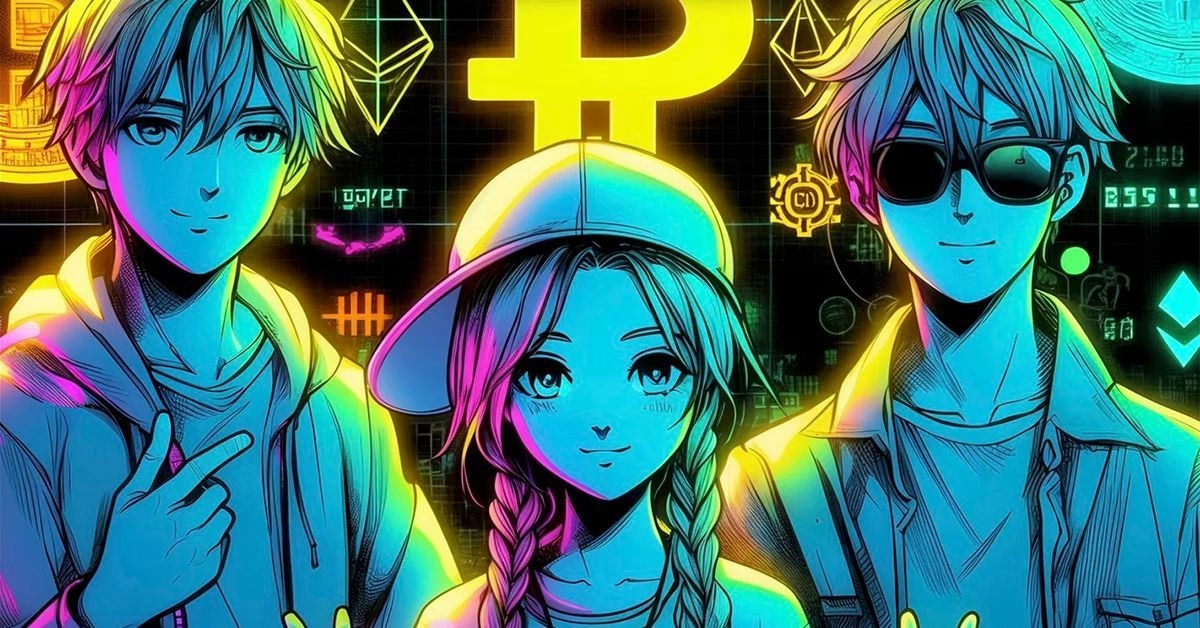
A University of California San Diego engineering professor has turned cryptocurrency education into a children’s adventure story, using fiction to introduce young readers to the technology behind digital currencies.
Published on November 5, 2026, The Crypto Campaign by Pamela Cosman explores Crypto Tech through a fictional school currency called BinCoin, which students create to encourage recycling and environmental responsibility.
The novel follows a group of schoolchildren as their recycling initiative develops into a cryptocurrency experiment involving digital transactions, recordkeeping and security challenges. As more students begin trading BinCoin, the system encounters problems that mirror some of the technical and financial difficulties associated with real-world cryptocurrencies.

Cosman, chair of UC San Diego’s Department of Electrical and Computer Engineering and an affiliate of its Qualcomm Institute, uses the fictional storyline to explain concepts such as blockchain, decentralised networks and fraud prevention without requiring young readers to have prior technical knowledge.
The book represents another effort by the professor to make complex engineering concepts accessible through storytelling, combining educational material with the suspense and humour of children’s fiction.
In a separate real-world case, US prosecutors charged two Canadian nationals, Ryan James Roach and Mathiew James Stubbings, over an alleged scheme to hack university computer networks and use their computing power to mine cryptocurrency between 2016 and 2019.
The idea behind Cosman’s children’s books dates back more than two decades, when she visited her oldest son’s second-grade classroom during a parent resource day.
Rather than introduce a conventional classroom activity, she demonstrated error-correcting codes, a concept used in engineering and communications to ensure information reaches its intended recipient accurately.
The children responded enthusiastically, treating the exercise as a game and even choosing to spend their lunchtime working on encoding and decoding worksheets.
“They were thinking of it as a game,” said Cosman, recalling the classroom experience. “That was so cool. I thought, ‘I want to try to harness that and write a storybook.’”
That experience eventually developed into a series of adventure novels designed to introduce technical concepts through fictional situations.
In The Crypto Campaign, the central idea is a school recycling initiative that rewards students with BinCoin for collecting rubbish and recyclable materials. As the fictional currency gains popularity, students begin exchanging their coins, creating a need for a reliable system to track transactions and prevent manipulation.
The resulting complications provide opportunities to explain how cryptocurrency systems operate. Rather than presenting Crypto Tech through technical lectures, Cosman allows the characters to discover solutions as the story progresses.
One of the book’s central educational techniques is translating complex cryptocurrency mechanisms into activities children can understand.
For example, when students begin recording BinCoin transactions in their notebooks, they need a way to ensure that everyone maintains consistent records. The characters update one another’s notebooks whenever they meet, demonstrating a concept known as the gossip protocol.
In cryptocurrency networks, gossip protocols help distribute information between participants, allowing different nodes to share updates across a decentralised system.
The fictional exercise gives young readers a practical illustration of how information can spread across a network without depending entirely on one central authority.
Some of the technical ideas incorporated into the book also came from Cosman’s second son, who now works as an entrepreneur in cryptocurrency and artificial intelligence.
Although Cosman’s academic research focuses primarily on digital image processing rather than cryptocurrency development, her decades of teaching at UC San Diego’s Jacobs School of Engineering have influenced how she approaches technical education.
Her mentoring experience, including work with the Qualcomm Institute’s Neurodiversity in Tech internship programme, has also helped shape her understanding of how different learners engage with complicated subjects.
The book includes a nonfiction section explaining additional technical concepts and warning readers about different types of cryptocurrency scams.
Cosman, however, is careful to distinguish between teaching technology and encouraging children to participate in digital asset markets.
“I don’t mean this to be an endorsement for people who don’t know the cryptocurrency landscape to dive in,” she said. “The intent of the book is to teach technical concepts.”
While translating engineering concepts into accessible language was familiar territory, developing engaging fictional characters and dialogue presented a different challenge for Cosman.
Her academic background had prepared her to explain technical subjects, but writing fiction required a different approach to structure, character development and storytelling.
“Obviously, none of my technical papers have ever had dialogue,” she said. “So that was a real challenge for me to learn a completely different way of writing. It’s not enough to have a clever plot.”
Between her initial classroom visit and the publication of her first children’s book, Cosman spent nearly 15 years attending writing workshops, taking classes and participating in critique groups while balancing her academic responsibilities and raising four sons.
Her first two novels, The Secret Code Menace and The Hexagon Clue, were initially published by a small British publisher. American publisher Leapfrog Press has now released The Crypto Campaign and plans to publish revised editions of the earlier titles.
Cosman said developing a storyline and outlining the technical concepts eventually became an enjoyable creative process.
“Once I’ve done the outline, with concepts and storyline, then I can sit down and write, and that is really fun,” she said. “It feels very creative and taps into a different side of my brain.”
With three children’s novels now forming part of her writing journey, Cosman is already considering another technical subject for a future adventure.
Her publisher has suggested artificial intelligence as a possible theme for the next book. However, she has not yet settled on a storyline capable of translating the subject into an engaging fictional experience.
“I have some other ideas,” she said. “The AI might have to wait.”


Copyright © 2025 - The Bit Gazette.