
- Trending
- Comments
- Latest

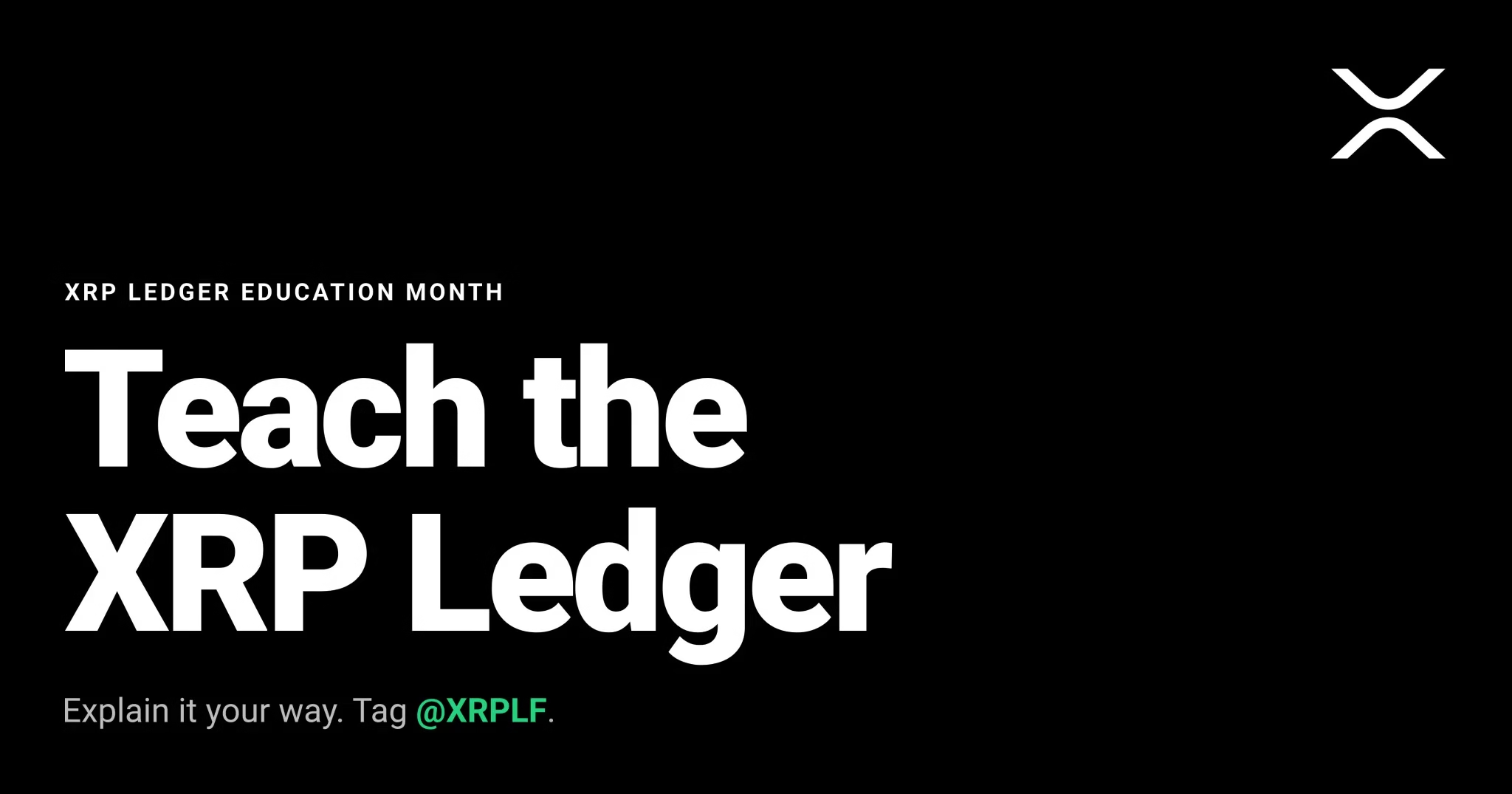
The XRP Ledger Foundation is offering up to $40,000 in awards to creators who explain the XRP Ledger (XRPL), including proposed upgrades such as the Lending Protocol, it announced on X on November 9, 2026. The awards go only to submissions the foundation selects after the campaign closes.
The XRP Ledger Foundation announced the launch of $XRP Ledger Education Month on November 9, 2026, offering up to $40,000 in awards to educators, developers and content creators producing educational materials about the XRP Ledger (XRPL).
The announcement, shared through the foundation’s official X account, outlines an initiative designed to make the network’s technology and development plans easier to understand.
The campaign encourages creators from different backgrounds to explain how the blockchain operates and why its underlying features matter.
According to the foundation’s announcement which says, up to $40,000 in awards for educators and content creators who explain upcoming amendments like the Lending Protocol, or teach how the $XRP Ledger works, the role of $XRP and the core protocol philosophies.
The financial incentive is intended to encourage the production of informative and accessible content that can serve the wider XRPL community.
The $XRP Ledger Education initiative is particularly relevant because understanding blockchain infrastructure and proposed network improvements can provide useful context when evaluating the long-term development of a digital asset.
The $XRP Ledger Education campaign is not restricted to written publications or conventional blockchain tutorials.
Participants can submit educational videos, short-form clips, explainer series, articles, social media threads, illustrations, animations and graphics.
Someone with a development background, for example, could produce a practical tutorial, while a financial educator might explain how XRPL features could affect businesses and digital asset users.
However, the foundation has established quality expectations for submissions. Content must be factually accurate, creative, consistent and understandable to people without advanced technical knowledge.
The $XRP Ledger Education programme also places emphasis on originality. Contributors are encouraged to develop their own presentation styles rather than simply repeat existing explanations of the network.
According to the campaign guidelines, creators can participate by tagging @XRPLF on X or including the hashtag #XRPEducationMonth when publishing through platforms such as YouTube and TikTok.
The foundation will review submissions for factual accuracy before deciding which entries qualify for awards. It will also consider the creator’s individual approach and consistency in producing educational materials.
The $40,000 allocation should not be interpreted as an automatic payment to everyone who participates. The foundation intends to select qualifying submissions after the campaign closes, with successful recipients receiving payment following a signed agreement.
Beyond explaining existing network features, the $XRP Ledger Education initiative places considerable attention on two proposed developments: the Lending Protocol and Confidential Transfers.
Both subjects are relevant to the network’s potential evolution, although they address different areas of blockchain functionality.
The proposed Lending Protocol is designed to introduce fixed-term, uncollateralized lending arrangements through funds held in single-asset vaults.
Under the proposed structure, borrowers would undergo creditworthiness assessments outside the blockchain. The XRP Ledger would subsequently record the agreed loan conditions and facilitate repayment administration.
Another notable component is the potential involvement of loan brokers providing first-loss capital. This arrangement would allow brokers to use their own funds to absorb an initial portion of losses if borrowers default.
As of November 9, 2026, the proposal was still awaiting validator approval. Consequently, investors should distinguish between a proposed network amendment and a feature that has already been implemented.
The $XRP Ledger Education campaign provides an opportunity for developers and educators to explain these distinctions, particularly for investors who may interpret proposed upgrades as immediately available network capabilities.
The proposed feature would allow certain issued tokens to conceal transaction amounts and account balances while maintaining mechanisms through which authorised parties could verify relevant information.
The $XRP Ledger Education programme also covers existing network components, including consensus mechanisms, issued assets, non-fungible tokens and the role of XRP within the protocol.
These subjects provide creators with opportunities to discuss both the technical foundation of the network and the broader applications being developed around it.
The launch of $XRP Ledger Education reflects the foundation’s interest in strengthening the knowledge base surrounding the blockchain rather than focusing exclusively on technical development.
Network functionality, developer participation, accessibility and practical applications also contribute to an ecosystem’s development.
By encouraging educational content about consensus, lending infrastructure, token issuance and confidentiality, the foundation is creating opportunities for more people to understand the technology supporting the XRP Ledger.
The $XRP Ledger Education campaign could also help introduce the network to individuals who are interested in cryptocurrency but lack the technical knowledge required to understand blockchain protocols.
However, the initiative should not be confused with a direct financial incentive for XRP holders. The $40,000 is intended for qualifying educational contributors, not token holders or investors.
The proposed Lending Protocol and Confidential Transfers could become relevant developments if they receive the necessary approvals and are successfully implemented.
Following these educational developments alongside validator decisions, protocol upgrades and ecosystem activity may provide a more informed perspective on the network’s long-term direction.



Copyright © 2025 - The Bit Gazette.