
- Trending
- Comments
- Latest

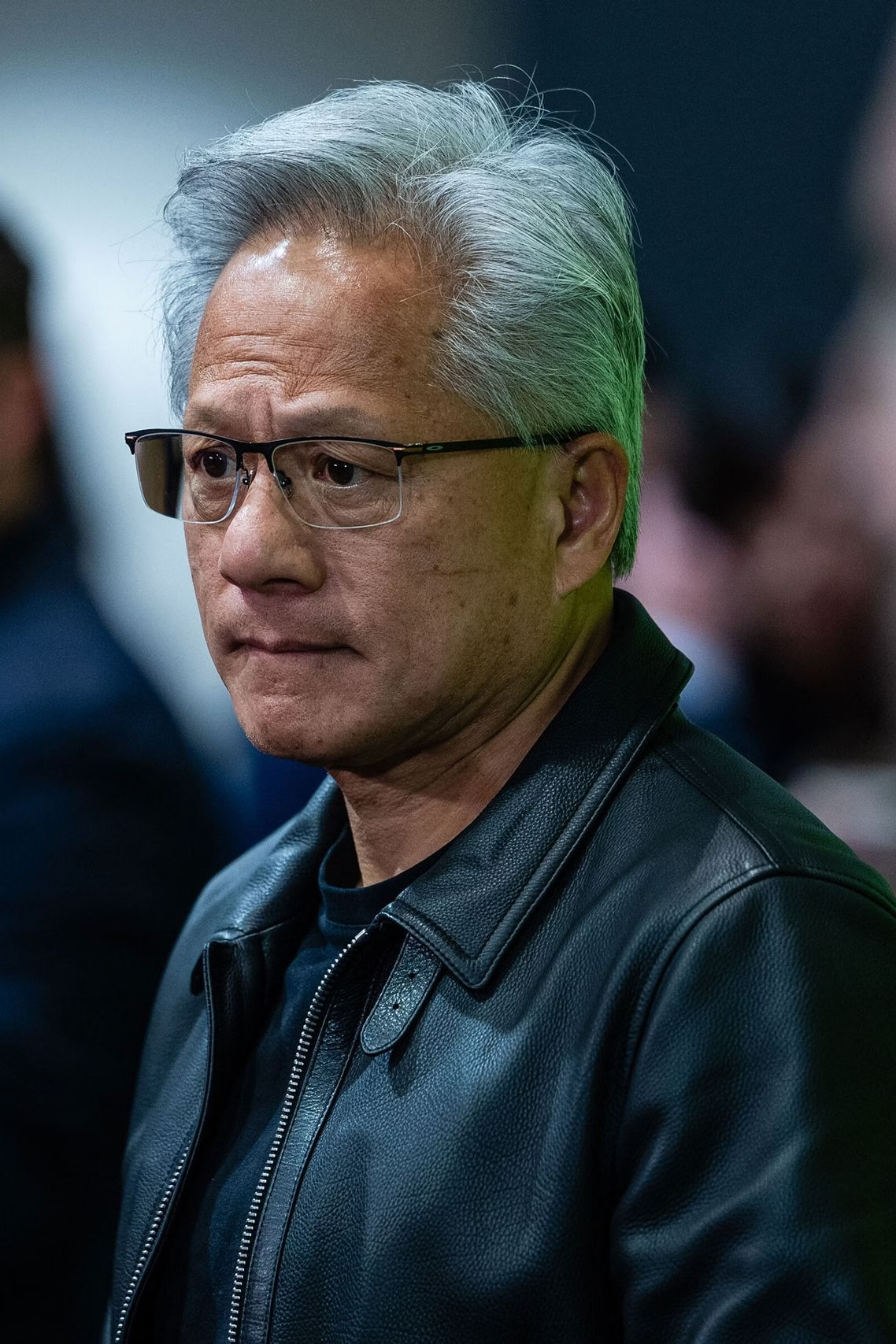
Jensen Huang’s departure leaves NVIDIA with two immediate challenges: replacing its founding leader and establishing what happened around him. His admission of infidelity answers a question about his personal conduct. It does not settle the allegations of espionage, additional relationships or outside interference that have gathered around his exit.
The distinction matters because these claims lead to very different conclusions. An undisclosed workplace relationship would raise questions about power and conflicts of interest. Foreign intelligence targeting would raise questions about access and security. An orchestrated removal would require evidence of who intervened, how they acted and what influence they exercised.
NVIDIA’s financial commitments add another dimension. Its filings describe arrangements that support customers buying its infrastructure, while new reporting describes internal debate over those deals. That makes the transition a question about capital allocation and risk management as well as personal conduct and security.
The public record reviewed establishes the admission, the leadership change, the investigation and disclosed financial exposure. It does not establish how much each issue contributed to the departure. The strongest analysis examines those connections without granting either corporate statements or prominent commentators an exemption from scrutiny.
In a November 8 message published by NVIDIA, Huang wrote: “I was unfaithful to my wife.”
That is direct evidence of his acknowledgment of infidelity. The message did not identify a partner, specify the number of relationships or admit passing confidential information to anyone. Huang also pledged to cooperate with the board’s investigation.
The company’s securities filing records that directors accepted his resignation as president, chief executive and board member on November 11, effective immediately. NVIDIA announced the transition the following day. Colette Kress became interim CEO while retaining her finance role, and Harvey C. Jones became board chair.
Neither the filing nor the transition announcement specifies the reason for Huang’s departure.
That leaves an important boundary around the evidence. His resignation establishes that he left. It cannot independently confirm every allegation published before he did.
The New York Times reported an alleged relationship between Huang and healthcare executive Kimberly Powell, citing five people who worked at NVIDIA. In the syndicated article reviewed for this analysis, the sources were unnamed. Two described a video showing affectionate behaviour; the newspaper explicitly said it had not seen the recording. Powell did not immediately respond to its request for comment.
Reuters subsequently reported an alleged relationship with another employee, citing two people familiar with the matter. It did not name that employee.
Those reports contain attributed testimony. Describing them as having no evidence at all would overlook that sourcing. Presenting their particulars as independently established facts would also exceed what readers can verify.
The relevant questions concern each source’s proximity to the events: Did they witness something, inspect a record or repeat what colleagues told them? Did separate sources independently corroborate the account?
A named commentator’s reputation does not answer those questions. Neither does a newspaper’s reputation. An anonymous witness can possess direct knowledge; a publicly identified expert can be reasoning from someone else’s reporting.
The same standard must apply to both.
NVIDIA’s November 8 board statement announced an inquiry following reporting that Huang had been targeted by a foreign intelligence effort. It also said directors had no reason at that point to believe national security or company secrets had been compromised.
That was the board’s stated assessment when announcing the inquiry. It was not a published final investigative finding. On November 10, the independent directors named Joon H. Kim and Wachtell, Lipton, Rosen & Katz to conduct the investigation.
China has rejected the espionage allegations. Foreign ministry spokesperson Guo Jiakun described the narrative as unfounded in remarks recorded by Reuters. That denial is Beijing’s position, rather than an independent resolution of the case.
A useful investigation must distinguish an attempted approach from successful access, information disclosure and knowing cooperation. These are different propositions. Establishing one does not establish all four.
An executive might be targeted without realising it. Sensitive information might remain protected despite a personal vulnerability. Conversely, a lack of publicly disclosed proof of a breach does not establish that security controls worked.
This is why both an automatic finding of espionage and an automatic declaration of clearance would be premature.
The commentary surrounding Huang does not form one unified explanation. Different speakers identify different possible actors and, in some cases, address consequences rather than causes.
In RT’s post featuring former CIA officer John Kiriakou, the explanation concerns a suspected Chinese honeypot operation. In his related full episode, reviewed through automatic captions, Kiriakou cites newspaper reporting and applies his intelligence experience to the alleged pattern.
That offers a mechanism worth examining: a personal relationship could provide access to a strategically important executive. However, the section reviewed does not disclose firsthand knowledge of this particular operation. His assertion that secrets must have been compromised goes beyond the evidence he presents there.
In a post on X, Sulaiman Ahmed attributed to former CIA analyst Larry Johnson the claim that Israel orchestrated Huang’s removal from NVIDIA. Ahmed described it as “an Israeli operation.”
Jesse Watters’s own post raises a possible American political setup, pointing to electoral timing and questioning whether Democrats want control of the AI chip market. The accompanying text does not demonstrate coordination, and a full transcript of that linked video was unavailable for this analysis.
These explanations deserve accurate representation. They also require different corroboration. Evidence of Chinese targeting would not automatically establish Israeli involvement in a removal. Suspicion about political timing would not demonstrate either operation.
Several prominent people discussing manipulation can establish that the question is attracting attention. It does not establish that they independently corroborate the same events.
The possibility of an Israeli successor has become part of the argument about who might benefit from Huang’s exit. Reporting on Haaretz’s succession coverage identifies NVIDIA’s Michael Kagan and Apple’s Johny Srouji among names discussed.
That is relevant to examining potential future leadership. It does not establish an official shortlist consisting entirely of Israelis. NVIDIA’s announcement describes a search involving internal and external candidates, with Kress serving on an interim basis.
To connect succession to an intelligence operation, evidence would need to show a mechanism: intervention in the board’s decision, coordinated pressure, an intermediary acting under instruction or another demonstrable link.
The same distinction applies to China or any American political faction. A party may gain an advantage from an event it did not arrange.
In a post shared by Mario Nawfal, Nick Fuentes questioned whether Chinese and Israeli connections receive equal scrutiny. His comparison, however, does not establish Israeli involvement in Huang’s departure.
Likewise, posts questioning why some executives face harsher consequences than political figures raise an accountability debate. They do not identify who caused this particular departure.
The most consequential unanswered corporate question concerns the board’s change in position.
On November 8, directors expressed confidence in Huang. Three days later, they accepted his resignation. The documents reviewed do not explain what changed.
That gap does not establish wrongdoing by directors. It does make their reasoning central to any serious assessment.
Shareholders should seek an account of when the board learned of relevant concerns, what new information reached it and whether any relationships or business dealings had been disclosed. Investigators should also examine whether safeguards applied to the founder as rigorously as they would to another executive.
If a relationship involving a subordinate is substantiated, the corporate questions extend beyond whether it was consensual. They include authority over compensation and promotion, disclosure of conflicts and the ability of employees to raise concerns safely. These are matters to investigate, not findings that favouritism or coercion occurred.
Personal misconduct and outside exploitation are also capable of coexisting. Evidence of one would not automatically erase the other. If someone exploited genuine misconduct, both the conduct and the intervention would warrant examination.
Replacing the chief executive cannot substitute for establishing whether oversight worked.
A Bull Theory post raises a distinct concern: NVIDIA’s financial support for companies that buy its chips. The underlying arrangements have a documentary basis, although the headline figures require careful classification.
NVIDIA’s quarterly filing lists $366 billion in future commitments, including $279 billion for supply and capacity; another $56 billion covers AI cloud agreements and third-party leases. Separately, maximum gross guarantee exposure totals $108.5 billion, including an August agreement capped at $105 billion for an Ohio project serving an OpenAI affiliate.
Adding those categories produces approximately $530.5 billion. It is a combined total, not $530.5 billion of loans, losses or default guarantees. The Ohio guarantees take effect in phases, with the first expected in fiscal 2029, and payments depend on specified defaults.
The distinction affects how the risk should be understood. Procurement contracts involve purchases in return for products or services; guarantees involve contingent payments. A combined headline cannot substitute for examining timing, contractual conditions and what the company receives.
The analytical concern is that supporting buyers may help generate sales while tying the supplier more closely to those buyers’ future success. If end-user demand disappoints, orders could weaken at the same time that financial support becomes more costly. If demand materialises, the arrangements could help build a durable customer base.
Neither outcome is demonstrated by the existence of the arrangements alone. They also do not, by themselves, establish fictitious revenue or fraud.
The Wall Street Journal reported that Kress questioned some financing arrangements and that Huang criticised her during an August meeting, citing people familiar with the discussions. The account remains attributed reporting about internal events.
It gives investors a more specific succession question: will Kress preserve the financing strategy, tighten its terms or reduce future commitments? These choices could affect customers as well as NVIDIA. They do not establish that a financial disagreement caused Huang’s departure.
Pavel Durov’s post uses humour to argue that boards threaten founders’ control, drawing a comparison with his own departure from VK. He urges founders to retain control of the board.
The post offers a governance position, not new firsthand evidence about NVIDIA’s decision. Its shorthand about Huang and a spy also assumes a disputed part of the underlying story.
The argument nevertheless exposes a real tension: founders may see independent oversight as an obstacle to the long-term decisions that built their companies. Other shareholders may see that same oversight as essential when personal conduct or financial commitments create risks.
Our assessment is that accountability must run in both directions. A founder’s importance should not insulate decisions from scrutiny; the power to remove a founder should not insulate directors from explaining their own actions. The quality of oversight matters more than a simple preference for founder or board control.
In a post summarising Patrick Moorhead’s assessment, Mario Nawfal presents the industry analyst’s argument that losing Huang could improve China’s position in the AI race. The post also attributes to Moorhead the belief that Huang anticipated the pressure and chose to leave on his own terms.
The first argument concerns a potential competitive consequence. The second interprets Huang’s decision. Neither, as presented in the post, identifies who orchestrated the departure.
The underlying business concern deserves attention. NVIDIA’s fiscal 2026 annual report already warned about dependence on its longstanding executive team and the risks of ineffective succession and knowledge transfer.
But the same company possesses engineering teams, networking technology, the CUDA software platform and established customer relationships. Those capabilities survive a change of chief executive.
The transition’s real test will be how effectively the new leadership coordinates those assets: retaining key people, delivering products, sustaining customer confidence and making the next set of strategic decisions.
Huang’s importance makes succession a serious risk to assess. It does not establish that NVIDIA must decline, or that any rival’s advantage is already assured.
Further evidence needs to address conduct and causation directly: authenticated communications, corroborated firsthand accounts, relevant access records, documented outside intervention or substantive investigative findings.
More repetition of the same allegation would add visibility without necessarily adding verification.
The strongest conclusion available now is that Huang’s admitted conduct, the board’s handling of the crisis, NVIDIA’s financial exposure and the possibility of outside exploitation deserve separate scrutiny. Newspaper allegations should retain their attribution. Expert interpretations should be assessed against their disclosed evidence. Corporate assurances should be tested against the investigation’s eventual findings.
NVIDIA has changed its leadership. It still owes shareholders a credible account of how the crisis developed, what its safeguards did, how its financial commitments will be managed and what must change. Until that account and supporting evidence emerge, identifying a foreign or political architect would run ahead of the record.



Copyright © 2025 - The Bit Gazette.