






- Trending
- Comments
- Latest

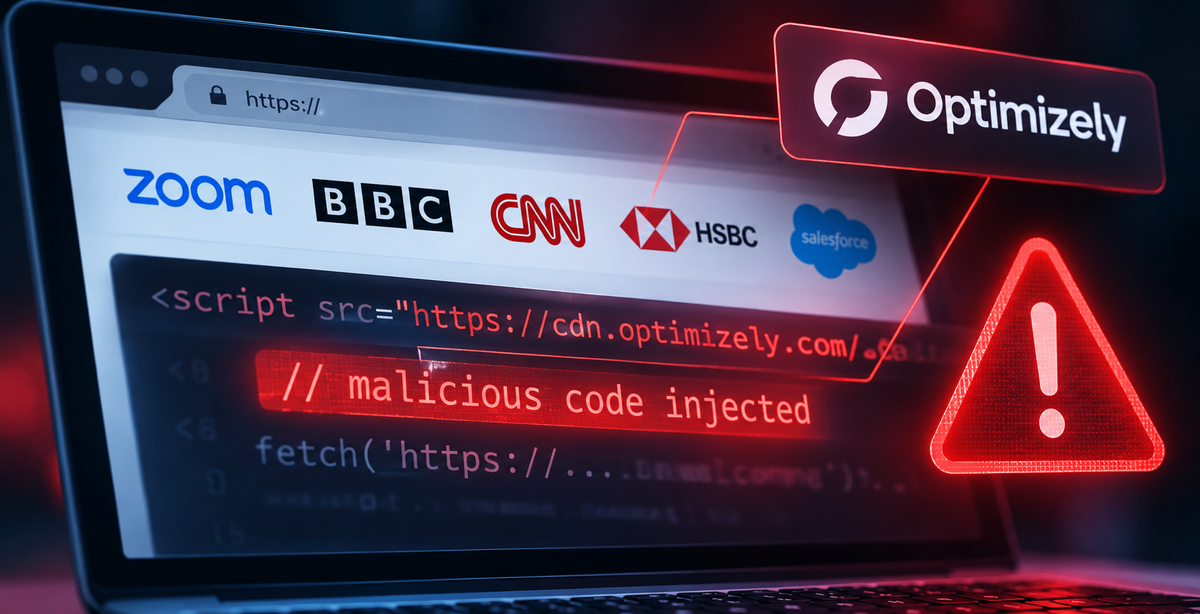
Hackers exploited a vulnerability in Optimizely’s web experimentation platform on November 16 to serve crypto-stealing malware to visitors of websites run by 178 organisations, including Ledger, the BBC and CNN, according to security researcher Scott Helme of Report URI.
The code swaps cryptocurrency wallet addresses for the attacker’s own, and analysts disagree on the damage: Report URI traced about $7,040 to attacker-linked wallets, while blockchain analytics firm Bitquery estimates $2,260 in victim-related payments.
The attack targeted Optimizely Web Experimentation, a platform businesses use to test website designs, personalize content and measure user engagement.
Websites using the service load JavaScript files from Optimizely’s infrastructure. Those files can include customer-defined code that runs inside visitors’ browsers.
According to Report URI, the attacker inserted malicious JavaScript into the Project JavaScript sections of affected customer projects, causing websites to load additional code from an attacker-controlled domain.
The injected code was distributed through legitimate Optimizely scripts, allowing it to run within affected websites without requiring the attackers to compromise each company’s servers.
Optimizely subsequently confirmed that an unauthorized party had exploited a vulnerability in its Experimentation account signup process to modify customer projects.
The company said it blocked the vulnerable access path, deployed a fix, removed the malicious code and took additional steps to secure affected accounts.
The attack illustrates how compromising a widely used third-party service can expose visitors across numerous otherwise unrelated websites.
Report URI’s analysis revealed that the malicious JavaScript carried several attack capabilities, including a cryptocurrency address replacement tool commonly known as a clipper.
The malware searched website content for valid cryptocurrency addresses and replaced them with attacker-controlled alternatives.
It targeted addresses across multiple networks, including Bitcoin, Ethereum, Solana, TRON, Litecoin, Bitcoin Cash, Dogecoin and TON.
Unlike conventional clipboard malware installed directly on a victim’s computer, this attack operated inside the browser. It could manipulate wallet addresses displayed on webpages, copied to clipboards or passed through certain browser requests.
Consequently, a user attempting to send cryptocurrency to a legitimate recipient could unknowingly transfer funds to the attacker instead.
The malware also contained a payment card skimmer designed to capture card numbers, expiration dates and security codes entered into affected websites’ own payment forms.
Separately, researchers identified code associated with the Coruna and DarkSword iOS exploit kits, which targeted vulnerable iPhones and iPads.
However, the discovery of these capabilities does not establish that every affected visitor had information stolen or that the iOS exploits successfully compromised devices.
The number of exposed users and the extent of any payment card theft remain unknown.
The cryptocurrency losses have become a significant point of contention following a separate investigation published by blockchain analytics firm Bitquery on November 17.
Report URI initially identified approximately $7,040 received by wallets associated with the malicious code.
However, Bitquery’s transaction-level analysis concluded that a substantial portion of those receipts came from cryptocurrency conversions involving funds already controlled by the attacker.
The investigation traced 19 external payments from 18 sending addresses across Bitcoin, Litecoin, Ethereum, TRON and BNB Chain, with a combined estimated value of $2,260.
One of the transactions, worth approximately $51, may also have originated from the attacker, potentially reducing the total to around $2,210.
The most significant discrepancy involved a Bitcoin transfer of approximately 0.076 BTC.
Bitquery found that the attacker had sent roughly $4,920 in stablecoins to a swap service before receiving the Bitcoin in return about 14 minutes later.
According to the researchers, the incoming Bitcoin was included in the original wallet-receipt calculation despite appearing to represent the proceeds of the attacker’s own asset conversion rather than a separate victim payment.
The analysis also found that approximately $4,311 in USDC involved in the swap had reached an attacker-associated wallet before the November 16 campaign.
Bitquery reported that the largest identified external payment was 15 LTC, valued at approximately $670, while the median payment was $54.
These findings suggest that the initially reported $7,040 should not be treated as a confirmed theft total.
Nevertheless, Bitquery acknowledged that blockchain records alone cannot establish the intentions behind every transfer or independently confirm that each payment resulted from the malware.
Its estimates also exclude any potential losses from payment card theft or other activity that cannot be traced through public blockchain transactions.
Cryptocurrency hardware wallet manufacturer Ledger was among the organizations whose website scripts were affected.
Ledger’s security team, Donjon, confirmed that malicious code had been served through the company’s website as a result of the third-party Optimizely incident.
The company said the issue had been remediated and the malicious code was no longer being delivered through its website.
Ledger also emphasized that the incident did not compromise the security architecture of its hardware wallets and that users’ private keys remained protected by their devices.
The distinction is significant because exposure to malicious code on Ledger’s website does not establish that attackers gained access to hardware wallet private keys.
Other organizations also responded to the incident.
According to Reuters, Salesforce disabled Optimizely scripts as a precaution, while Equifax stopped using the platform and reported no evidence that its internal systems had been compromised.
HSBC said unauthorized scripts were not active on its websites, while Salesforce and IKEA were investigating the incident.
Report URI documented a rapid reduction in infected scripts during the evening of November 16.
At 20:56 UTC, researchers identified 169 infected snippets. By 21:52 UTC, only one of the 188 previously identified snippets still contained the malicious code.
Optimizely subsequently confirmed that the exploited vulnerability had been fixed and the injected code removed from affected customer projects.
The company also ended active sessions, revoked access tokens, reset access for affected accounts and introduced additional protections against unauthorized script delivery.
It said affected customers had been notified and that its investigation was continuing.
The security incident also raises questions about a potentially broader campaign.
Report URI identified related malicious script activity involving other third-party services, including Kissmetrics, StorifyMe and Minute Media, before the Optimizely attack.
However, the full scope of those earlier operations, their relationship to the November 16 incident and the identity of the attackers have not been conclusively established.
For cryptocurrency users, the attack underscores a risk that conventional wallet security measures cannot eliminate on their own: a trusted website may display a fraudulent destination address even when the underlying blockchain and wallet remain uncompromised.
Users who made cryptocurrency transfers through potentially affected websites on November 16 should verify the recipient addresses against their transaction records, while hardware wallet users should confirm addresses and transaction details on the device itself before approving transfers.
The incident has largely been contained at the platform level, but the complete financial impact and number of affected visitors remain under investigation.



Copyright © 2025 - The Bit Gazette.