








- Trending
- Comments
- Latest

Two Ledger users have reported crypto theft involving hardware wallets they say they purchased from Virgin Megastore in Dubai, raising questions about whether a previously identified device-tampering campaign extends beyond Southeast Asia. The reports concern approximately 1,300 SOL and 507,000 USDT, but the alleged losses and purchase channels have not been independently verified.
An account using the name Rewinsky reported the SOL loss on November 15. Another account, New Babylon Order, said on November 17 that funds had been stolen from a Ledger Stax three days earlier.
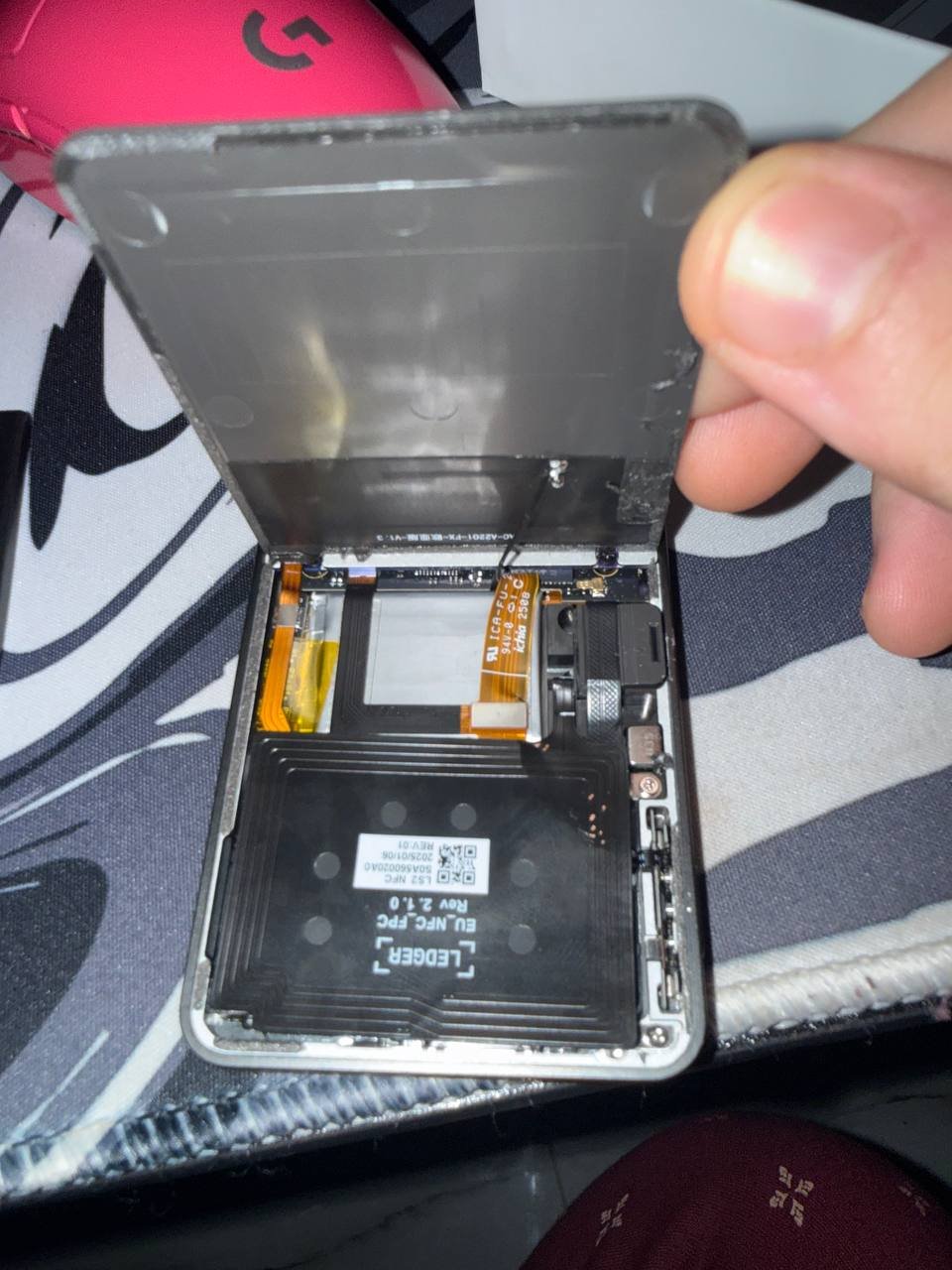
The available evidence differs between the devices. A public research registry identified an implant in photographs of Rewinsky’s Ledger Flex, while the reported Stax modification remains unconfirmed.
Rewinsky initially shared a transaction link alongside the loss allegation. On November 16, the account published photographs showing the opened hardware wallet.
“i just checked my ledger is tampered,” Rewinsky wrote.
Mark Karpelès’ public Ledger Implant OSINT registry analysed the images and identified an additional board and an antenna attached inside the back cover. According to the registry, those components resemble implants documented in other Flex devices.
The photographs provide evidence of a physical modification, but they do not independently establish every aspect of the crypto theft account, including where or when the device was altered.
Rewinsky subsequently identified Virgin Megastore at Dubai Mall as the seller. The registry noted that the account had not supplied a purchase date.
That leaves a distinction between the visible hardware alteration and the device’s reported retail history. The source does not establish who installed the added components or when they entered the supply chain.
The second crypto theft report concerns a Ledger Stax that New Babylon Order said was purchased new from Virgin Megastore Dubai on October 11, 2026.
The account alleged that 507,000 USDT was stolen on November 14. It also said the recovery phrase had been generated on the device and never entered elsewhere.
Those statements describe the user’s account of the wallet’s setup and handling. They have not been independently confirmed in the supplied report.
New Babylon Order later said the device remained untouched and requested guidance on obtaining a forensic examination. No internal photographs had been published, according to the registry.
Karpelès requested pictures of the interior or any implant. Until such evidence is available, the registry classifies the Stax modification as suspected rather than confirmed.
The two crypto theft allegations therefore cannot be treated as equally supported examples of the same attack. One includes photographs analysed as showing an implant; the other awaits physical evidence establishing whether a similar modification exists.
Ledger’s October investigation update described a method in which added components read recovery words displayed during device setup and transmit them through a cellular connection.
The company said those implants did not modify the wallet’s security chip or operating system.
That distinction explains how a physically altered device could still pass a software authenticity test. Ledger’s hardware-integrity guidance states that its Genuine Check verifies the original security chip but cannot detect spying implants when that chip remains intact.
The mechanism is relevant to the crypto theft reports because it concerns information exposed during setup, rather than a demonstrated compromise of the security chip itself.
However, the existence of that documented attack method does not establish that it caused both reported Dubai losses. The Stax allegation, in particular, remains unsupported by an internal examination in the available account.
In a November 13 statement, Ledger said it had not verified a drain involving a device purchased outside Southeast Asia and was reviewing other reports.
That statement preceded both users’ public loss reports. It should not be presented as a completed assessment of the subsequent Dubai allegations.
Ledger replied to Rewinsky on November 16 with reporting guidance and a warning about recovery scammers. The response did not confirm the implant, the seller or the circumstances of the crypto theft.
The company’s official reseller directory lists Virgin Megastores in the United Arab Emirates for physical and online sales. That establishes the retailer’s listed status, but not the provenance or condition of either individual wallet.
For customers reporting losses, Ledger’s October guidance recommends contacting its support team and local law enforcement. It also advises coordinating with authorities before opening a device or sending it elsewhere.
The crypto theft reports now hinge on further evidence: verification of the purchase histories, examination of the Stax and investigation of how any implanted components reached the affected devices.



Copyright © 2025 - The Bit Gazette.