







- Trending
- Comments
- Latest
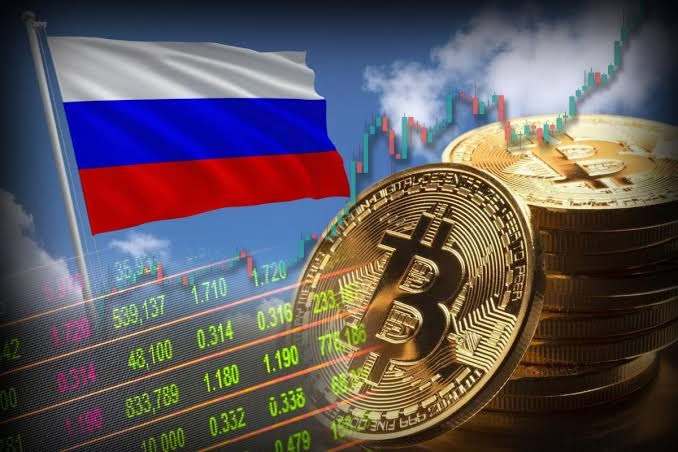
Moscow Exchange will begin pilot trading in Bitcoin, Ether and Tether’s USDT on December 1, 2026, but USDT trades will carry a 22% value-added tax on top of the price through December 31, according to its clearing house, the National Clearing Centre.
Bitcoin and Ether trades are exempt because Russian law classes them as digital currencies, while USDT is treated as a foreign digital instrument.
Moscow Exchange (MOEX), Russia’s largest stock exchange, has outlined plans to begin trading Bitcoin (BTC), Ethereum (ETH) and Tether (USDT) on December 1, 2026. The development marks an important stage in Russia’s efforts to establish a regulated environment for cryptocurrency transactions.
According to the exchange’s published trading guidelines, the initial rollout will cover the three digital assets, with financial intermediaries expected to make the products available to customers as their respective systems become operational.
Rather than establishing an entirely separate trading infrastructure, MOEX intends to use its existing stock market systems to facilitate cryptocurrency transactions.
Investors will access the products through brokerage accounts, while registered digital depositories will be responsible for cryptocurrency custody.
Trading is expected to operate within the exchange’s extended market schedule, running from 6:50 a.m. until 11:50 p.m. Moscow time.
The National Clearing Center (NCC), which provides clearing and settlement services for MOEX, has also outlined arrangements for same-day and next-day settlements. The framework will support swap transactions, potentially giving market participants additional flexibility when managing liquidity.
Preparations for the rollout follow the introduction of Russia’s updated digital asset legislation on September 1, 2026. The country’s regulatory environment has since continued evolving, with financial institutions preparing to offer cryptocurrency services under the new framework.
Despite the expansion of cryptocurrency access, the tax treatment of USDT presents a significant challenge for traders.
Under the arrangements published by the National Clearing Center, purchases, sales and swaps involving USDT will attract a 22% VAT between December 1 and December 31, 2026.
The difference in taxation comes from how Russian legislation classifies the assets. Bitcoin and Ethereum are recognised as digital currencies, while USDT falls into a separate legal category described as a foreign digital instrument because it is issued by Tether.
Article 146 of Russia’s Tax Code provides a VAT exemption for transactions involving digital currencies. However, the existing legislation does not clearly extend the same exemption to foreign digital instruments.
The NCC has reportedly requested clarification from the Federal Tax Service and the Ministry of Finance regarding the appropriate tax treatment. Until further guidance or legislative changes are introduced, the clearing institution’s published arrangements provide for VAT to apply to USDT transactions.
Proposed legislative amendments addressing the taxation of foreign digital instruments have passed their first reading. The NCC has indicated that further information may follow if lawmakers introduce an exemption covering transactions completed before January 1, 2027, or if relevant tax authorities issue additional guidance.
Beyond taxation, access to the new trading products will also depend on an investor’s regulatory classification. The Bank of Russia announced its initial list of eligible cryptocurrencies for non-qualified investors on November 6, 2026.
Under the framework, individuals without qualified investor status can purchase up to 300,000 rubles’ worth of approved cryptocurrencies annually through each financial intermediary.
The restriction applies to the combined value of eligible cryptocurrency purchases made through an individual intermediary. It does not provide a separate 300,000-ruble allowance for each asset.
Qualified investors will not face an equivalent annual purchase restriction. Nevertheless, both qualified and non-qualified investors must complete the required knowledge assessment and understand the risks associated with cryptocurrency investments.
The central bank reportedly considered several factors when selecting eligible cryptocurrencies, including market capitalisation, average daily trading volumes and historical price performance across foreign exchanges over a period of at least five years.
The Moscow Exchange launch is taking place alongside a broader expansion of Russia’s regulated cryptocurrency infrastructure.
By November 18, 2026, Russia had registered 30 cryptocurrency exchange operators, with major financial institutions, including Sberbank and VTB, among the authorised participants.
Organised cryptocurrency trading received regulatory permission to begin on November 22, subject to the approval of individual trading venues’ operating rules.
The Bank of Russia is also requiring exchanges to maintain comprehensive records of submitted orders and completed transactions. Trading platforms must monitor market activity, calculate price indicators and submit transaction information to the regulator through established reporting procedures.
These obligations are designed to bring cryptocurrency trading closer to the oversight standards already applied to conventional financial instruments.
Until the authorities clarify the treatment of foreign digital instruments, the additional VAT could influence how investors structure their transactions.
Russia’s approach offers an interesting example of how governments can encourage regulated digital asset trading while maintaining different tax treatments for individual cryptocurrencies.
The December launch will therefore be important not only for Moscow Exchange but also for investors monitoring the relationship between cryptocurrency adoption, financial regulation and taxation.



Copyright © 2025 - The Bit Gazette.