







- Trending
- Comments
- Latest

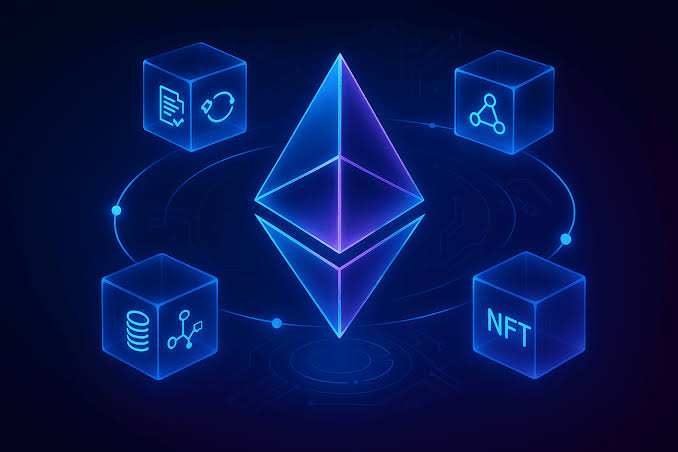
Launching a new blockchain protocol used to mean building a validator set from scratch, designing a token, attracting stakers, and accumulating enough economic weight to make attacks expensive. Actively validated services skip that entirely, letting new protocols borrow Ethereum’s existing security instead.
In a traditional setup, any new protocol requiring decentralised validation must bootstrap its own validator set from scratch designing a token, attracting stakers, and building enough economic weight to make attacks expensive. For most teams, it is a slow and capital-intensive process.
Actively validated services solve this through restaking. Restaking allows Ethereum validators to re-pledge their already-staked ETH or liquid staking tokens to simultaneously secure additional services. Those services are the actively validated services themselves, operating inside a shared security framework and drawing on the full weight of Ethereum’s staked capital.
As The Bit Gazette’s recent coverage of Ethereum’s fragmented liquidity landscape makes clear, how security and capital are distributed across Ethereum’s expanding ecosystem is one of the defining infrastructure challenges of this cycle and actively validated services sit at the centre of that debate.
Each AVS consists of on-chain smart contracts that manage operator registration and stake accounting, and an off-chain execution container that operators download and run. Operators perform the actual validation tasks confirming data availability, verifying ZK proofs, or attesting to rollup state transitions and earn yield from the services they support.
In exchange, operators accept the AVS’s slashing conditions. EigenLayer launched its full slashing system in April 2025, completing a feature that had been absent since the protocol’s initial mainnet debut. At that point, EigenLayer secured over $7 billion in restaked assets across 39 actively validated services.
Real-world actively validated services include EigenDA, AltLayer, Lagrange, and Eoracle. Eoracle functions as the first Ethereum-native oracle network built on EigenLayer, enabling decentralised apps to access real-world data verified through restaking. Lagrange’s State Committees provide a ZK light client for optimistic rollups, enabling faster and more secure cross-chain communication.
Before EigenLayer, developers building protocols that required external operators typically had to design and launch a token, incentivise node operators, and implement reward and slashing mechanisms themselves. Actively validated services collapse that process by letting new protocols purchase security directly from EigenLayer’s open marketplace.
For validators, the incentive is stacked yield. The same staked ETH securing Ethereum can simultaneously generate rewards from multiple actively validated services making restaking capital-efficient.
Competing protocols including Symbiotic and Karak have since emerged, signalling broader conviction in the model. As The Bit Gazette’s analysis of real yield mechanics in DeFi notes, AVS-generated fee revenue is now a core part of where sustainable protocol yield actually comes from.
The shared security model also introduces compounding risk. If the same stake is restaked across several AVSs by the same validator, the cumulative gain from malicious behaviour may exceed the loss from slashing preventing such network-level vulnerabilities is a critical challenge for EigenLayer.
If a large number of validators all restake to the same set of protocols, a bug or exploit in one could lead to a cascade of slashing events threatening the stability of the entire Ethereum network a correlation risk that does not exist when validators are only securing Ethereum. EigenLayer’s April 2025 slashing redesign addressed part of this by allowing operators to cap their exposure to any individual AVS.



Copyright © 2025 - The Bit Gazette.

