




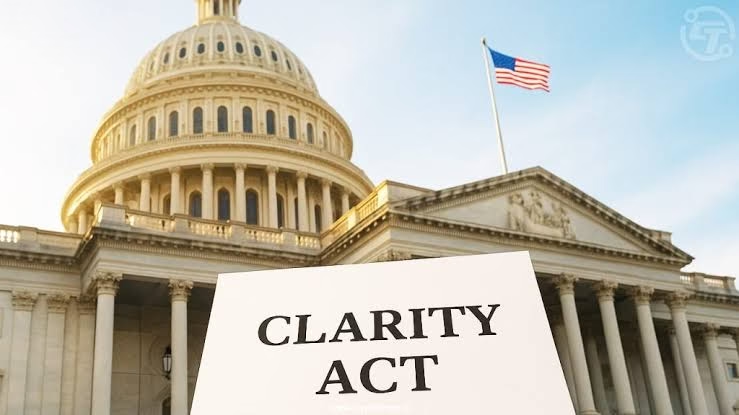
There might be a quiet, steady drain of money from local banks, starving small businesses and farmers of loans, all because customers can earn better rewards on a digital dollar in a crypto wallet.
This is the warning being sounded by a powerful coalition of banking trade groups in Washington. But a closer look at their campaign, their language, and the political maneuvering on Capitol Hill suggests something more calculated than simple concern for community lending.
Major financial institutions are waging an aggressive, well-funded lobbying war to weaponize the U.S. Senate, turning a technical debate over the CLARITY Act into an existential fight for the very definition of money.
The letter that launched a new attack
On May 8, 2026, a coalition including the Bank Policy Institute, American Bankers Association, and Independent Community Bankers of America sent an urgent letter to Senate Banking Committee leaders. Their message was stark: the proposed CLARITY Act must be amended to strictly prohibit “interest‑like yield” on stablecoins, or risk triggering a deposit flight that could reduce lending by “one‑fifth or more.”
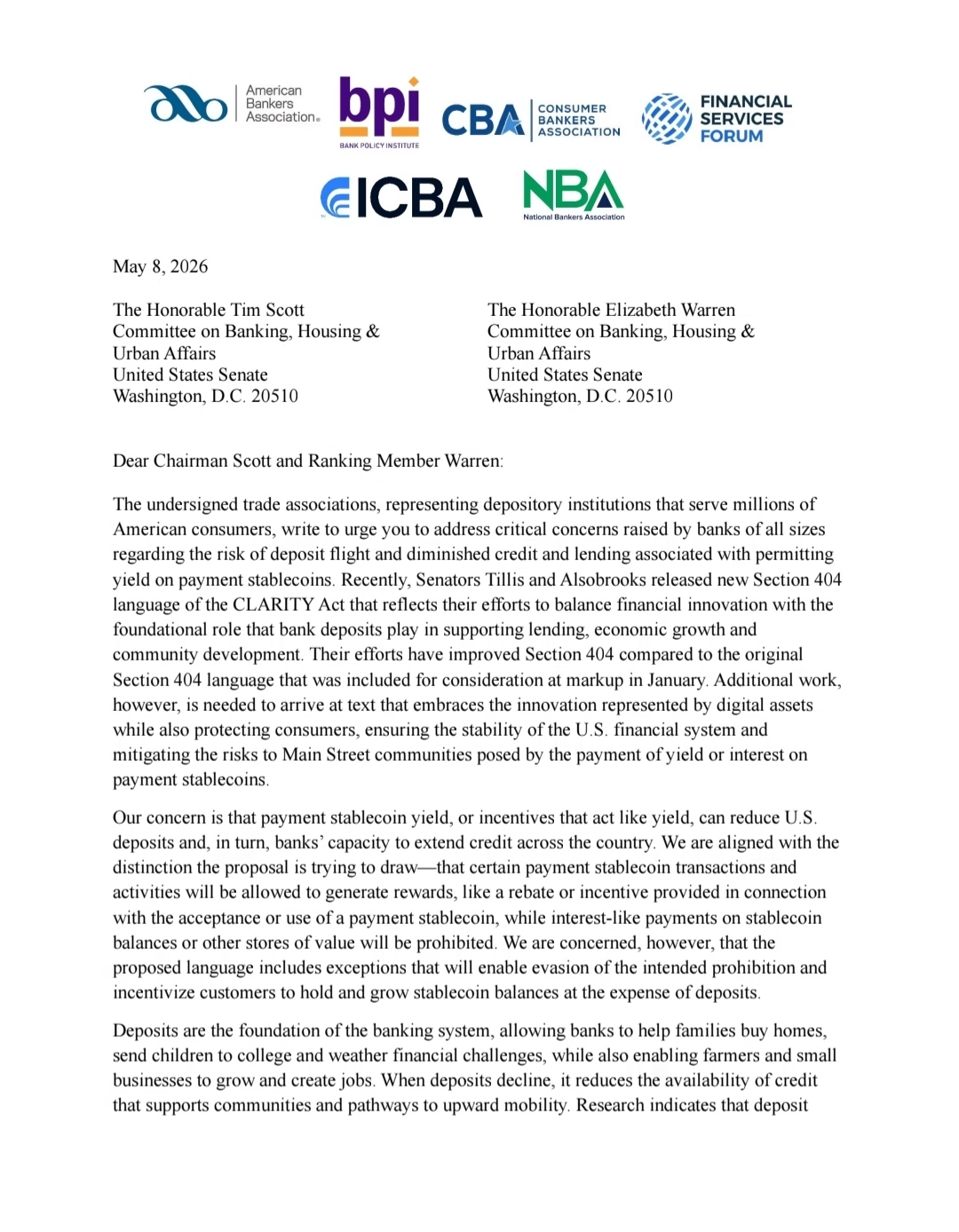
This wasn’t a new argument. As The Bit Gazette previously reported, the White House set a February deadline to resolve this very dispute, recognizing it as the primary obstacle to passing the landmark crypto bill. The banks have simply escalated their pressure, now rejecting a compromise crafted by Senators Tillis and Alsobrooks that they themselves had previously entertained.
Why yield is the real battlefield
The core issue is simple yet profound. Banks want stablecoins to function strictly as payment tools, not savings vehicles. As our coverage of lawmaker French Hill’s March 2026 statements explained, the CLARITY Act’s design has always envisioned stablecoins as a new form of digital check, not a high-interest account.
However, crypto firms argue that prohibiting yield would stifle innovation and drive the industry offshore. The banks’ new letter goes further, aiming to close any “loopholes” that would allow rewards based on account tenure, balance size, or transaction frequency – effectively gutting the Senate compromise on stablecoin yield rules that had recently pushed the bill’s passage odds past 55% on prediction markets.
By labeling any customer incentive as a threat to deposits, the banks are attempting to regulate crypto wallets like bank accounts, a move that would fundamentally cripple decentralized finance (DeFi) models.
The White House push and “now or never” momentum
This lobbying blitz comes at a critical juncture. The banking industry is fighting not just the crypto industry, but also the administration’s timeline. As we detailed in February, the White House drew a firm line on the CLARITY Act, with negotiators reportedly given until March 1 to reach a deal.
Since then, pressure has only mounted. Senators like Cynthia Lummis have called the moment “now or never,” warning that failure to pass the bill this cycle would allow other jurisdictions already moving ahead with their own frameworks to permanently capture the digital asset economy. The banks’ new letter is a clear attempt to stall or sink that momentum by forcing a return to square one on the yield debate.
When lobbying becomes “weaponization”
The term “weaponization” fits because the banks’ strategy uses the Senate’s deliberative process as a cudgel. This is not merely advocacy; it is a coordinated campaign designed to exploit procedural choke points.
The joint letter to Chairman Scott and Ranking Member Warren is a public shaming tactic, implying that any senator who accepts the Tillis-Alsobrooks compromise is knowingly enabling a future financial crisis.
Furthermore, the banks are leveraging data and emotional appeals about “small business and farm lending” to pressure moderate Democrats and Republicans who rely on community bank support. Even as the XRP community gathered at ETHDenver showcasing grassroots crypto innovation and builder culture, the banking lobby remained singularly focused on the corridors of power, using lobbying might to outmaneuver a fragmented digital asset industry.
The bottom line: protecting a legacy system
Make no mistake. The threat of deposit flight is real in theory. If stablecoins offered 5% yields while checking accounts offer 0.1%, some money would move.
However, the banks’ proposed solution seems to legislatively ban innovation rather than compete and this reveals their true goal: to protect their legacy business model by law, not by merit. They are weaponizing the Senate to erect a regulatory moat around a system of fractional-reserve lending that many Americans already distrust.
The fight over the CLARITY Act is no longer just about crypto rules. It is a referendum on whether the U.S. financial system will remain a closed shop for incumbent banks, or whether it will evolve to give consumers a choice.
If the Senate caves to the latest banking letter, the weaponization will have succeeded and the future of digital finance will be written not by innovators, but by lobbyists.