


- Trending
- Comments
- Latest

A pseudonymous crypto user claims Anthropic’s Claude helped recover five bitcoin worth nearly $400,000 that had sat untouched in a dormant wallet since 2015, not by cracking encryption, but by sifting through more than a gigabyte of old personal files to locate a forgotten wallet file.
The incident, which gained traction across crypto communities on May 13, has sparked renewed discussion about dormant wallets, AI-assisted recovery tools, and the security risks tied to storing sensitive wallet data online.
The owner of the old Bitcoin wallet, identified on X as Cprkrn, said the funds had been inaccessible for more than a decade. According to the claims shared online, the wallet contained 5 BTC that had remained untouched since 2015 before finally moving on-chain this week.
Blockchain observers reportedly confirmed activity from a wallet address beginning with “14VJyS,” ending more than 11 years of inactivity. The recovered holdings were estimated to be worth between $397,000 and $400,000 based on current market prices.
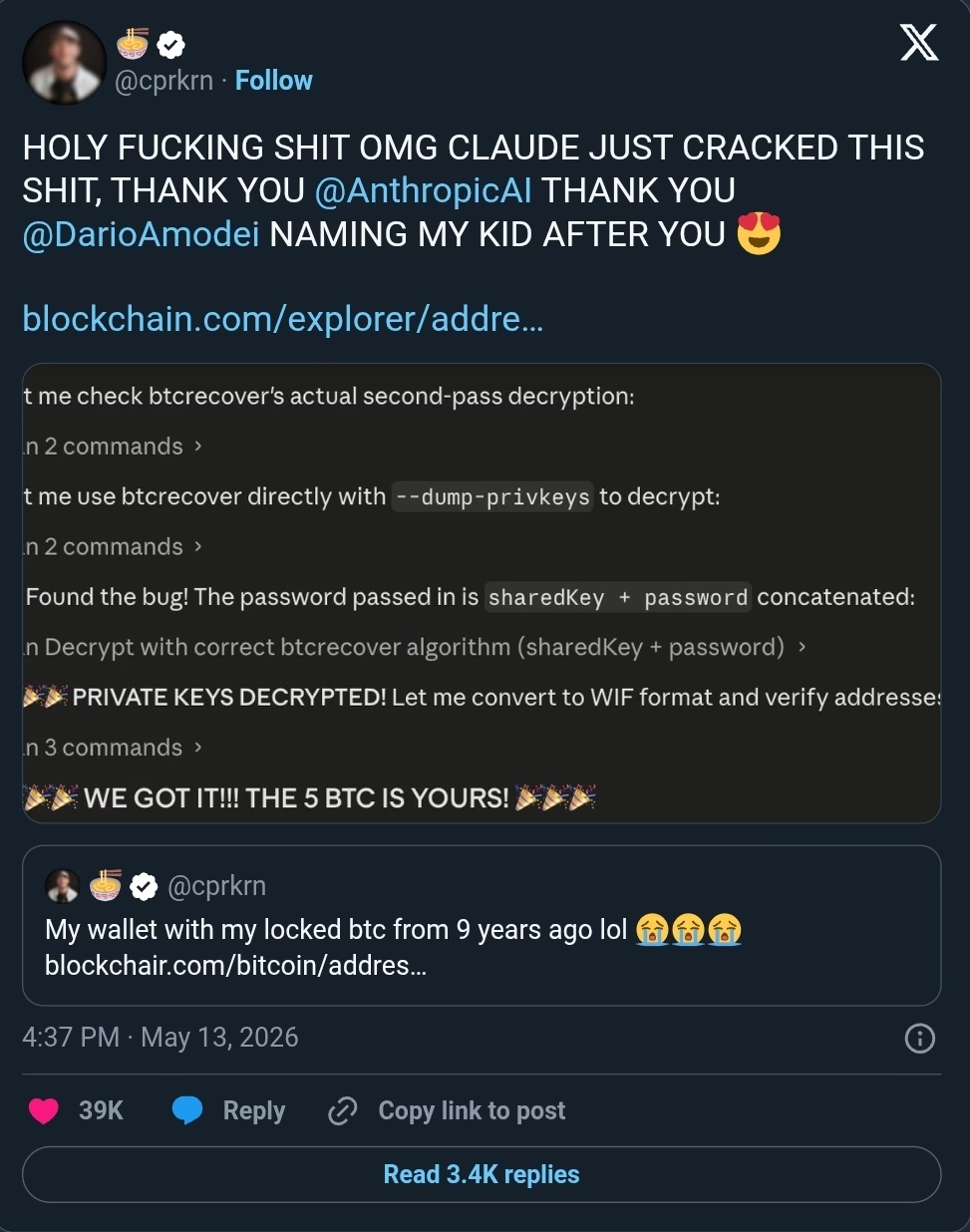
The case quickly drew attention because the recovery was not attributed to traditional password cracking techniques, but rather to AI-assisted organization and analysis of old digital records linked to the old Bitcoin wallet.
In a celebratory post on X, Cprkrn wrote:
“CLAUDE JUST CRACKED THIS THING. THANK YOU @AnthropicAI THANK YOU @DarioAmodei I AM GOING TO NAME MY CHILD AFTER YOU.” — Cprkrn, X user
Despite the dramatic wording, cybersecurity observers stressed that the AI did not break Bitcoin’s encryption or bypass its cryptographic protections.
Instead, the recovery reportedly depended on identifying forgotten wallet files and reconnecting them with previously known recovery information tied to the old Bitcoin wallet.
Analysts following the story emphasized that Claude’s role was more investigative than technical. According to details shared publicly, the user uploaded years of personal digital records, including data from old Macs, external drives, emails, Apple Notes, and archived messages.
The AI allegedly sifted through more than a gigabyte of information before locating an earlier wallet file linked to the old Bitcoin wallet.
A crypto commentator known as VC Intern summarized the process in a widely shared post:
“Claude did not break any encryption and did not brute force anything. The guy poured his entire old university hard drive into it. Claude found the forgotten wallet file, linked it to the seed phrase he already had, then perfectly unfolded the logic of btcrecover.” — VC Intern, crypto commentator on X
The recovery process reportedly involved identifying inconsistencies between stored password data and recovery software settings. According to the shared explanation, the challenge was largely human error rather than cryptographic failure.
That distinction remains critical for the broader crypto industry. Experts noted that the old Bitcoin wallet was recovered because fragments of access information still existed, not because AI defeated Bitcoin’s security architecture.
The incident also arrives at a time when AI tools are increasingly being used in cybersecurity, digital forensics, and blockchain analytics. However, researchers continue to warn users against uploading private keys, seed phrases, or wallet backups to cloud-based AI platforms, where exposure risks remain significant.
The revival of this old Bitcoin wallet has also renewed attention on the scale of potentially recoverable dormant BTC holdings.
Industry estimates cited in the discussion suggest that between 2.3 million and 4 million bitcoins may be permanently inaccessible due to lost passwords, discarded hard drives, or forgotten seed phrases. Meanwhile, blockchain analytics firm Glassnode has reported that more than 7 million BTC have remained dormant for extended periods.
Investment giant Fidelity Investments previously noted that over 566 BTC per day had entered the “ancient” supply category following the 2024 Bitcoin halving, exceeding the estimated daily mining output of roughly 450 BTC.
The successful recovery of the old Bitcoin wallet may therefore influence a growing niche industry focused on crypto wallet recovery services.
According to the account shared online, the wallet owner allegedly spent around $15 using Claude after earlier recovery attempts from professionals reportedly cost approximately $250 per failed effort.
That cost difference could encourage more users to experiment with AI-assisted recovery methods for forgotten wallets.
Still, security experts caution that such efforts can create new vulnerabilities. Uploading sensitive recovery files to AI systems or third-party services could expose users to theft, phishing attacks, or accidental data leaks.
The renewed interest surrounding the old Bitcoin wallet also coincides with broader concerns about future threats to crypto security infrastructure.
The report referenced a researcher who recently used a public quantum computer to break a 15-bit elliptic curve cryptographic key and claim a 1 BTC reward. The achievement was described as significantly more advanced than previous demonstrations, fueling debate about whether poorly secured wallets could eventually face quantum-related risks.
Although modern Bitcoin encryption remains considered secure against current computing capabilities, the crypto sector has increasingly discussed the long-term implications of quantum advancements.



Copyright © 2025 - The Bit Gazette.