


- Trending
- Comments
- Latest

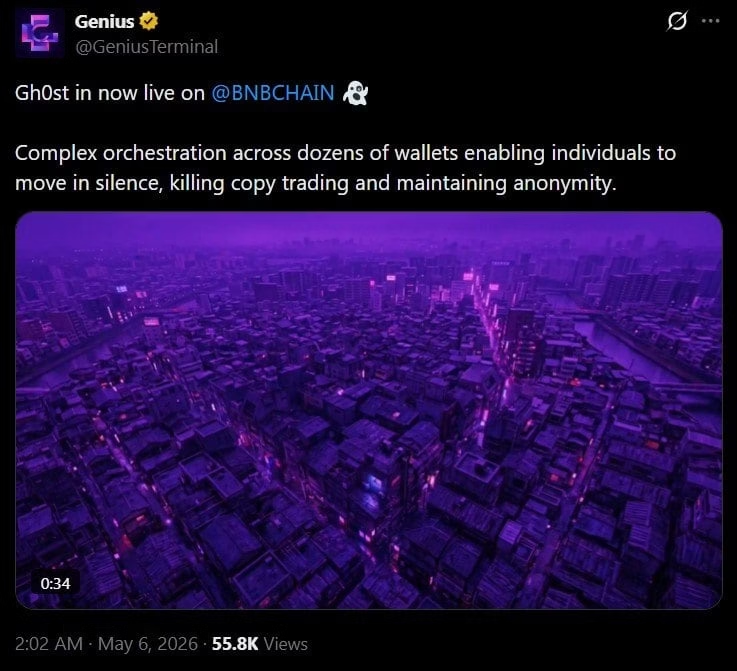
Gh0st Privacy Protocol has launched on BNB Chain with a multi-wallet orchestration system that routes trades through multiple intermediary addresses before execution, designed to prevent blockchain analytics firms and competing traders from tracking a user’s positions or transaction history.
The move places Gh0st Privacy Protocol among a fast-rising class of privacy-focused infrastructure projects attempting to solve one of blockchain’s oldest contradictions: fully transparent networks exposing sensitive user behavior.
The debut of Gh0st Privacy Protocol also arrives at a time when concerns around wallet tracking, front-running, phishing attacks, and blockchain surveillance continue to grow across the crypto industry.
According to the project, Gh0st Privacy Protocol works by routing trades through multiple intermediary wallets before execution occurs onchain. Instead of a direct connection between a trader’s public wallet and a completed swap, the protocol distributes activity across several addresses in real time.
That structure is intended to make it significantly harder for blockchain analytics firms, malicious actors, or competing traders to track positions, holdings, or transaction history.
Unlike privacy coins such as Monero, which obscure transaction data directly at the protocol level, Gh0st Privacy Protocol functions as a middleware privacy layer operating above BNB Chain’s existing infrastructure.
The approach resembles systems developed by projects such as Railgun, which uses zero-knowledge technology to shield decentralized finance transactions while remaining compatible with public blockchains.
Privacy infrastructure has increasingly become one of crypto’s fastest-growing sectors in 2026 as traders react to the unintended consequences of radical blockchain transparency.
Blockchain transparency was originally promoted as a core strength of decentralized systems. However, analysts now argue that permanently visible wallets create new forms of financial vulnerability.
“Public wallet visibility creates asymmetric risk for active market participants,” said blockchain researcher Vitalik Buterin in previous discussions surrounding onchain privacy. Buterin has repeatedly argued that privacy should be viewed as a normal feature of digital finance rather than a tool reserved for bad actors. The launch of Gh0st Privacy Protocol reflects that broader industry shift.
For active DeFi users, public transaction histories can reveal trading strategies, portfolio size, liquidation levels, and even personal financial behavior. Those disclosures have contributed to rising incidents of wallet-targeted scams, phishing attacks, and social engineering campaigns.
BNB Chain remains one of the largest decentralized finance ecosystems by total value locked, making the network an attractive target for privacy-focused tools like Gh0st Privacy Protocol.
The protocol’s developers argue that traders should be able to interact with decentralized markets without broadcasting every move to the public internet.
The timing of the Gh0st Privacy Protocol launch is particularly notable because BNB Chain itself has already outlined plans to introduce native privacy features later in 2026.
BNB Chain’s roadmap includes privacy-preserving smart contract calls and compliance-oriented confidentiality tools designed to give users more control over what transaction information becomes publicly visible.

That means Gh0st Privacy Protocol could eventually operate alongside the network’s own built-in privacy infrastructure rather than compete directly against it.
The expansion of privacy tooling is no longer isolated to one blockchain ecosystem. Projects including Aztec and COTI have also accelerated deployments aimed at improving transaction confidentiality across decentralized finance.
Industry observers say this trend reflects a maturing market increasingly focused on practical user protection rather than pure transparency.
Despite rising demand, privacy infrastructure remains politically sensitive across multiple jurisdictions.
Regulators globally have intensified scrutiny of privacy-enhancing crypto tools following sanctions placed on Tornado Cash in 2022 by the U.S. Treasury’s Office of Foreign Assets Control. Authorities argued that certain privacy services could enable illicit financial activity and money laundering.
That regulatory backdrop means projects such as Gh0st Privacy Protocol will likely face close attention as adoption grows.
Still, many crypto advocates argue that privacy tools themselves are neutral technologies.
“Privacy is a necessary component of open financial systems,” said Edward Snowden in past comments regarding digital surveillance and financial transparency. Supporters of privacy protocols frequently compare blockchain confidentiality to encrypted messaging, arguing that ordinary users deserve basic financial protection online.

The launch of Gh0st Privacy Protocol demonstrates how quickly the market is evolving beyond simple token speculation toward infrastructure designed to solve deeper usability and security problems.
The arrival of Gh0st Privacy Protocol on BNB Chain signals that privacy is rapidly becoming one of decentralized finance’s next major battlegrounds.
As more capital moves onchain, traders are increasingly demanding tools that reduce surveillance risk while preserving the openness of blockchain systems. The success of Gh0st Privacy Protocol will likely depend on whether it can balance usability, compliance concerns, and effective privacy protections in a market that remains deeply divided over anonymity in crypto.



Copyright © 2025 - The Bit Gazette.