


- Trending
- Comments
- Latest

Justin Sun, founder of the Tron blockchain, says crypto cards are the next major distribution channel for stablecoins, a claim that carries strategic weight given that Tron currently hosts more USDT in circulation than any other network. His comments, posted on X, come as stablecoin transaction volumes hit an estimated $33 trillion in 2025, more than double the roughly $14 trillion processed by Visa.
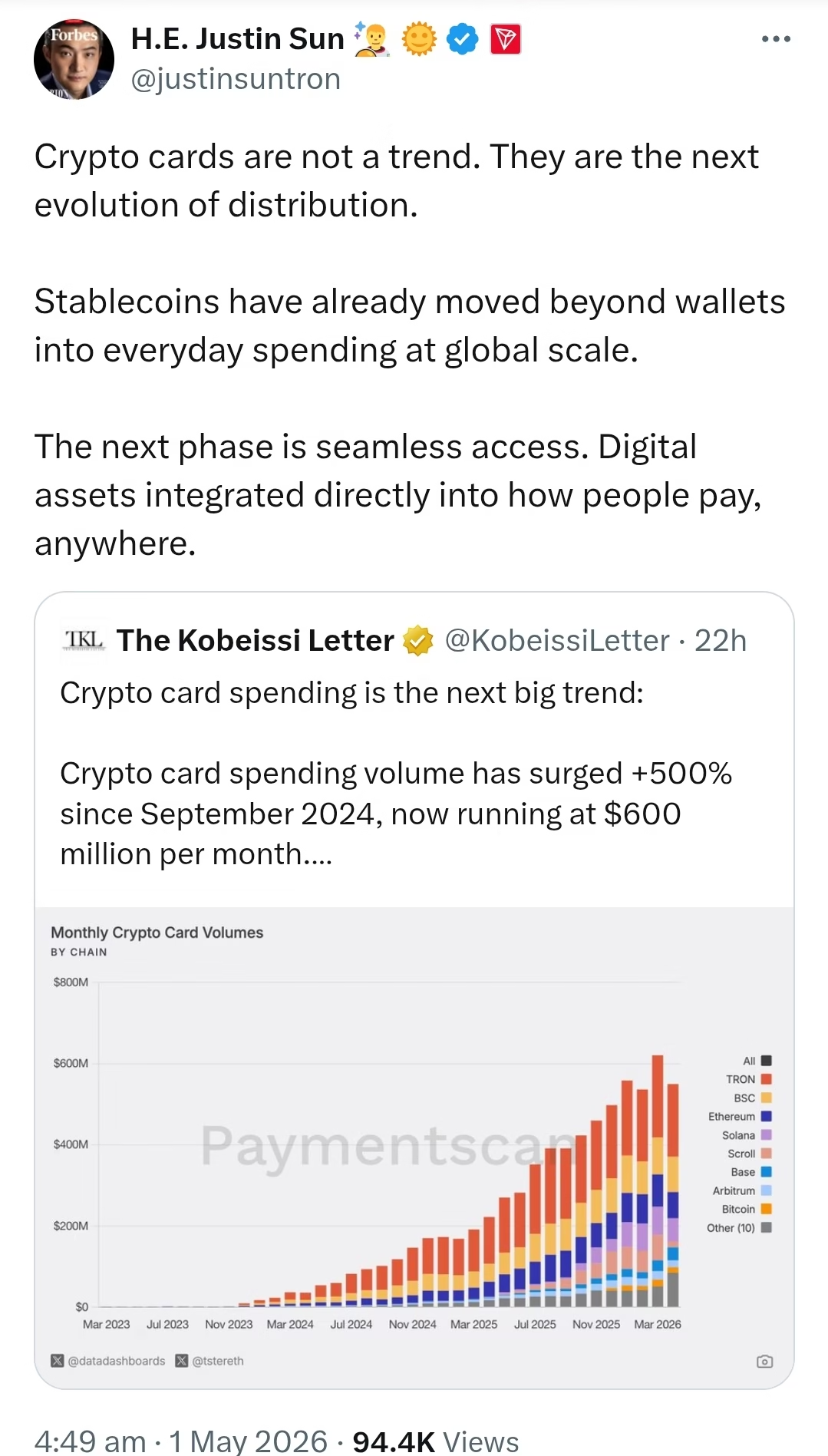
“Crypto cards are the ‘next evolution’ for stablecoin distribution,” — Justin Sun, Founder, Tron.
The growing relevance of Crypto cards reflects a broader industry effort to bridge the gap between decentralized finance and traditional payment rails, allowing users to spend digital assets seamlessly without needing specialized platforms.
The rise of Crypto cards is closely tied to the rapid expansion of the stablecoin market, which entered 2026 with a total supply of approximately $310 billion. Transaction volumes have surged across both crypto-native ecosystems and conventional financial networks, underscoring increasing adoption.
Data from Binance Research shows that stablecoins processed around $33 trillion in 2025. While much of this activity was driven by trading and liquidity flows, the consumer payments segment has also grown significantly. Crypto cards have played a central role in this shift, with spending volumes reaching levels comparable to peer-to-peer stablecoin transfers.
Where early adoption relied heavily on wallet-to-wallet transactions and decentralized finance protocols, Crypto cards are now enabling payments at physical and online merchants, cross-border transfers, and everyday purchases.
Major payment networks are accelerating this integration. has enabled stablecoin payments at more than 150 million merchants through partnerships such as MoonPay, while has expanded its settlement infrastructure to nine blockchain networks, supporting over 130 card programs across more than 50 countries.
“These are not pilots; they are live infrastructural offerings at scale,” — Industry data, Binance Research.
This expansion underscores how Crypto cards are transitioning from experimental tools into core components of global payment systems.
Sun’s advocacy for Crypto cards is closely linked to Tron’s strategic position within the stablecoin ecosystem. The Tron network currently hosts more USDT in circulation than any other blockchain, making it a critical infrastructure layer for global stablecoin transfers.
If Crypto cards become the dominant channel for spending stablecoins, Tron stands to benefit significantly from increased transaction volume flowing through its network. This places the company at the center of a rapidly evolving payments landscape.
Sun has consistently positioned Tron around real-world payment use cases, including the development of gasless transaction solutions designed to reduce friction for users. These efforts aim to make Crypto cards and stablecoin payments more accessible to a broader audience.
In addition, Sun has pointed to the convergence of artificial intelligence and blockchain-based payments, suggesting that emerging technologies could further accelerate adoption of Crypto cards in automated financial systems.
The emergence of Crypto cards reflects a broader transformation in the role of digital assets. Once primarily associated with speculation and trading, stablecoins are increasingly being used for practical financial activities.
The integration of Crypto cards into mainstream payment infrastructure highlights this shift, enabling users to interact with digital assets in ways that mirror traditional banking and payment experiences. From retail purchases to international remittances, the use cases for stablecoins continue to expand.
At the same time, analysts caution that transaction volume alone does not equate to consumer adoption, as a significant portion of stablecoin activity remains tied to market operations. However, the steady rise of Crypto cards suggests that the gap between institutional usage and everyday spending is narrowing.
As the ecosystem evolves, the role of Crypto cards will likely remain central to how digital assets are distributed and utilized globally, shaping the next phase of financial innovation.



Copyright © 2025 - The Bit Gazette.