

- Trending
- Comments
- Latest

Federal prosecutors in Massachusetts filed a civil forfeiture action on July 31 seeking to recover 47,461.73111 USDT, about $47,000, allegedly stolen from five victims through a government-impersonation and tech-support scam that routed cash through a cryptocurrency ATM. The case is the latest in a string of Massachusetts forfeiture actions targeting crypto ATM fraud proceeds this year.
The scheme allegedly began when a Ware, Massachusetts resident’s computer froze and displayed a pop-up warning directing her to call a support line. The person who answered told her that her bank account had been compromised and instructed her to move her money to “the government” for safekeeping.
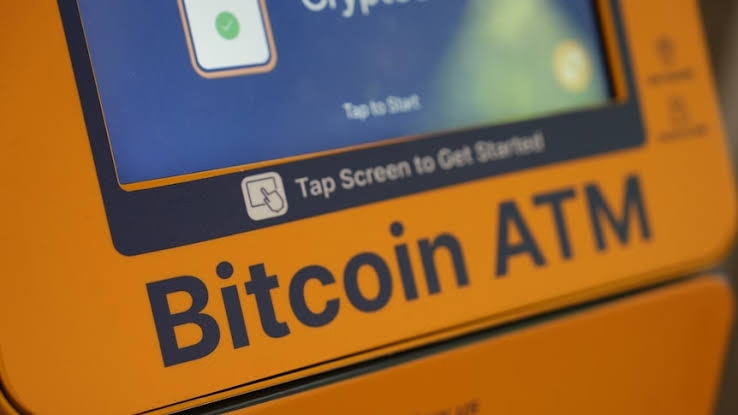
Following those instructions, prosecutors say, the victim withdrew cash from her bank and deposited it into a Bitcoin Depot-branded cryptocurrency kiosk at a gas station in Ludlow.
“At the direction of the scammers, the victim withdrew funds from their bank account and deposited them into a Bitcoin Depot brand cryptocurrency ATM at a gas station in Ludlow, Mass.”
Investigators traced part of the deposited funds to a single cryptocurrency wallet and seized them in March. That same wallet, prosecutors allege, received payments from four additional victims of similar schemes — bringing the total number of people affected to five.
The Ludlow case lands as crypto ATM fraud draws growing attention in Washington. The bipartisan Stop Crypto ATM Scams Act, introduced in the U.S. House on June 11, has not yet become law. As written, it would cap new customers’ transactions at $2,000 a day and $10,000 total during their first 14 days, require conspicuous fraud warnings at kiosks, create refund pathways for victims in certain cases, and tighten anti-money-laundering and recordkeeping rules for kiosk operators.
The bill follows FBI data showing Americans lost more than $333 million to crypto ATM scams in 2025. Separately, the Treasury’s Financial Crimes Enforcement Network and other regulators have pushed kiosk operators to strengthen anti-money-laundering controls and flag transaction patterns common among older and vulnerable victims, and have fined operators found to lack adequate compliance programs.
Investigators say the fraud pattern is consistent: spoofed caller ID, fabricated legal threats, and pressure to move money immediately, tactics designed to get victims to a kiosk before they have time to question the request.
The Ludlow filing extends a series of forfeiture actions by the U.S. Attorney’s Office in Massachusetts this year. On March 10, prosecutors filed to recover roughly $3.4 million in cryptocurrency tied to an alleged scheme that persuaded victims to buy ether for an investment falsely described as gold-backed.
A separate complaint filed March 2 sought about $327,829 connected to an online romance scam, in which funds allegedly moved through intermediary wallets, were converted to USDT, and were seized in August 2025.
“This is one of several civil forfeiture actions the U.S. Attorney’s Office has filed seeking to forfeit cryptocurrency traced to fraud schemes targeting Massachusetts victims.”
Civil forfeiture cases give third parties a window to assert ownership claims before a court rules on whether the government can keep the assets. If prosecutors prevail and no valid competing claims survive, recovered funds are typically returned to the fraud victims who lost them.



Copyright © 2025 - The Bit Gazette.