





- Trending
- Comments
- Latest

The SEC has approved Nasdaq’s proposal to list cash-settled Bitcoin index options on the Philadelphia Stock Exchange on an accelerated basis, but the products cannot begin trading until the CFTC grants exemptive relief, given Bitcoin’s classification as a commodity under U.S. law.
The approval allows Nasdaq’s Phlx exchange to introduce cash-settled Bitcoin index options tied to the Nasdaq Bitcoin Index, a benchmark derived from the CME CF Bitcoin Real Time Index. The SEC approved the proposal on an accelerated basis, according to an order published Friday.
The move signals continued momentum for regulated crypto derivatives under the leadership of SEC Chairman Paul Atkins, whose agency has increasingly adopted a more innovation-friendly approach toward digital assets and tokenized finance.
Still, Bitcoin index options cannot begin trading immediately because the Commodity Futures Trading Commission must first grant exemptive relief before the products become operational.
According to the SEC filing, the Bitcoin index options will trade under the ticker “QBTC” on Nasdaq’s Philadelphia Stock Exchange.
The contracts are structured as European-style options, meaning they can only be exercised at expiration rather than before maturity. Unlike physically settled crypto products, these Bitcoin index options are entirely cash-settled, eliminating the need for investors to directly hold or transfer Bitcoin.
The contracts are tied to the Nasdaq Bitcoin Index, which tracks one one-hundredth of the CME CF Bitcoin Real Time Index. That benchmark aggregates pricing data from major cryptocurrency exchanges and updates approximately every 200 milliseconds.
By using cash settlement, Bitcoin index options offer institutional and retail traders another way to gain exposure to Bitcoin price movements without the operational complexity associated with custody of digital assets.
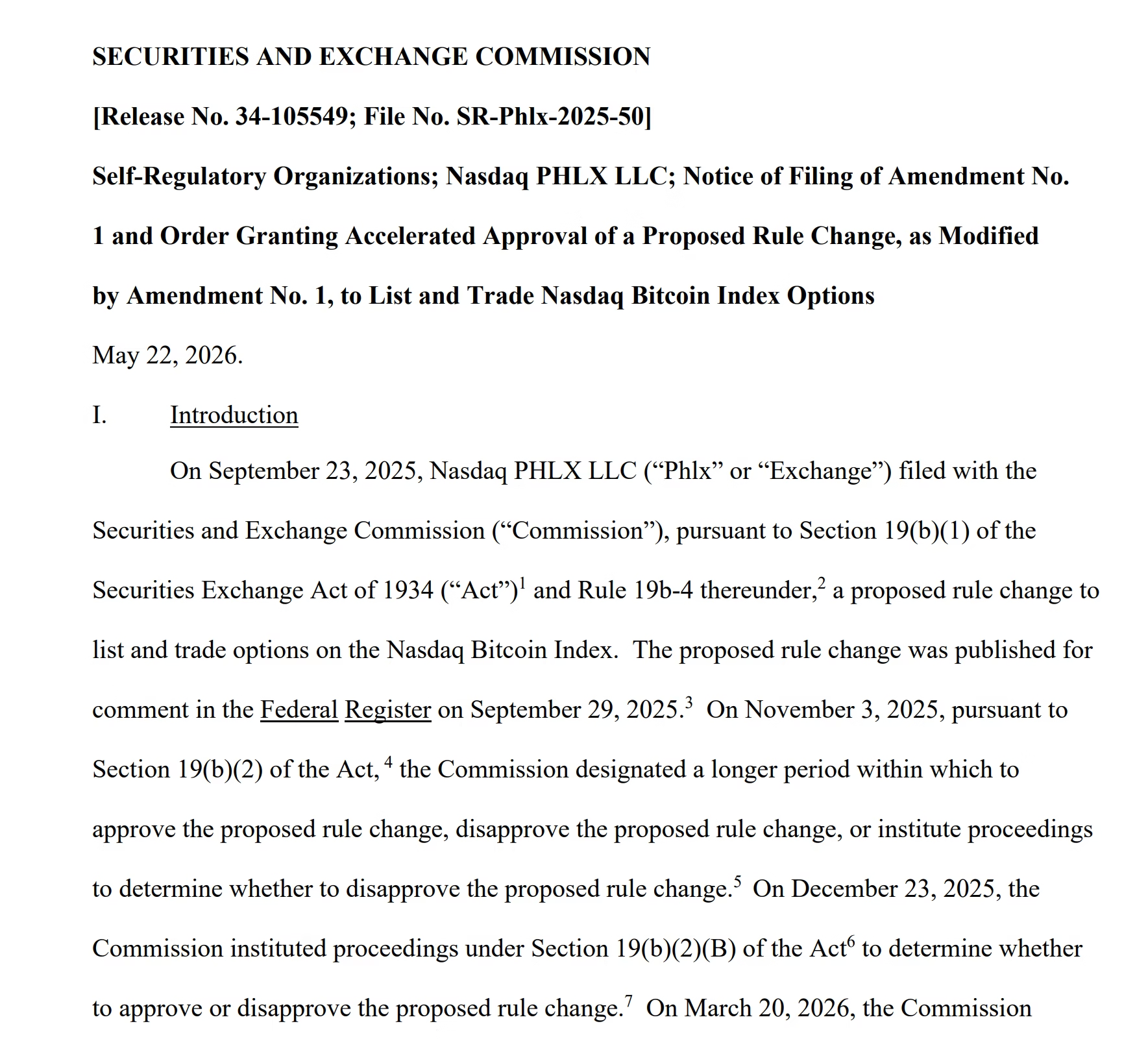
The SEC noted that the contracts will trade with a minimum increment of $0.01 and carry position limits of 24,000 contracts per side, representing roughly 0.12% of Bitcoin’s circulating supply.
The approval of Bitcoin index options reflects the growing appetite among institutional investors for regulated crypto derivatives products.
Over the past several years, major exchanges and financial institutions have steadily expanded their crypto offerings as Bitcoin matured from a speculative retail asset into a more widely recognized institutional investment vehicle.
Analysts say Bitcoin index options could become particularly attractive for hedge funds, market makers, and sophisticated traders seeking more advanced hedging and volatility strategies.
Because the products are cash-settled, Bitcoin index options remove some of the logistical and regulatory concerns tied to physically backed crypto trading.
That distinction separates them from spot Bitcoin ETF options, which remain directly linked to underlying Bitcoin holdings.
The introduction of Bitcoin index options also strengthens Nasdaq’s position within the increasingly competitive market for regulated digital asset derivatives.
Despite receiving SEC approval, the launch of Bitcoin index options still depends on the CFTC because Bitcoin is classified as a commodity under U.S. law.
That classification creates overlapping oversight responsibilities between the SEC and the CFTC, particularly for derivative-based products tied to crypto assets.
The SEC acknowledged this issue directly in its filing, noting that concurrent jurisdiction between both agencies is already well established in other financial products.
“The concept of shared jurisdiction between the Commission and the CFTC is not new,” the SEC stated, referencing examples such as mixed swaps and security futures.

CME Group, which has offered Bitcoin futures options since 2020, previously argued that products like Bitcoin index options fall primarily under the CFTC’s jurisdiction.
In a comment letter submitted last year, CME reportedly maintained that the derivatives framework surrounding Bitcoin products should remain within the commodity regulator’s oversight structure.
Even so, the SEC’s latest order suggests both agencies may continue cooperating on crypto market supervision as digital asset products become increasingly integrated into traditional finance.
The approval of Bitcoin index options also highlights the broader transformation currently underway at the SEC.
Under Atkins, the commission has moved away from the aggressive enforcement-driven approach that characterized much of the previous administration’s crypto policy.
Several high-profile lawsuits targeting digital asset firms have either been dropped or reevaluated, while regulators increasingly emphasize clearer rules designed to encourage innovation.
Atkins has repeatedly argued that blockchain technology and digital assets require modernized regulatory frameworks capable of supporting legitimate financial development.
Industry observers believe the approval of Bitcoin index options is part of a wider strategy aimed at integrating crypto infrastructure into regulated U.S. capital markets rather than isolating the sector.
That approach has already fueled speculation about upcoming tokenization rules and broader exemptions for blockchain-based financial products.
The SEC is also reportedly preparing an “innovation exemption” framework that could allow tokenized trading of public company shares on blockchain-based platforms, even without direct participation from the underlying issuers.
If implemented, the proposal could dramatically reshape how securities are traded, settled, and accessed through decentralized infrastructure.
The expansion of Bitcoin index options may therefore represent only one part of a much larger regulatory transition involving tokenization, digital settlement systems, and blockchain-native trading rails.

Financial institutions are increasingly betting that tokenized markets and crypto derivatives will become a permanent feature of the global financial system.
The approval of Bitcoin index options demonstrates how far regulated crypto finance has evolved in the United States.
Just a few years ago, Bitcoin derivatives faced significant resistance from regulators and traditional financial institutions alike. Today, products like Bitcoin index options are steadily becoming integrated into mainstream exchange infrastructure.
For institutional traders, the appeal lies in flexibility, liquidity, and regulated exposure to one of the world’s most volatile asset classes.



Copyright © 2025 - The Bit Gazette.