

- Trending
- Comments
- Latest

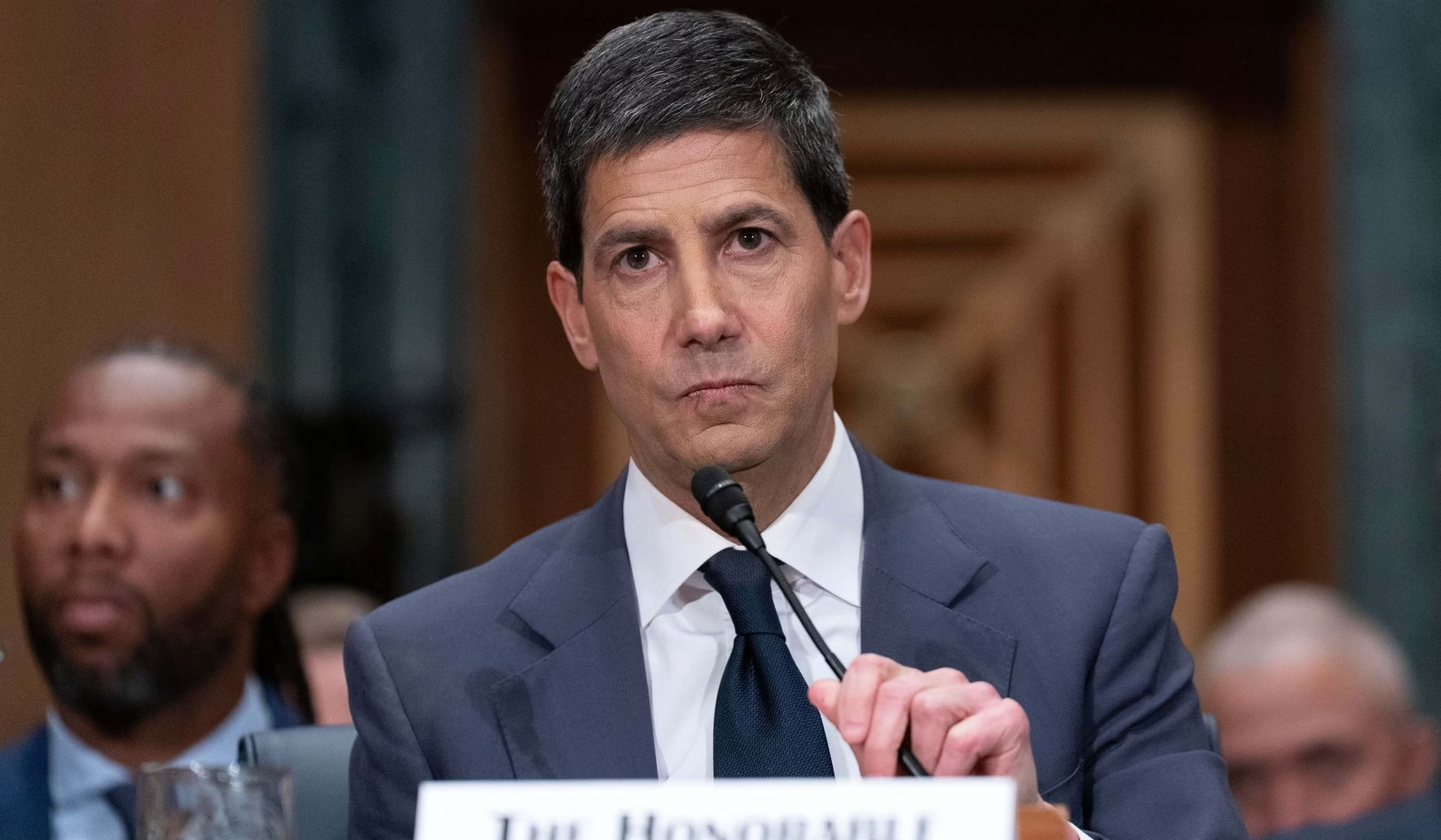
The U.S. Senate approved Kevin Warsh as a Federal Reserve governor by 51 votes to 45 on Wednesday, clearing the first procedural hurdle toward his potential nomination as Fed chair, a transition that crypto investors are watching closely given Warsh’s previously stated openness to Bitcoin as a store of value.
The vote, held in Washington amid ongoing debates over crypto regulation and central bank independence, immediately drew attention from financial markets and digital asset investors who see the incoming Federal Reserve Governor as more open to Bitcoin and financial innovation than many of his predecessors.
Warsh, who previously served at the Federal Reserve between 2006 and 2011, now finds himself at the center of two major developments shaping U.S. markets: the expected departure of current Fed Chair Jerome Powell and the Senate’s review of the Digital Asset Market Clarity Act, commonly known as the CLARITY bill.
The convergence of monetary transition and crypto legislation has placed the role of the next Federal Reserve Governor under intense scrutiny from investors, lawmakers, and banking institutions alike.
The Senate vote confirming Kevin Warsh as Federal Reserve Governor came after weeks of political debate surrounding the future direction of the U.S. central bank. Senators approved his nomination largely along party lines, with Democratic Senator John Fetterman emerging as a notable exception.
The confirmation secures Warsh a 14-year term as governor while also paving the way for a separate four-year term vote for Fed chairmanship later this week.
The political backdrop surrounding the incoming Federal Reserve Governor remains especially sensitive because Powell’s term as Fed chair expires Friday, even though his position as a governor technically extends until 2028. Former President Donald Trump has repeatedly criticized Powell in recent years, fueling broader concerns over the independence of the central bank.
For investors, the transition raises important questions about the future path of interest rates, inflation control, liquidity conditions, and financial oversight. Markets traditionally react strongly to changes involving the Federal Reserve Governor, given the institution’s direct influence on credit markets, equities, bonds, and increasingly, cryptocurrencies.
At the same time, traders are assessing whether Warsh’s reputation as a supporter of innovation could alter the Federal Reserve’s broader posture toward digital assets.
The debate surrounding the next Federal Reserve Governor is unfolding during a pivotal week for the cryptocurrency industry in the United States.
Lawmakers on the Senate Banking Committee are currently reviewing the CLARITY bill, legislation designed to establish a clearer regulatory framework for cryptocurrencies and stablecoins. The committee recently released an updated version of the proposal that includes compromise provisions related to stablecoin yields, an issue that has generated strong reactions from both crypto firms and traditional banks.
The overlap between the Federal Reserve Governor confirmation process and crypto legislation has amplified investor interest, particularly among institutional traders looking for signs of regulatory stability.
If approved by the committee this week, the CLARITY bill could move to the full Senate floor, potentially reshaping oversight of digital asset markets in the United States.
For market participants, the combination of regulatory reform and a new Federal Reserve Governor could significantly influence risk appetite and liquidity flows into digital assets.
The crypto sector continues to depend heavily on two major forces: monetary policy and regulatory clarity. A more defined legal framework may reduce uncertainty for exchanges, stablecoin issuers, and institutional investors, while Federal Reserve policy decisions remain critical for overall market liquidity.
Much of the attention surrounding the incoming Federal Reserve Governor stems from Kevin Warsh’s previous comments about Bitcoin and financial innovation.
Warsh has often been described as open to cryptocurrencies and supportive of technological progress within financial markets. Investors increasingly view his appointment as potentially favorable for Bitcoin, particularly at a time when institutions are seeking clearer macroeconomic signals.
In an appearance on CNBC’s Squawk Box, Warsh acknowledged Bitcoin’s possible role as a long-term store of value comparable to gold.
“Bitcoin’s possible role as a durable store of value,” — Kevin Warsh, former Federal Reserve official, during CNBC’s Squawk Box interview.
In another discussion at the Hoover Institution, Warsh suggested Bitcoin served as a useful market indicator rather than a threat to financial stability.
“Bitcoin did not make me nervous,” — Kevin Warsh, during an interview at the Hoover Institution.
Warsh also compared Bitcoin’s generational appeal to gold, particularly among younger investors.
“For those under 40, Bitcoin represents their new gold,” — Kevin Warsh, former Federal Reserve official.
Those remarks have strengthened the perception that the incoming Federal Reserve Governor may adopt a less confrontational stance toward digital assets than some policymakers in Washington.
Still, analysts caution that Warsh’s appointment alone does not guarantee a sustained rise in Bitcoin prices. Broader market conditions, interest rate policy, inflation trends, and congressional regulation will continue shaping crypto market performance.
As the Senate prepares for a final vote, investors are closely watching how the next Federal Reserve Governor could influence both traditional finance and digital assets in the months ahead.
The transition comes at a critical moment for U.S. markets, where questions surrounding monetary independence, stablecoin oversight, and crypto regulation continue to dominate financial discussions..



Copyright © 2025 - The Bit Gazette.