







- Trending
- Comments
- Latest

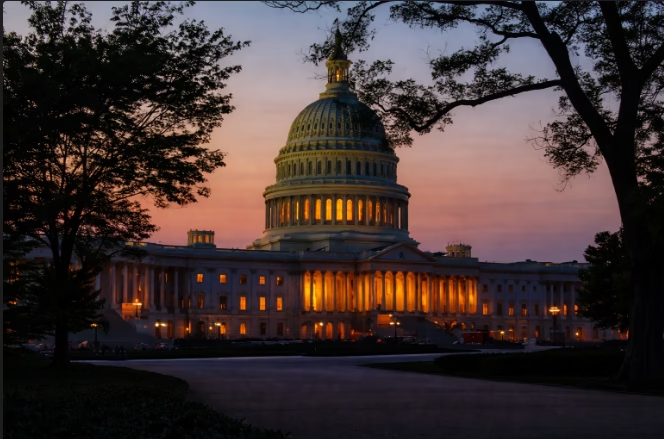
More than 100 amendments have been filed to the Clarity Act ahead of a Senate Banking Committee markup session Thursday, with Senator Elizabeth Warren alone submitting over 40 proposals, including one that would bar cryptocurrency firms from accessing Federal Reserve master accounts, according to POLITICO and congressional correspondent Eleanor Terrett.
The latest wave of Clarity Act amendments includes dozens of proposals from Democratic lawmakers and several revisions from Republican sponsors of the bill. Senator Warren alone reportedly submitted more than 40 amendments ahead of the committee markup.
According to journalist Eleanor Terrett, one of Warren’s proposals would prevent the Federal Reserve from granting master accounts to cryptocurrency companies, a move that could significantly limit crypto firms’ access to core banking infrastructure.
Another proposal, filed by Senator Jack Reed, seeks to prohibit cryptocurrencies from being used as legal tender, including for tax payments.
“News: Sens. Reed (D-R.I.) and Smith (D-Minn.) have filed an amendment ahead of Thursday’s markup that will force senators to choose between crypto and the banks,” — Brendan Pedersen, journalist, in a post on X.
The mounting list of Clarity Act amendments highlights continuing disagreements within Congress over how aggressively digital assets should be regulated, particularly in relation to banking access, stablecoins, and consumer protections.
The current tally mirrors tensions seen earlier this year, when committee members filed 137 amendments before a planned January markup session.
The growing fight over the Clarity Act amendments has also drawn heavy lobbying from the traditional banking sector.
According to a source cited by Eleanor Terrett, the American Bankers Association has sent more than 8,000 letters to Senate offices since last Friday. The outreach campaign reportedly centers on stablecoin yield restrictions included in a compromise negotiated by Senators Thom Tillis and Angela Alsobrooks.
The banking industry has expressed concerns that some provisions tied to stablecoin yields could blur the lines between regulated banks and digital asset firms.
“The amendment would incorporate bank’s changes to stablecoin yield restrictions. Tough tough vote for bank-friendly Rs,” — Brendan Pedersen, journalist, in a post on X.
The intense lobbying campaign underscores how the Clarity Act amendments have evolved beyond a crypto policy discussion into a broader battle over the future structure of the American financial system.
Supporters of the bill argue the legislation would provide long-awaited regulatory certainty for digital asset companies operating in the United States. Critics, however, warn that parts of the legislation could weaken existing financial safeguards or give crypto firms privileges similar to banks without equivalent oversight.
Thursday’s markup session is expected to determine whether the revised legislation advances to the Senate floor, where debate over the Clarity Act amendments could become even more contentious.
The revised 309-page draft reportedly introduces several additional policy provisions and expanded regulatory language compared to the earlier January version.
While lawmakers have not publicly detailed every proposed amendment, the growing number of filings reflects deep divisions over how the federal government should oversee cryptocurrencies, stablecoins, and blockchain-based financial services.
“The CLARITY Act vote is coming up this Thursday. It decides whether the Senate Banking Committee advances the updated draft to the full Senate floor,” — BeInCrypto, in a post on X.
The outcome of the markup vote could influence not only the future of the bill itself but also the broader direction of U.S. crypto regulation at a time when lawmakers face increasing pressure from both the banking industry and digital asset advocates.
As senators continue negotiating the final language, the Clarity Act amendments remain at the center of one of the most closely watched regulatory battles in Washington. With more than 100 proposals already filed, the committee vote is shaping up to be a pivotal moment for the cryptocurrency industry and for lawmakers attempting to define the rules governing digital finance in the United States.



Copyright © 2025 - The Bit Gazette.

