

• Trending
  • Comments
  • Latest
The Louvre needed police escorts to move crypto attendees: Decentralised money just decentralised the danger

The Louvre needed police escorts to move crypto attendees: Decentralised money just decentralised the danger

04/18/2026
AI People joins Dubai’s innovation one — Declares war on the forgetting of humanity

AI People joins Dubai’s Innovation One program: Declares war on the forgetting of humanity

07/22/2025 - Updated on 07/23/2025
XRP community

Ripple CEO reassures community after SWIFT selects rival blockchain for pilot

02/10/2026
Polygon Discord Channel Hacked, Throws Crypto Community in Turmoil

Polygon Discord Channel Hacked, Throws Crypto Community in Turmoil

2
Bitcoin reclaims $107,000 as Iran-Israel ceasefire cools market tensions

Bitcoin reclaims $107,000 as Iran-Israel ceasefire cools market tensions

2

Hello world!

1
FATF stablecoin regulation

Stablecoins are dismantling the remittance fee model that Western Union and MoneyGram built over decades

05/01/2026
MegaETH token

MegaETH hits $200 million market cap within hours of simultaneous launch across 13 exchanges

04/30/2026
Iran-linked crypto exchanges

US Treasury sanctions 35 entities and freezes $344 million in crypto linked to Iran’s shadow banking network

04/30/2026
  • Trending
  • Comments
  • Latest
The Louvre needed police escorts to move crypto attendees: Decentralised money just decentralised the danger

The Louvre needed police escorts to move crypto attendees: Decentralised money just decentralised the danger

04/18/2026
AI People joins Dubai’s innovation one — Declares war on the forgetting of humanity

AI People joins Dubai’s Innovation One program: Declares war on the forgetting of humanity

07/22/2025 - Updated on 07/23/2025
XRP community

Ripple CEO reassures community after SWIFT selects rival blockchain for pilot

02/10/2026
Polygon Discord Channel Hacked, Throws Crypto Community in Turmoil

Polygon Discord Channel Hacked, Throws Crypto Community in Turmoil

2
Bitcoin reclaims $107,000 as Iran-Israel ceasefire cools market tensions

Bitcoin reclaims $107,000 as Iran-Israel ceasefire cools market tensions

2

Hello world!

1
FATF stablecoin regulation

Stablecoins are dismantling the remittance fee model that Western Union and MoneyGram built over decades

05/01/2026
MegaETH token

MegaETH hits $200 million market cap within hours of simultaneous launch across 13 exchanges

04/30/2026
Iran-linked crypto exchanges

US Treasury sanctions 35 entities and freezes $344 million in crypto linked to Iran’s shadow banking network

04/30/2026
Friday, May 1, 2026
  • Login
The Bit Gazette
  • Home
  • Crypto News
  • Expert Analysis
  • Finance
  • Tech
  • Sponsored
  • Press Release
  • Opinion
No Result
View All Result
The Bit Gazette
No Result
View All Result
Home Opinion

Stablecoins are dismantling the remittance fee model that Western Union and MoneyGram built over decades

A silent financial insurgency is already underway, as stablecoins dismantle the high-friction economics that sustained traditional remittance giants for decades.

by Joseph Samuel
34 minutes ago
in Opinion
Reading Time: 3 mins read
0
FATF stablecoin regulation
Share on FacebookShare on Twitter

In cities like Lagos, Manila, and Buenos Aires, users are bypassing legacy rails not out of ideological alignment with crypto, but because stablecoins simply work better.

A trader receiving USDT doesn’t think about blockchain, they think about instant settlement, lower fees, and avoiding currency volatility.

This ground-level adoption signals something more structural: the remittance business model, long protected by regulatory inertia and infrastructure barriers, is being dismantled from the edges inward.

The structural weakness of legacy remittance systems

Traditional remittance providers such as Western Union and MoneyGram built their dominance on geographic reach and regulatory compliance.

However, their model depends on intermediated liquidity, correspondent banking networks, and layered fees.

According to the World Bank, the global average remittance cost remains above 6%, far from the UN’s 3% target. These costs are not incidental, they are embedded in the system.

Every transaction involves multiple entities: sending agents, receiving agents, settlement banks, and FX providers. Each layer extracts value. For decades, this complexity created a moat but stablecoins collapse that stack.

Stablecoins as a zero-intermediary settlement layer

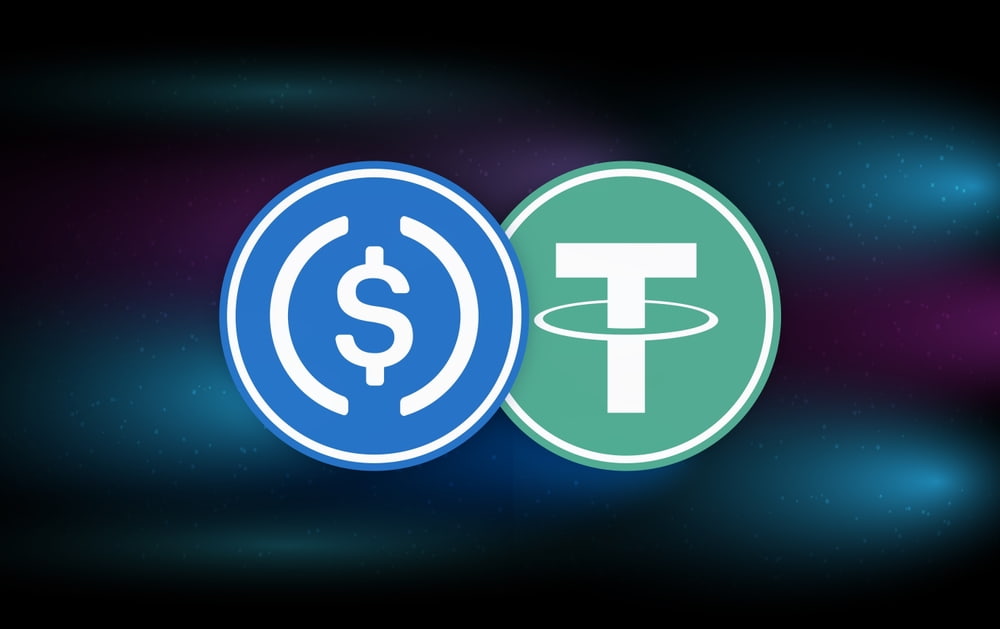
Stablecoins like USDC and USDT function as programmable dollars that move across blockchain networks without intermediaries.

A sender in the U.S. can transfer value directly to a recipient in Nigeria within minutes, often at a fraction of a dollar in fees. There is no correspondent bank, no delayed settlement window, and no FX spread in the traditional sense.

This is not just faster, it fundamentally alters the economics of remittance. The role of “trusted middlemen” becomes redundant when trust is embedded in transparent, verifiable ledgers.

Visa itself acknowledged this shift, noting the growing relevance of stablecoin settlement in cross-border payments.

When incumbents begin adapting to the disruptor’s model, it signals structural pressure, not experimentation.

Liquidity, not technology, is the real disruption

The real breakthrough is not blockchain, it is dollar liquidity distribution. Stablecoins effectively export U.S. dollar liquidity into regions where access to hard currency is constrained.

For recipients, holding stablecoins is often preferable to local currency due to inflation risk.

This dynamic transforms remittance from a “send-and-cash-out” process into a persistent financial layer. Funds received as stablecoins can be stored, traded, or reused without ever re-entering the legacy banking system.

Chainalysis data shows that emerging markets dominate grassroots crypto adoption, driven largely by stablecoin usage rather than speculative trading.

The collapse of fee-based monopolies

Legacy remittance firms rely heavily on transaction fees and FX spreads. Stablecoins erode both simultaneously.

When users can send $1,000 across borders with near-zero fees and minimal slippage, the willingness to pay 5–10% disappears.

This is not a gradual decline, it is a compression event. Margins that once seemed durable are being arbitraged away by open networks.

Even more critically, stablecoins introduce competition at the protocol level.

Anyone can build a wallet, integrate payments, or offer liquidity services. This open access model contrasts sharply with the closed networks of traditional providers.

The result is a fragmentation of market power. No single entity controls the rails, and therefore no single entity can enforce pricing dominance.

Regulatory friction as the final barrier

Despite the momentum, regulation remains the last meaningful defense for legacy systems.

Compliance requirements, licensing regimes, and capital controls still shape how easily stablecoins can replace traditional remittance channels.

However, this barrier is weakening. Governments are increasingly recognizing the efficiency gains of blockchain-based settlement.

The Financial Stability Board has outlined frameworks for stablecoin regulation that aim to integrate rather than eliminate their use.

As regulatory clarity improves, the remaining friction points for stablecoin adoption will diminish, accelerating their competitive advantage.

The endgame: infrastructure replacement, not competition

What makes this shift profound is that stablecoins are not merely competing with remittance companies, they are replacing the underlying infrastructure those companies depend on.

For investors and analysts, the implication is clear: this is not a cyclical disruption but a structural replatforming of global money movement.

The winners will not be those who optimize legacy rails, but those who build on or integrate with stablecoin networks.

The Remittance Execution is already in motion. The only question is how long legacy monopolies can sustain a business model that the market has already begun to abandon.


Tags: blockchain paymentscross-border paymentsdigital assetsfinancial inclusionfintech innovationglobal financelow-cost transfersMoneyGrampayment disruptionremittancesstablecoinsWestern Union
Share196Tweet123
Joseph Samuel

Joseph Samuel

Samuel Joseph is a professional writer with experience creating clear, engaging, and well-researched crypto contents. He specializes in Crypto contents, educational articles, debate pieces, and informative reviews, with a strong ability to adapt tone to suit different audiences. With a passion for simplifying complex ideas and presenting them in a compelling way, he delivers content that informs, persuades, and connects with readers. Samuel is committed to accuracy, originality, and continuous improvement in his craft, making him a reliable voice in digital publishing.

  • Trending
  • Comments
  • Latest
The Louvre needed police escorts to move crypto attendees: Decentralised money just decentralised the danger

The Louvre needed police escorts to move crypto attendees: Decentralised money just decentralised the danger

04/18/2026
AI People joins Dubai’s innovation one — Declares war on the forgetting of humanity

AI People joins Dubai’s Innovation One program: Declares war on the forgetting of humanity

07/22/2025 - Updated on 07/23/2025
XRP community

Ripple CEO reassures community after SWIFT selects rival blockchain for pilot

02/10/2026
Polygon Discord Channel Hacked, Throws Crypto Community in Turmoil

Polygon Discord Channel Hacked, Throws Crypto Community in Turmoil

2
Bitcoin reclaims $107,000 as Iran-Israel ceasefire cools market tensions

Bitcoin reclaims $107,000 as Iran-Israel ceasefire cools market tensions

2

Hello world!

1
FATF stablecoin regulation

Stablecoins are dismantling the remittance fee model that Western Union and MoneyGram built over decades

05/01/2026
MegaETH token

MegaETH hits $200 million market cap within hours of simultaneous launch across 13 exchanges

04/30/2026
Iran-linked crypto exchanges

US Treasury sanctions 35 entities and freezes $344 million in crypto linked to Iran’s shadow banking network

04/30/2026
The Bit Gazette

Copyright © 2025 - The Bit Gazette.

Navigate Site

  • About
  • Advertise
  • Privacy & Policy
  • Contact

Follow Us

Welcome Back!

Login to your account below

Forgotten Password?

Retrieve your password

Please enter your username or email address to reset your password.

Log In
No Result
View All Result
  • Home
  • Crypto News
  • Expert Analysis
  • Finance
  • Tech
  • Sponsored
  • Press Release
  • Opinion

Copyright © 2025 - The Bit Gazette.