Tag: binance

  • Giant golden CZ statue erected in Washington days after Trump pardon sparks controversy

    Giant golden CZ statue erected in Washington days after Trump pardon sparks controversy

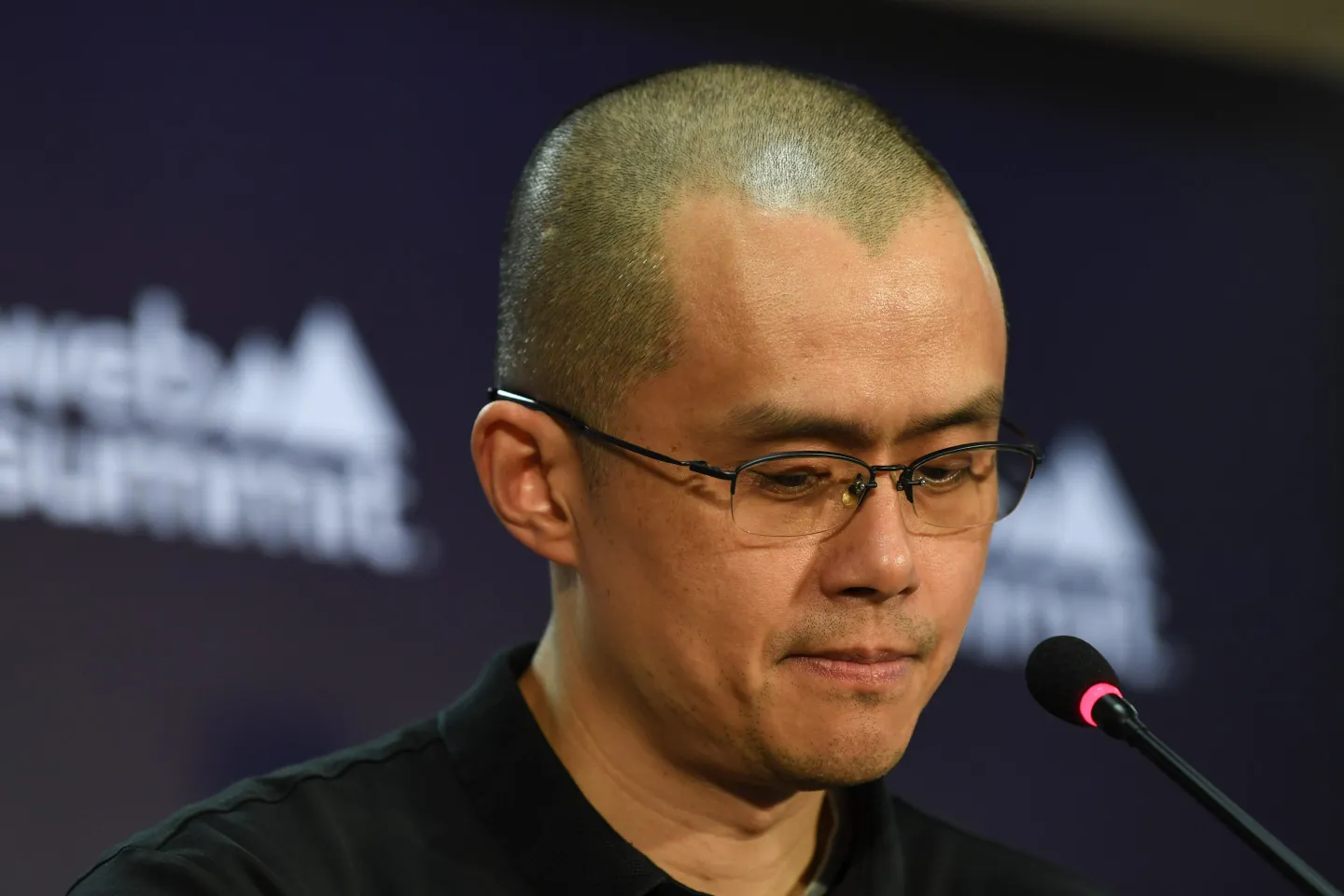
    A 14-foot golden statue of Binance founder Changpeng Zhao has been unveiled in Washington, D.C., just days after President Donald Trump pardoned the former crypto executive who pleaded guilty to money laundering violations in 2024.

    The $50,000 monument, funded by anonymous crypto donors, has ignited fresh debate over the intersection of cryptocurrency influence and political power in the nation’s capital.

    The statue portrays CZ flashing four fingers, a gesture tied to his 2023 aim of pushing through fear, uncertainty, and doubt. Organizers emphasized the symbolic nature of the piece in a climate where public attention to crypto leadership remains high.

    Crypto community erects CZ statue in U.S. capital

    Anonymous crypto donors have funded the 14-foot-tall gold-painted CZ statue in Washington, D.C., to honor Binance founder Changpeng Zhao.

    This initiative comes shortly after U.S. President Donald Trump pardoned Zhao, marking a significant moment for the crypto leader. The statue depicts CZ flashing four fingers, representing his 2023 mission to overcome fear, uncertainty, and doubt amid intense regulatory scrutiny.

    $50,000 raised anonymously to fund the CZ statue

    Four anonymous crypto enthusiasts contributed roughly $50,000 to bring the CZ statue to life, revealed organizer Nick Zee.

    The statue was meticulously crafted over four weeks using advanced CNC milling technology on dense foam blocks, then coated in gold paint. It will be publicly displayed for a few hours before being gifted or auctioned to benefit CZ’s nonprofit, Giggle Academy.

    Symbolism and community support behind the CZ statue

    Zee explained that the CZ statue symbolizes resilience in the face of criticism and regulatory pressure.

    “The gesture four fingers raised embodies CZ’s goal to push past fear, uncertainty, and doubt,” he said. The statue’s creation also followed a surge in Binance Coin (BNB) price and ongoing community backing, reinforcing Zhao’s influence in the crypto world.

    Presidential pardon reignites attention on CZ statue

    In 2024, Zhao was indicted and served time in a California minimum-security prison after pleading guilty to anti-money laundering violations, stepping down as Binance CEO.

    Last week, President Trump’s pardon sparked widespread debate. White House Press Secretary Karolike Levitt stated, “The pardon reflects constitutional authority exercised amid political targeting by the previous administration.”

    Mixed reactions to CZ’s pardon and statue unveiling

    Senator Elizabeth Warren sharply criticized the pardon, stating, “Changpeng Zhao pleaded guilty to criminal money laundering charges and later sought political favors.

    This pardon exemplifies corruption.” In contrast, supporters highlight the CZ statue as a symbol of resilience for the crypto community amid heavy regulatory hurdles.

    CZ statue joins a growing trend of crypto monuments in D.C.

    This CZ statue follows recent efforts to honor prominent crypto figures with public monuments in Washington, D.C. Another gold statue featuring former President Trump clutching a Bitcoin was erected nearby last month, signaling increasing cultural recognition of crypto’s impact.

    Crypto projects tie-in and market impact linked to CZ statue

    The Binance-linked BNB Chain issued a memecoin called CZSTATUE associated with the statue project, currently valued at approximately $577,000. The statue unveiling coincides with notable gains in BNB’s price, which recently hit record highs despite recent minor corrections.
  • Same trader, same questions: $56K CZ pardon bet reignites crypto insider trading debate

    Same trader, same questions: $56K CZ pardon bet reignites crypto insider trading debate

    A crypto trader who made $190 million shorting Bitcoin and Ethereum hours before Trump’s 2018 tariff announcement has sparked fresh insider trading speculation after profiting $56,000 from a Polymarket bet on a CZ pardon — the second time the same wallet has appeared to correctly predict major political-economic events with suspicious timing.

    The pattern has reignited debate within the crypto community about whether the trader possesses privileged information, particularly after on-chain analysts linked the recent CZ pardon wager to the same wallet used in the 2018 short position that preceded a sharp market decline.

    Previous trading history resurfaces amid CZ pardon speculation

    The trader first became widely known after anticipating the market impact of a presidential tariff announcement in 2018, shorting Bitcoin and Ethereum ahead of a notable price drop.

    That event drew speculation about insider knowledge. Years later, the same trader’s decision to place funds on the CZ pardon outcome has triggered similar reactions.

    Source: X @JacobKinge

    On-chain observers traced activity from a wallet associated with the earlier trades to the recent Polymarket position tied to the CZ pardon. The outcome resulted in a profit of over $56,000, which, while smaller than the trader’s earnings from the Bitcoin short, has still led analysts to question whether the individual had insights into political or legal developments involving the Binance founder.

    Some commentators argue that the CZ pardon was already widely anticipated in certain market circles, reducing the significance of the trader’s move. Others continue to contend that the timing of the wager is difficult to dismiss as coincidence.

    Disagreement over whether bet implies insider knowledge

    The CZ pardon bet has renewed debate around whether the trader’s performance reflects exceptional analysis or unfair informational advantage. Some industry observers highlighted discussions that connected a $2 billion investment by Changpeng Zhao into the WLFUSD stablecoin with speculation surrounding the possible CZ pardon.

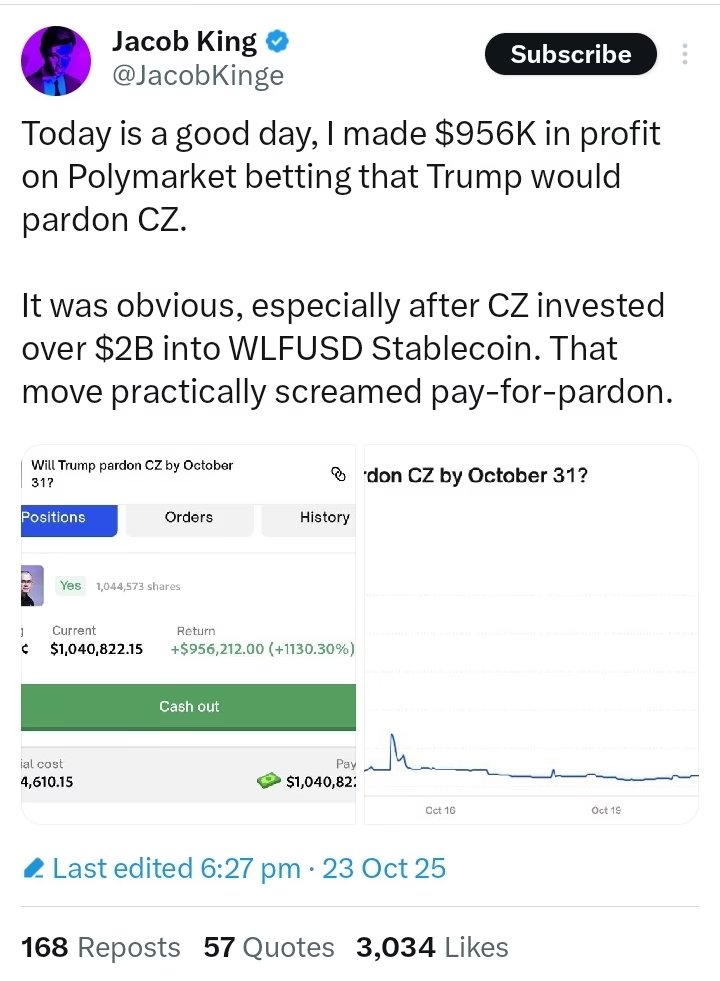
    Jacob King, CEO of Swan Desk, argued that the CZ pardon scenario seemed “obvious,” suggesting that Zhao’s financial activities pointed toward that outcome.

    He added that the investment “practically screamed pay-for-pardon,” indicating that he believed the motivations were observable rather than hidden. King disclosed that he personally earned $956,000 betting on the same CZ pardon outcome, suggesting that informed speculation was available to those following developments closely.

    Others pointed out commentary from online personalities, including the claim that the trader might “know something others don’t,” though no evidence has surfaced confirming access to confidential details regarding the CZ pardon.

    Former BitForex CEO rejects alleged wallet connection

    The speculation surrounding the CZ pardon has also revived past claims involving the identity of the trader behind the wallet used in both the 2018 short and the recent Polymarket wager.

    Garrett Jin, former CEO of BitForex, has previously been linked to the wallet in question. Jin, however, rejected those claims and reiterated that the wallet does not belong to him.

    He clarified that while his firm manages client funds and provides internal research insights, it does not engage in insider trading or market manipulation. Jin’s denial has not fully ended speculation but has underscored that direct attribution of the wallet remains unconfirmed.

    As the conversation surrounding the CZ pardon continues, market participants remain divided. For some, the profitability of the Polymarket bet demonstrates strategic market understanding.

    For others, the timing and connections involved continue to raise unresolved concerns about fairness and information access within the crypto ecosystem.

  • Market maker retracts Binance system failure claims after exchange releases technical logs from October crash

    Market maker retracts Binance system failure claims after exchange releases technical logs from October crash

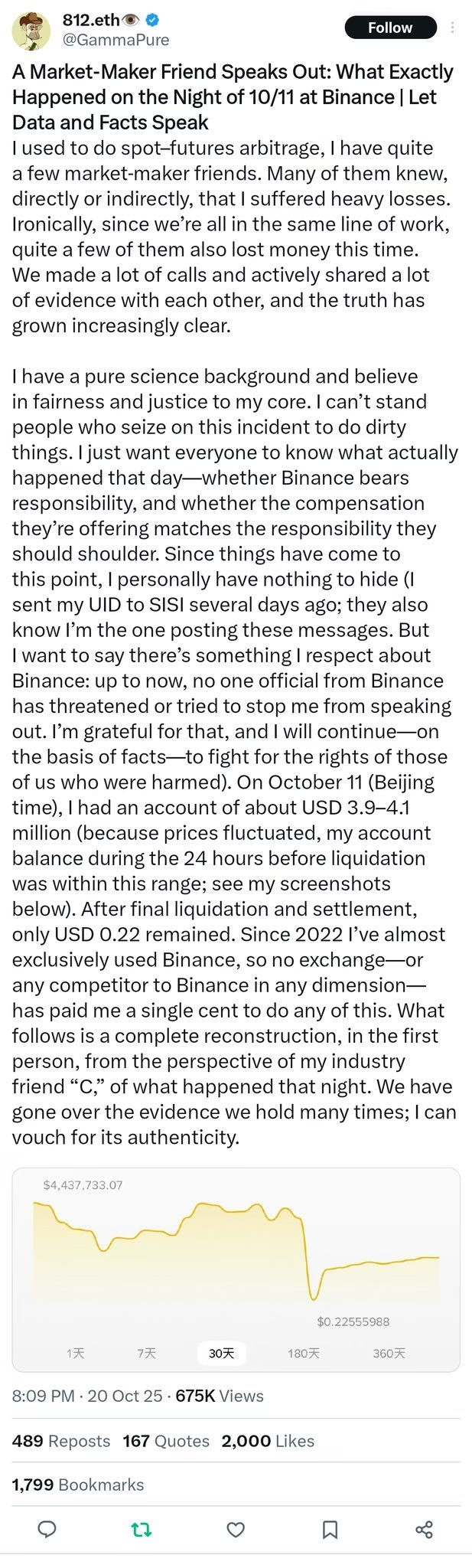
    A market maker’s deleted post has sparked renewed debate around Binance trading glitch allegations following the October 10 market crash that wiped billions from global crypto markets. The post, published by trader GammaPure, accused Binance of failing to execute automated orders and freezing key trading functions at the height of market turmoil.

    The controversy erupted after the trader abruptly deleted his post, triggering speculation about possible suppression or private settlements. Binance, the world’s largest cryptocurrency exchange, later released technical logs disputing the claims, asserting that no trading malfunction occurred during the crash.

    GammaPure’s claims added fuel to existing criticism of Binance’s handling of high-volatility events. Users have long alleged that the exchange benefits when systems fail during critical price movements.

    However, after reviewing Binance’s technical evidence, GammaPure retracted his statements, clarifying that the Binance trading glitch allegations were unfounded.

    “Yesterday, I created a group chat with some colleagues from Binance… My main argument was that ‘API orders failed, and reduce-only orders returned a 503 error.’ But Binance’s technical team provided complete logs… which showed that the reduce-only orders never encountered a 503 error,” — GammaPure, trader, on X.

    A Part of GammaPure’s Deleted Post. Source: X/Rektko

    Crash chaos and transparency concerns

    The controversy traces back to the crypto market collapse that followed President Trump’s tariff escalation on October 10. The sudden drop triggered massive sell-offs across exchanges, freezing billions in liquidations. Traders reported halted stop-loss orders, frozen accounts, and widespread delays — incidents that formed the basis of the Binance trading glitch allegations.

    Binance initially attributed the disruptions to “intense trading activity,” insisting that its systems remained operational throughout the crash. Nevertheless, users across social media platforms expressed doubts, with some accusing Binance of selectively prioritizing market makers or internal accounts.

    An X user, @CryptoZachLA, questioned the deletion of GammaPure’s post, writing:

    “Anyone find it odd the long post from @GammaPure regarding how @binance… failed during the crash is now deleted? The cabal is doing cabal things. Silencing people.”

    Despite these suspicions, Binance maintained its position that its systems operated normally. The exchange pointed to its October 14 announcement of a $400 million recovery fund designed to compensate affected traders — a move intended to stabilize confidence after the crash.

    GammaPure clarifies reason for deletion

    In a follow-up post, GammaPure stated that he deleted his earlier comments after meeting with Binance’s technical team and verifying the exchange’s data. He said the company provided detailed logs proving there was no 503 error for reduce-only orders, effectively debunking his original claim.

    “The main account management team and their responsible staff reviewed the global logs and confirmed that there was no 503 error for reduce-only orders,” — GammaPure, in a later X post.

    The trader also addressed rumors that he had received “hush money” from Binance to retract his statements. He explained that his only compensation came from Binance’s Together Initiative, a standard recovery program for users impacted by the October 10 events.

    “Some followers said Binance ‘paid me to keep quiet.’ The truth is: only those who met the criteria and hadn’t filed a claim received payments,” — GammaPure, via X.

    He emphasized that his decision to step back was based on accuracy, not external pressure. “I decided to step back because I could no longer confirm what information was accurate,” he wrote, urging followers not to spread misinformation.

    Ongoing scrutiny for Binance amid regulatory headwinds

    While GammaPure’s retraction appears to have calmed immediate controversy, the Binance trading glitch allegations underscore broader industry concerns about exchange transparency and crisis communication. Binance has faced mounting global scrutiny from regulators, particularly over operational integrity and user protection during high-volatility events.

    Analysts suggest that the incident could intensify pressure on Binance to adopt greater public auditing mechanisms and real-time disclosure practices during market disruptions. For many traders, the rapid deletion of GammaPure’s post has raised enduring questions about accountability in centralized crypto exchanges.

    Still, the incident also highlights the power of open dialogue between users and exchanges in resolving disputes. By releasing internal system logs, Binance may have set a precedent for addressing future technical concerns more transparently.

    For now, the Binance trading glitch allegations remain a cautionary episode in the crypto industry’s ongoing struggle for trust, transparency, and stability during turbulent market conditions.

  • CZ warns traders as hackers hijack verified crypto accounts to promote fake meme coins

    CZ warns traders as hackers hijack verified crypto accounts to promote fake meme coins

    Changpeng “CZ” Zhao issued an urgent warning to crypto traders on Sunday after a series of verified social media accounts—including BNB Chain and PancakeSwap—were hijacked to promote fake meme coins that collectively trapped millions in exit scams.

    The former Binance CEO told his 11 million X followers that even official accounts posting contract addresses can no longer be trusted, as hackers increasingly target verified badges to manufacture legitimacy.

    “With the rise of meme coins, hackers are targeting social media accounts (as they usually have lower security measures) to post CAs [contract addresses],” — CZ, on X. “Beware that official accounts do not endorse any specific memes,” he added.

    High-profile hacks fueling the meme coins scam trend

    The latest meme coins scam wave saw the BNB Chain X account compromised to promote a fake BNB meme coin disguised as an airdrop event. The hacker behind the attack pooled users’ funds into a meme token named “4”, only to execute a rug pull and profit about $4,000 before abandoning the scheme.

    In a twist, the BNB community mocked the attacker by buying and pumping the token’s price by 500% after the hack, before letting it collapse again.

    “Interestingly, after the hacker dumped ALL his tokens for a $4k gain, the community took over and bought the meme coin higher, as a mock to the hacker. Funniest comeback by the community!” — CZ, commenting on the incident.

    Just weeks earlier, the PancakeSwap X account suffered a similar hack on October 8. The attacker used the compromised account to promote a coin called “Sir Pancake”, which recorded $20 million in trading volume shortly after launch.

    The meme coins scam trend has extended beyond crypto. In late 2024, rapper Drake’s X account was hacked to promote a fake coin called ANITA, which reached $4.9 million in volume. Similarly, in February 2025, Dior’s account was compromised to market a fake DIOR meme coin that soared 138% in value before crashing by 90% when the brand regained control.In another case, Walt Disney Instagram account was hacked to promote a fake Solana meme coin.

    Meme coins scam reshaping the BNB ecosystem

    Despite repeated meme coins scam warnings, trading activity within the BNB Smart Chain (BSC) ecosystem has surged. Meme coin launchpads like Four.Meme and PancakeSwap have driven record DEX volumes, with Four.Meme briefly overtaking Solana-based Pump.fun in 24-hour revenue earlier this month.

    CZ, maintaining a neutral stance, acknowledged the meme coins scam trend as both a risk and a sign of market creativity. He emphasized the importance of utility-driven projects instead of speculative tokens.

    “I didn’t expect this at all. And people keep asking me to predict the future… Keep building!” — CZ, celebrating what he called the ‘BNB meme season’.

    Earlier this year, CZ had described the BNB meme coin ecosystem as “immature,” following an influx of dog-themed coins inspired by his pet dog, Broccoli. Despite skepticism, the trend has accelerated, drawing traders from Solana to BNB’s growing meme culture.

    The balancing act between innovation and deception

    The rise in meme coins scam incidents underscores the ongoing tension between crypto innovation and investor protection. While meme coins often represent creativity and community humor, their association with fraudulent schemes threatens wider trust in the industry.

    Experts warn that social media-based scams could intensify unless stronger security and verification standards are enforced. For now, CZ’s reminder serves as a timely warning: in a space where virality drives value, even a verified account can’t guarantee legitimacy.

  • CZ demands custody audits after $100M crypto treasury firm pumps 960% then collapses

    CZ demands custody audits after $100M crypto treasury firm pumps 960% then collapses

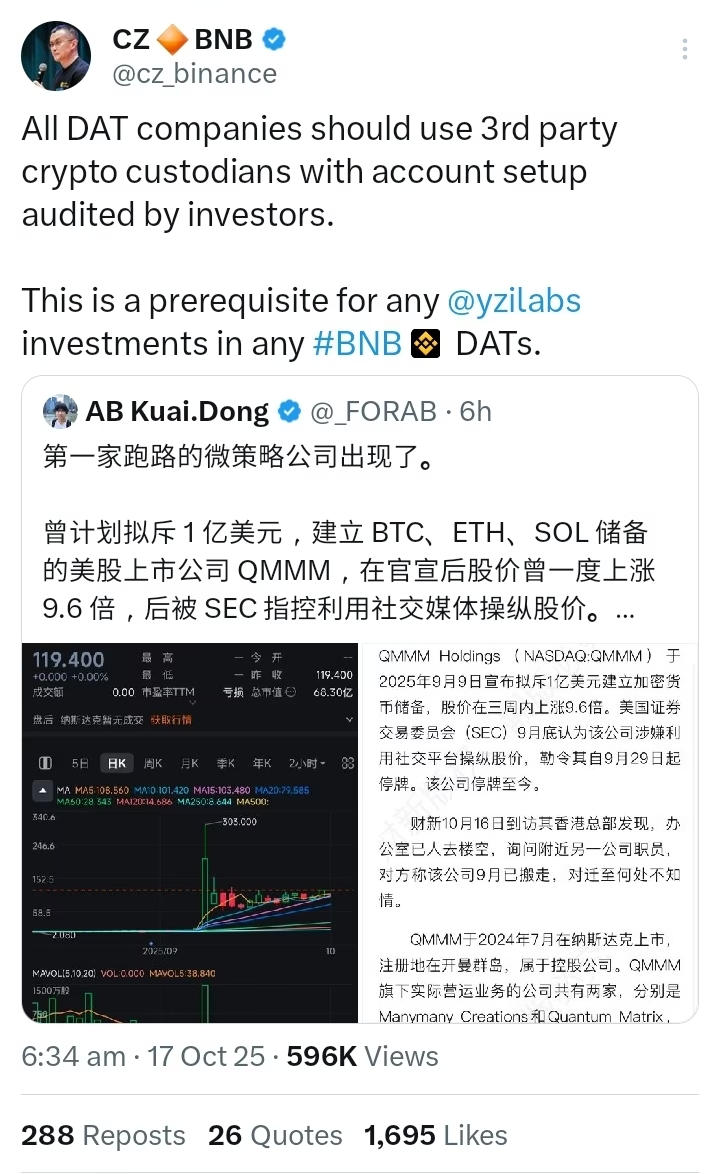
    Binance founder Changpeng Zhao is demanding mandatory QMMM collapse audit, insisting third-party custody audits for all crypto treasury companies after QMMM—a U.S.-listed firm that surged 960% on a $100 million Bitcoin reserve announcement—collapsed to near zero amid SEC fraud allegations.

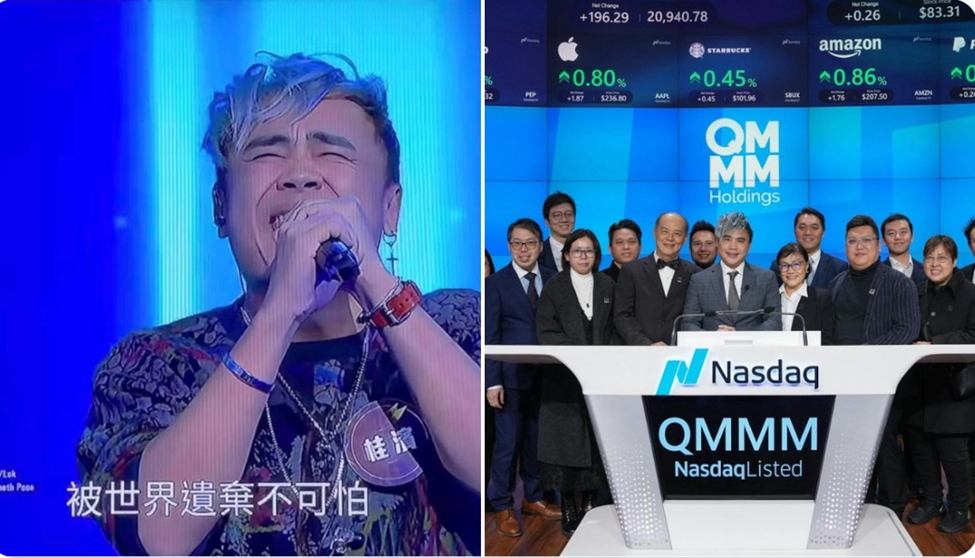
    The company’s Hong Kong office has been vacated and its founder, former TV personality Kwai Bun, is reportedly missing as trading remains halted. The spectacular pump-and-dump, which some are calling “the runaway MicroStrategy,” has reignited calls for stricter oversight in the emerging digital asset treasury sector.

    CZ demands third-party custodians and investor audits

    In an X (Twitter) post, CZ stated that all DAT firms should undergo custodial oversight and investor-led auditing, making this a new prerequisite for YZi Labs’ investments in BNB-affiliated treasury projects.

    The QMMM collapse audit comes after the company’s September announcement of a plan to build a $100 million diversified crypto treasury focusing on Bitcoin (BTC), Ethereum (ETH), and Solana (SOL).

    “As part of this initiative, QMMM is establishing a diversified cryptocurrency treasury, initially focusing on Bitcoin, Ethereum, and Solana. The treasury is expected to scale to an impressive $100 million,”  QMMM announcement.

    However, within days of that statement, the SEC accused QMMM of manipulating stock prices via social media campaigns. Soon after, reports from Caixin revealed that QMMM’s Hong Kong office, located in the Seaview Building, had been vacated — sparking fears that the company’s executives had fled the country.

    “They pumped the headlines and dumped the truth”

    The crypto community has reacted sharply to the revelations surrounding the QMMM collapse audit, with many calling it a classic case of speculative hype gone wrong.

    One pseudonymous X user, The Master Builder, commented that QMMM “pumped the headlines and dumped the truth,” calling the company’s meteoric rise a “bait trap” for retail investors.

    Further investigation revealed that QMMM’s founder and CEO, KWAI Bun, a former Hong Kong TV personality and singing competition participant, had pivoted into crypto finance in 2024. The company went public that same year at $4 per share, raising $8.6 million. Its stock later skyrocketed to $303 before collapsing to just $0.54.

    QMMM’s founder and CEO, KWAI Bun. Source: Lin on X

    The SEC subsequently halted trading after uncovering inflated trading volumes and suspected Reddit-driven hype manipulation — key findings now central to the ongoing QMMM collapse audit.

    Industry reckoning and the road ahead

    Analysts describe the QMMM collapse audit as a cautionary tale — a stark reminder of the dangers of unchecked hype, leverage, and opaque treasury practices. The scandal’s ripple effect is already prompting calls for regulatory action and self-governance within the crypto-treasury ecosystem.

    CZ’s push for investor-audited accounts and third-party custodians reflects a broader attempt to rebuild trust and enforce accountability across DAT companies, especially those integrating digital assets into their corporate balance sheets.

    The incident has reignited questions about whether speculative firms are undermining the legitimacy of genuine corporate crypto adoption. As one industry observer noted, “Discernment may be the only hedge left when hype outpaces substance.”

    In the wake of the QMMM collapse audit, market players are bracing for heightened scrutiny — and perhaps, long-overdue reform in how digital asset treasuries operate.


  • Coinbase includes BNB in listing plans shortly after critic calls out rival token exclusions

    Coinbase includes BNB in listing plans shortly after critic calls out rival token exclusions

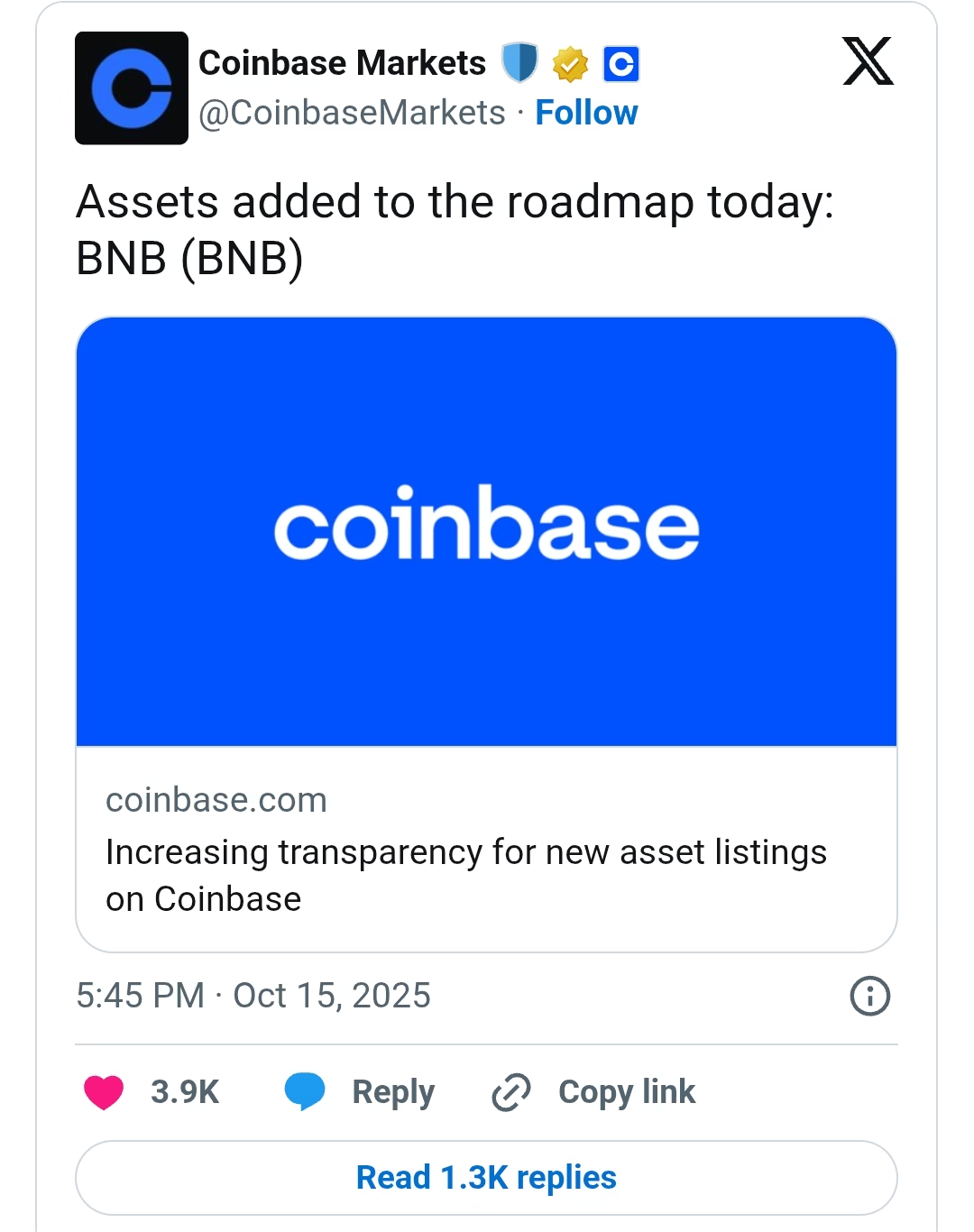
    Coinbase added Binance’s BNB token to its listing roadmap on Wednesday, just 33 minutes after unveiling a new “Blue Carpet” program designed to make crypto asset listings more transparent and accessible. The move marks a significant shift for the exchange, which has historically avoided listing tokens from rival platforms.

    While roadmap inclusion doesn’t guarantee an immediate listing, the decision signals Coinbase’s willingness to consider high-performing assets from competitors following industry criticism of its selective listing practices. BNB, the native token of Binance’s ecosystem, is the fifth-largest cryptocurrency by market capitalization at approximately $170 billion.

    Source: X@ Coinbase

    The Blue Carpet Program Simplifies Listings

    Coinbase has launched the Blue Carpet program, which provides asset issuers with direct access to the listing team, page customization, referral discounts, and Coinbase One seats. The initiative is designed to streamline the listing process and promote fair access to high-quality tokens.

    Jesse Pollack, head of protocol at Coinbase, said the Blue Carpet program aims to make exchange listings ‘cost-free’ while providing ‘transparent and equal treatment to projects while maintaining market integrity.’

    The program allows projects to update their asset pages on both centralized exchanges and retail DEXs, so that users always see accurate and current information.

    Source: Arca

    BNB Joins Coinbase Roadmap

    BNB, Binance’s native token, joined Coinbase’s roadmap shortly after the Blue Carpet program was announced. While being added to the roadmap does not guarantee immediate listing, it does demonstrate Coinbase’s commitment to reviewing high-performing rival tokens.

    A Coinbase spokesperson said: “BNB’s addition reflects our goal of providing fair access to the best-performing crypto assets.”

    BNB’s inclusion ensures that the token will only trade once it has the technical infrastructure, market-making support, and regulatory compliance verified.

    Market Reaction and Price Impact

    BNB briefly rose by about 2% after Coinbase’s listing announcement, reaching $1,175, but later stabilized around $1,164.33 after a 4.7% decline in 24 hours.

    Despite this brief volatility, analysts see the move as a milestone for BNB and Coinbase users.

    Public Criticism and Industry Background

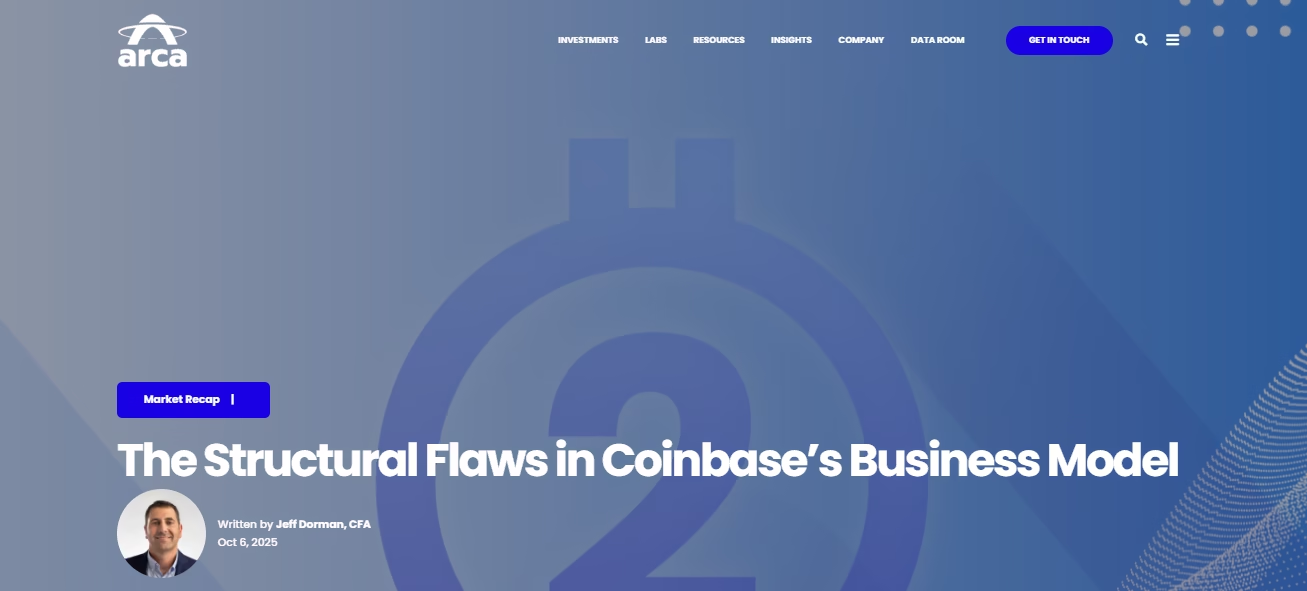
    The announcement comes after Arca CIO Jeff Dorman publicly criticized Coinbase for its reluctance to list high-performing rival tokens. Dorman said that BNB outperformed many assets and praised its revenue-backed buybacks and strong tokenomics.

    Dorman added: “Alternatives should either list with broad neutrality, or focus on only the best assets.”

    BNB originally launched in 2017 as a trading fee discount token and now serves as the primary gas token for BNB Chain transactions, payments, staking, and governance.

    Technical and Regulatory Considerations

    Coinbase clarified that inclusion in the roadmap does not guarantee immediate trading. If tokens do not meet liquidity, technical, or regulatory standards, listing may be delayed or rejected.

    Trading will only begin once these standards are confirmed, ensuring market stability and investor protection.

    Strategic Implications for Coinbase and BNB

    By including BNB in ​​the roadmap, Coinbase strengthens its position in the competitive exchange landscape and signals to rival token communities that high-performing assets can now access the platform.

    The move is expected to increase institutional interest, improve liquidity, and provide users with broader trading options.

    BNB’s Path After Inclusion

    If regulatory approval and market conditions remain favorable, BNB could soon begin trading on Coinbase and increase adoption among its global users. BNB’s inclusion demonstrates Coinbase’s ready listing strategy and desire to integrate high-performing rival tokens for the benefit of users around the world.

  • Bitcoin pioneer Roger Ver settles $50M tax case, avoids prison in DOJ deal

    Bitcoin pioneer Roger Ver settles $50M tax case, avoids prison in DOJ deal

    The Roger Ver indictment has officially come to an end after years of legal back and forth between the early Bitcoin investor and U.S. authorities. Roger Ver, famously dubbed “Bitcoin Jesus” for his early evangelism of cryptocurrency, reached a settlement with the U.S. Department of Justice (DOJ) agreeing to pay nearly $50 million in back taxes, penalties and interest to the Internal Revenue Service (IRS).

    According to the DOJ, the Roger Ver indictment was resolved through a deferred prosecution agreement under which Ver admitted he willfully failed to report his Bitcoin holdings when he renounced his U.S. citizenship in 2014. Prosecutors claimed this omission caused a $16.9 million loss to the government.

    With the settlement finalized, the DOJ has dropped the criminal charges tied to the Roger Ver indictment.

    “Mr. Ver is accepting responsibility for his actions and has agreed to pay a substantial penalty,” Said Acting U.S. Attorney Bill Essayli in a statement released on Tuesday.

    Ver, who became a citizen of St. Kitts and Nevis in 2014 was arrested in Spain last year and later extradited to the United States. His case was handled by the IRS Criminal Investigation Cyber Crimes Unit, which specializes in tax evasion involving digital assets. The Roger Ver indictment had been closely watched across the crypto world due to Ver’s long standing reputation as one of Bitcoin’s earliest and most influential promoters.

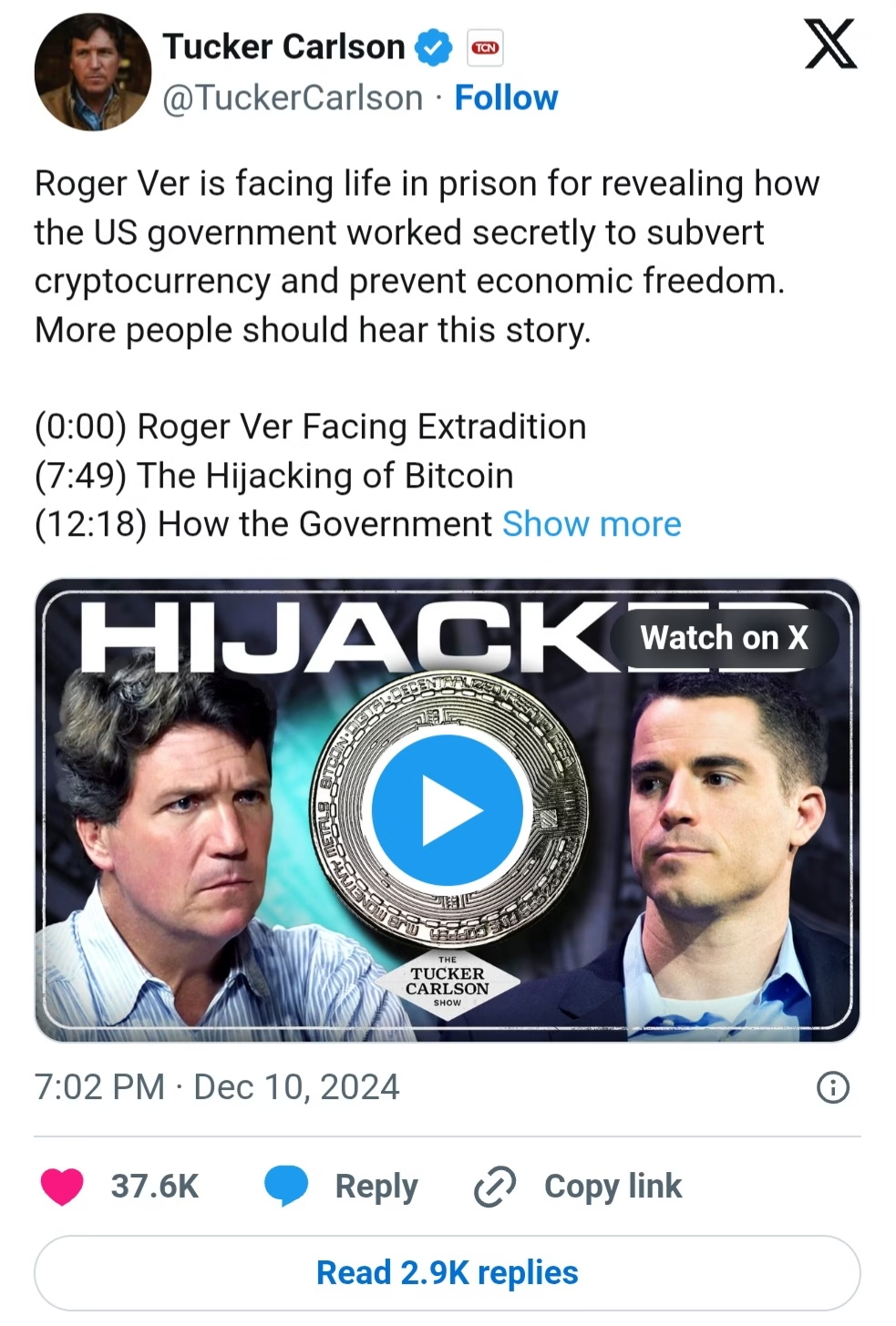
    Reports earlier this month indicated that Ver and the DOJ were close to finalizing a resolution to the $48 million tax evasion case. The conclusion of the Roger Ver indictment coincided with heightened political speculation surrounding potential pardons from Donald Trump. On prediction platform Polymarket odds of a Trump pardon for Ver surged to 50% before falling back to around 13% after the DOJ’s settlement announcement.
    Throughout the Roger Ver indictment Ver appeared to leverage political connections to influence his legal outcome. He reportedly paid $600,000 to Trump ally Roger Stone to lobby against certain tax provisions linked to his case. Lobbying records also show Ver retained attorneys Christopher Kise and Brian Ballard, both with strong ties to Trump’s political network.

    Prosecutors said the Roger Ver indictment stemmed from his deliberate concealment of Bitcoin assets when he renounced his citizenship. Under U.S. tax law, citizens who expatriate must pay an “exit tax” on all global assets including cryptocurrency. Authorities alleged that by hiding his crypto wealth Ver deprived the U.S. of millions in taxes owed at the time.

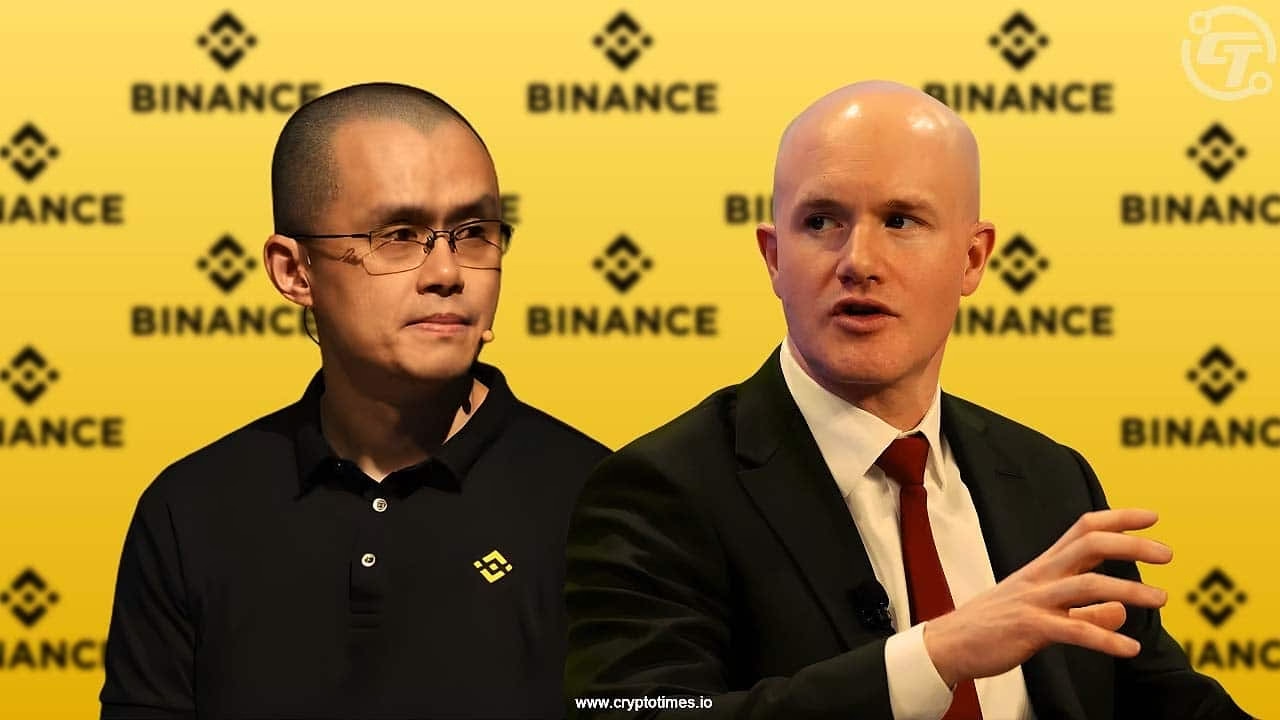
    In a related development, the White House is reportedly considering a presidential pardon for Binance founder Changpeng “CZ” Zhao. According to reports from the New York Post and Fox Business journalist Charles Gasparino, Trump is “leaning toward a pardon,” even as advisors express concern over potential backlash.

    Zhao who pleaded guilty in November 2023 to failing to implement sufficient anti-money laundering controls at Binance stepped down as CEO following his plea.

    The potential pardon has drawn strong criticism from lawmakers such as Senator Elizabeth Warren who sent a letter to the White House Counsel’s Office warning that granting clemency in the Zhao or Roger Ver indictment cases could undermine public trust in the justice system.

    As the Roger Ver indictment officially closes, it highlights a growing intersection between cryptocurrency, regulation and political influence in the United States where blockchain pioneers increasingly find themselves at the center of both financial innovation and federal scrutiny.

  • Binance Gopax acquisition advances as South Korea review signals likely approval

    Binance Gopax acquisition advances as South Korea review signals likely approval

    South Korean regulators have officially resumed the review of the Binance Gopax acquisition signaling renewed momentum for Binance’s long delayed re-entry into the country’s crypto market.

    According to a Tuesday report from Newsis, the Financial Intelligence Unit (FIU) is now reviewing Gopax’s formal report on executive changes a process directly tied to Binance’s ownership stake. The Binance Gopax acquisition review is reportedly progressing favorably with potential approval expected as early as the end of 2025.

    Binance’s Fate in Korea Hinges on Executive Review

    Under South Korean law, there is no distinct regulatory framework for evaluating the eligibility of major shareholders in cryptocurrency exchanges.

    As a result, the FIU’s examination of Gopax’s executive changes effectively serves as a vetting process for Binance’s qualification as a controlling shareholder a key element in the Binance Gopax acquisition process.

    Binance initially acquired a 67% stake in Gopax in February 2023 becoming its largest shareholder. The Binance Gopax acquisition was filed for approval shortly afterward but South Korean regulators froze the process in March 2023 over Anti-Money Laundering (AML) concerns.

    The suspension coincided with Binance’s legal battles in the United States where the Securities and Exchange Commission (SEC) and the Department of Justice (DOJ) accused the company of AML violations and unregistered operations. Binance eventually reached a $4.3 billion settlement with U.S. authorities a move that appears to have eased South Korean regulators’ concerns surrounding the Binance Gopax acquisition according to Newsis.

    Binance’s Strategic Reentry and Gopax’s Past Struggles

    Gopax is among the few South Korean exchanges authorized to facilitate cash to crypto transactions a status requiring strict KYC and AML compliance. The Binance Gopax acquisition was originally presented as a rescue mission following Gopax’s liquidity crisis in early 2023 which was triggered by its DeFi partner Genesis Global Capital freezing withdrawals tied to Gopax’s GoFi product.

    After Genesis filed for Chapter 11 bankruptcy, roughly $47 million (₩56.6 billion) in user funds became inaccessible. Binance stepped in positioning the Binance Gopax acquisition as a means to restore user confidence and inject liquidity to compensate affected customers.

    However, prolonged regulatory hurdles led Binance to explore selling part of its Gopax stake to local cloud provider Megazone in an effort to reduce its ownership share. The deal tied closely to the Binance Gopax acquisition, ultimately collapsed in late 2024 The Bell reported.

    South Korea Tightens Crypto Oversight Amid Market Reform

    In August, South Korea’s financial regulator ordered local crypto exchanges to suspend all crypto lending services until a comprehensive framework is established. The move was part of a broader crackdown intended to curb risky lending practices while maintaining market stability a policy that indirectly influences the Binance Gopax acquisition outcome.

    Despite these restrictions, South Korea continues to progress toward regulated crypto adoption. Authorities are preparing to approve the nation’s first spot crypto ETFs and developing a stablecoin framework pegged to the Korean won. These initiatives suggest that the environment surrounding the Binance Gopax acquisition could become more favorable over time.

    Meanwhile, Dunamu the operator of South Korea’s largest crypto exchange, Upbit recently launched a custody service targeting institutional clients. The service secures digital assets in cold wallets fully insulated from online threats. This development underscores the country’s growing emphasis on security and compliance factors that may shape the long term success of the Binance Gopax acquisition.

  • Binance’s $200K cancer donation from 2018 now worth $39M sits unclaimed in Malta

    Binance’s $200K cancer donation from 2018 now worth $39M sits unclaimed in Malta

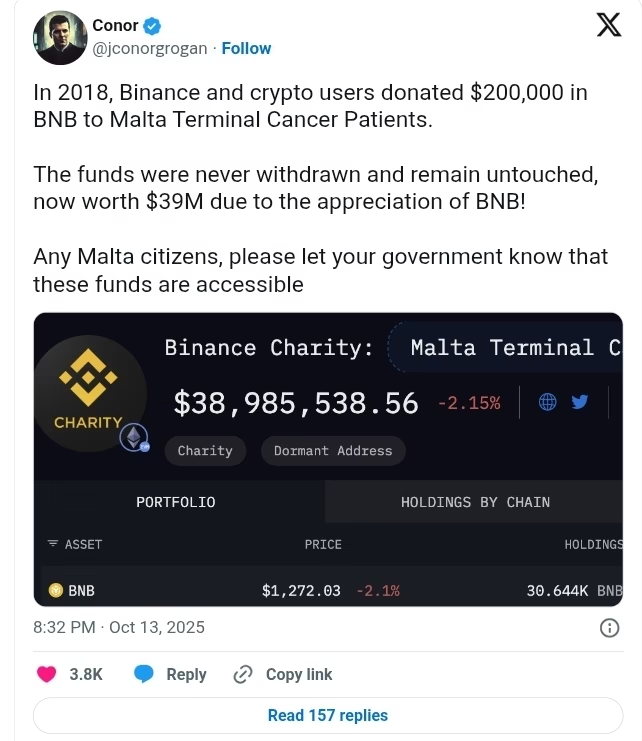
    LA charitable contribution made by Binance in 2018 has resurfaced after a startling revelation that the funds—now worth $39 million—remain unclaimed. Coinbase executive Conor Grogan disclosed that unclaimed Binance donations meant for Malta’s terminal cancer fund have yet to be accessed, urging the Maltese government to take action.

    The unclaimed Binance donations were initially valued at $200,000 in BNB, contributed by Binance and members of the crypto community to assist terminally ill cancer patients. However, due to BNB’s substantial price increase over the years, that donation has ballooned to a staggering $39 million.

    Grogan took to social media platform X on October 13 to raise awareness, emphasizing the urgent need for Maltese citizens to alert authorities.

    “Any Malta citizens, please let your government know that these funds are accessible,” — Conor Grogan, Coinbase executive, in a post on X.

    He noted that the unclaimed Binance donations could finance full salaries for medical specialists and significantly improve cancer care infrastructure across Malta.

    Legal delays and forgotten crypto charity funds

    The unclaimed Binance donations trace back to a philanthropic initiative by Binance and its users in 2018. The funds were earmarked for the Malta Terminal Cancer Patients Fund, but procedural and legal hurdles delayed their withdrawal.

    A lawsuit surrounding the donated assets was dropped in 2021 after the funds were located, yet they have since remained untouched. Despite being secure, no official government effort has been made to access or utilize the funds for their intended purpose.

    “The funds could have a significant impact on Malta’s healthcare system, especially in oncology,” Grogan added, expressing optimism that increased public attention could drive governmental intervention.

    The unclaimed Binance donations highlight broader challenges within crypto philanthropy—particularly around fund management, regulatory clarity, and the custodianship of blockchain-based donations.

    BNB’s market surge amplifies the value of unclaimed funds

    At the heart of the story lies the dramatic appreciation of BNB, Binance’s native cryptocurrency. Once valued modestly, BNB has now surged beyond $1,200, with its market capitalization placing it among the top-performing digital assets.

    The unclaimed Binance donations have thus multiplied nearly 200 times in value, reflecting both the volatility and potential of crypto assets in long-term holdings.

    “BNB’s strong performance is driven by genuine market demand, without market maker intervention,” Changpeng Zhao (CZ), Founder, Binance, during a recent update.

    BNB recently reached an all-time high of $1,357.88, before stabilizing at around $1,275, marking a 46% gain in 30 days and 135% over the past year. This growth underscores the widening role of cryptocurrencies not only as investments but also as tools for transparent, traceable charitable giving—when managed properly.


    Crypto philanthropy’s growing influence

    The revelation about the unclaimed Binance donations comes amid a surge in crypto-backed charitable initiatives. Binance’s founder CZ recently pledged $11 million in BNB to support the Giggle Academy, a global education initiative providing free learning resources for children.

    According to the Giggle Academy’s concept paper, the program aims to fund community-driven educational content, creator incentives, and ecosystem expansion—all powered by crypto donations.

    These developments illustrate the expanding scope of crypto-based philanthropy while also emphasizing the risks of neglect and bureaucratic inaction. The case of Malta’s unclaimed Binance donations stands as both a cautionary tale and a call to action for better coordination between blockchain donors, governments, and beneficiaries.

    If claimed, the $39 million could transform cancer care in Malta—turning a forgotten digital wallet into a beacon of hope for patients and a powerful example of crypto’s humanitarian potential.

  • China Renaissance targets $600M fund for Binance’s BNB with CZ family office backing

    China Renaissance targets $600M fund for Binance’s BNB with CZ family office backing

    China Renaissance Holdings Ltd. is in advanced talks to raise $600 million for a new investment vehicle dedicated to BNB crypto treasury assets, signaling a renewed push into digital finance following the release of its former chairman, Bao Fan.

    The move marks one of the largest institutional investments in a cryptocurrency linked to Binance Holdings Ltd., as China reengages selectively with the digital asset market.

    The Beijing-based investment bank revealed that it intends to channel a portion of the fund into BNB crypto treasury reserves, underscoring its confidence in Binance’s ecosystem despite ongoing global regulatory scrutiny.

    According to sources familiar with the matter, YZi Labs, the family office of Binance co-founder Changpeng Zhao, will join the deal alongside China Renaissance. Together, the two entities will contribute $200 million toward the total fundraise.

    In an August filing, China Renaissance confirmed its plans to invest $100 million in BNB, highlighting the growing institutional appetite for blockchain-linked financial products.

    Partnership with Binance co-founder’s family office

    The collaboration between China Renaissance and YZi Labs adds significant weight to the proposed BNB crypto treasury, particularly given Zhao’s standing in the global crypto community. The partnership also underscores the gradual reentry of major Chinese financial players into digital asset markets following years of regulatory tightening.

    “China Renaissance is demonstrating strategic foresight by aligning itself with Binance’s network,” said a market analyst familiar with the negotiations. “The formation of a BNB crypto treasury vehicle could establish a blueprint for institutional participation in Asia’s digital asset sector.”

    Changpeng Zhao, who was released from U.S. federal custody in 2024, has since turned his attention toward diversifying his investments through YZi Labs. His participation in the BNB crypto treasury project represents both a symbolic and financial vote of confidence in Binance’s native ecosystem.

    Institutional interest grows in BNB crypto treasury assets

    The proposed fund aims to create a BNB crypto treasury capable of serving as a structured investment vehicle for institutional and high-net-worth investors seeking exposure to BNB. As Binance’s flagship token continues to perform strongly across decentralized finance and exchange operations, the fund’s timing appears strategic.

    BNB remains a cornerstone of Binance’s operations, used for transaction fees, staking, and blockchain infrastructure projects. The BNB crypto treasury initiative could, therefore, deepen liquidity in Binance-linked ecosystems and strengthen institutional confidence in blockchain-backed financial instruments.

    According to insiders, the capital raise will focus on both direct BNB acquisitions and strategic ecosystem partnerships. The structure is expected to mimic traditional treasury investment models, offering transparency and yield-based growth potential within the volatile crypto landscape.

    Market implications and regulatory backdrop

    The BNB crypto treasury announcement comes amid cautious optimism in the Asian financial sector, particularly after China Renaissance’s recent leadership challenges. Former chairman Bao Fan, who was detained by Chinese authorities in 2023 and released in August 2025, had long championed the integration of fintech and investment banking. His return has been viewed as a catalyst for the firm’s renewed momentum.

    Analysts note that the proposed BNB crypto treasury could test the boundaries of China’s evolving digital asset stance. While mainland regulators maintain restrictions on cryptocurrency trading, Hong Kong’s more permissive environment provides an alternative pathway for cross-border innovation.

    “This move demonstrates how financial institutions are adapting to regulatory realities while positioning themselves for future growth in digital assets,” said another Hong Kong-based financial strategist.

    With China Renaissance and YZi Labs leading the way, the fund may serve as a bellwether for how traditional finance and digital assets can coexist, particularly through compliant, treasury-style investment mechanisms.

    A new era for Asia’s crypto finance ecosystem

    If successfully executed, the BNB crypto treasury could mark a significant milestone in the institutionalization of crypto assets across Asia. The collaboration between China Renaissance and Binance’s co-founder sends a powerful message about market confidence and regional leadership in the next phase of blockchain finance.

    For investors, the BNB crypto treasury offers both opportunity and insight, a sign that Asia’s financial heavyweights are no longer standing on the sidelines of crypto innovation but actively shaping its future.

Are you sure want to unlock this post?
Unlock left : 0
Are you sure want to cancel subscription?