
- Trending
- Comments
- Latest

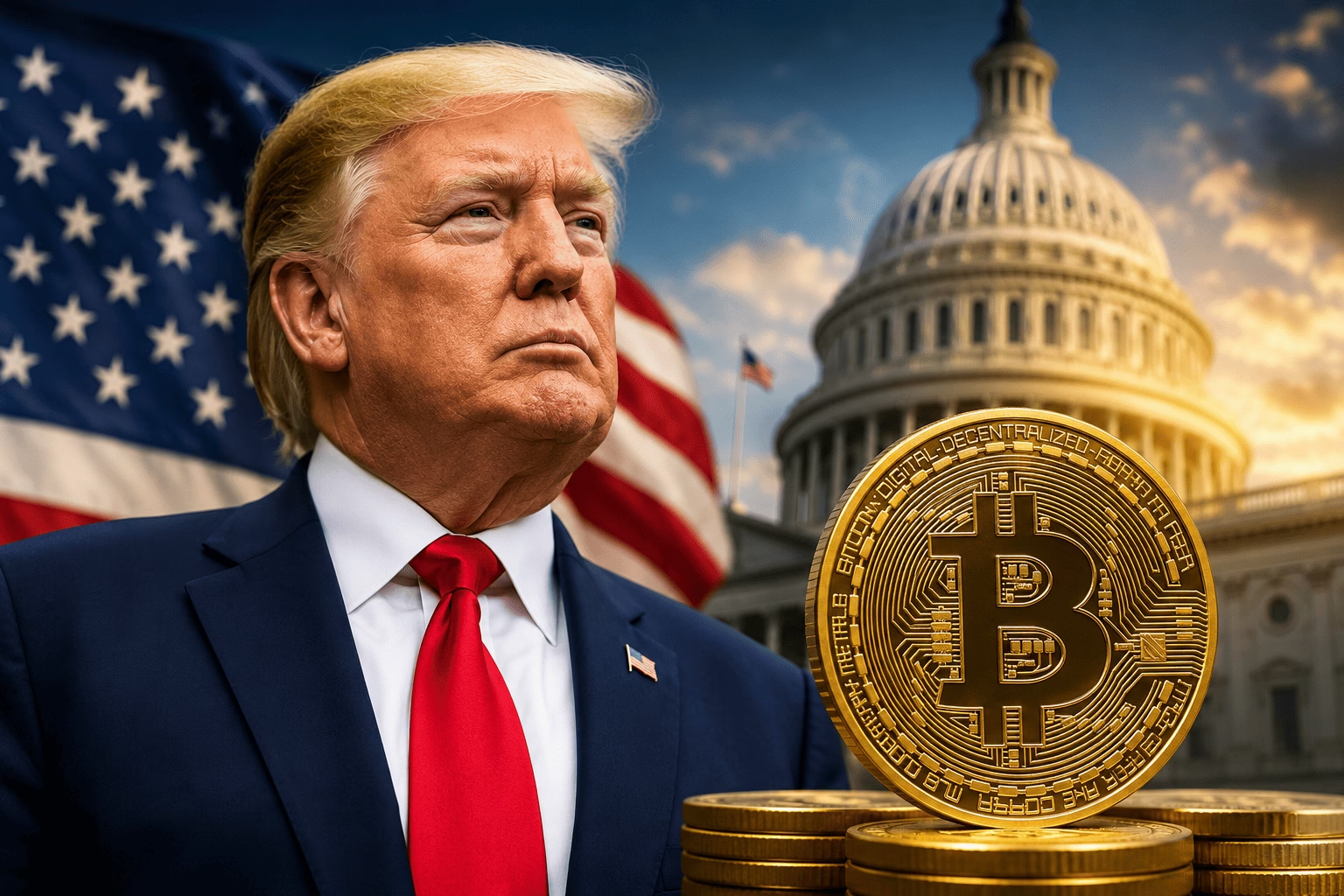
President Donald Trump said Aug. 19, 2026, that his administration has discussed buying more Bitcoin but has not settled on a plan, telling reporters he would defer to SEC Chair Paul Atkins before making a move.
“I think I’d probably rely on Paul and the whole group for that,” Trump said. “If you came in with recommendations, I would certainly listen.”
The remarks stopped short of authorizing US Bitcoin purchases. No target, funding mechanism, acquisition schedule or new executive action was announced, leaving investors to distinguish between political interest in expanding the reserve and an actual buying program.
The comments are significant because the administration already has a formal framework for holding Bitcoin. Trump established the Strategic Bitcoin Reserve through a March 6, 2025 executive order, directing Treasury to capitalize the reserve primarily with Bitcoin finally forfeited through criminal or civil asset-forfeiture proceedings. Bitcoin placed in the reserve generally should not be sold.
The same order gives Treasury and Commerce authority to develop strategies for additional Bitcoin acquisitions, but with a major constraint: those strategies must be budget neutral and impose no incremental costs on U.S. taxpayers.
That means future US Bitcoin purchases would need to fit within an existing legal and fiscal framework unless the administration or Congress takes further action. The order does not authorize Treasury to simply spend taxpayer funds on Bitcoin.
The reserve was designed to change how the federal government handles Bitcoin seized or otherwise forfeited in legal proceedings. Treasury is responsible for administering the reserve, while federal agencies were instructed to account for government-controlled digital assets.
The White House also created the United States Digital Asset Stockpile for cryptocurrencies other than Bitcoin. Unlike the Bitcoin reserve, the executive order says the government cannot acquire additional stockpile assets outside forfeiture proceedings or civil money penalties without further executive or legislative action.
That creates a clear divide. While US Bitcoin purchases can potentially be pursued through budget-neutral strategies authorized by the 2025 order, fresh purchases of non-Bitcoin assets face a higher legal hurdle.
Trump’s decision to point toward Atkins is notable, although the SEC does not control Treasury’s reserve. Atkins can influence digital-asset regulation, while Treasury and Commerce have the explicit acquisition role under the executive order.
At the White House event, Atkins described the administration’s regulatory push as a “turnaround” and said the SEC’s proposed Crypto Assets Rule was intended to give crypto businesses greater certainty when raising capital in the United States. He also backed congressional action on the CLARITY Act.
Trump also argued that Bitcoin had “taken a lot of pressure off the dollar” and had been “very, very good for the dollar.” He offered no supporting economic data for that claim, so it remains the president’s assessment rather than an established economic finding.
The market nevertheless reacted to the broader pro-crypto message. Bitcoin climbed above $68,000 on Aug. 19, while major crypto-related stocks also posted gains, according to The Wall Street Journal.
For US Bitcoin purchases to move from discussion to execution, the administration would need a concrete acquisition strategy. That could include identifying eligible funding or asset-conversion mechanisms, determining how much Bitcoin to acquire, and setting custody and risk controls.
The legal framework provides a pathway for budget-neutral accumulation, but it does not guarantee that Treasury or Commerce will use it. Any strategy would need to remain consistent with applicable law and federal budget rules.
For now, US Bitcoin purchases are a policy possibility rather than a confirmed government transaction. Trump has made clear that he is willing to hear proposals, but until officials publish a strategy, authorize an acquisition or announce an actual transaction, the Strategic Bitcoin Reserve remains primarily a vehicle for government-held and forfeited Bitcoin.
The distinction is crucial for markets. A formal buying program could create a new source of structural demand for Bitcoin and influence expectations around sovereign digital-asset adoption. For now, however, the administration has offered no timetable—and investors are still waiting for the policy discussion to become an executable plan.



Copyright © 2025 - The Bit Gazette.