





- Trending
- Comments
- Latest

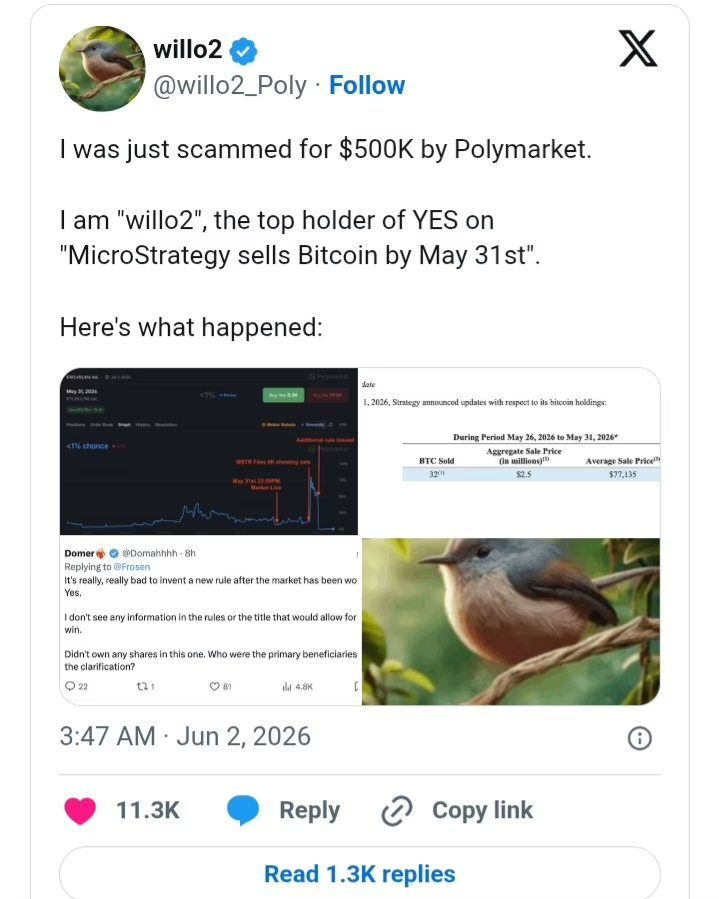
A trader is accusing Polymarket of effectively changing the rules of a live market after Strategy disclosed through a June 1 regulatory filing that it had sold 32 Bitcoin before a May 31 deadline, a disclosure the platform ruled came too late to satisfy settlement conditions, cancelling what the trader believed was a confirmed winning position.
The controversy centers on a trader who claims the prediction market platform effectively changed the rules after the event had already occurred, resulting in the cancellation of what he believed was a winning position.
As Polymarket manipulation allegations continue to circulate on social media, the incident is drawing attention to broader concerns surrounding decentralized prediction markets and how they determine outcomes when facts emerge after a contract’s stated deadline.
The latest Polymarket manipulation allegations originated from a detailed thread published on X by a trader using the handle willo2_Poly, known online as Willo2.
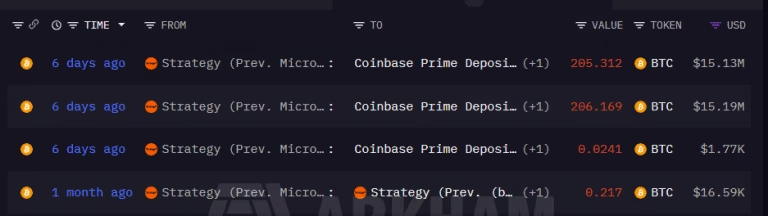
According to the trader, he began purchasing YES shares in a market asking whether Strategy would sell Bitcoin before May 31 after noticing an unusual transfer of approximately $30 million worth of Bitcoin to Coinbase Prime.
The trader argued that the movement stood out because Strategy has historically maintained a long-term Bitcoin accumulation strategy and rarely transfers assets in a manner that suggests an imminent sale.
After analyzing previous wallet activity and reviewing the market’s official rules, he concluded there was a strong possibility the transfer signaled a pending disposition of Bitcoin.
The trader said he based his investment decisions entirely on the written market conditions, believing the contract would resolve according to whether a Bitcoin sale occurred during the specified timeframe.
The Polymarket manipulation allegations gained momentum on June 1 when Strategy disclosed through a regulatory filing that it had sold 32 Bitcoin between May 26 and May 31.
That disclosure immediately altered market sentiment. Traders rapidly reassessed the contract’s likely outcome, causing the price of YES shares to surge as participants interpreted the filing as evidence that the conditions for a positive resolution had been met.
For Willo2 and other traders who had taken similar positions, the filing appeared definitive.
The trader argued that the disclosure clearly confirmed a sale had taken place before the deadline specified in the contract.
However, despite the filing becoming public, the market remained unresolved. That delay would eventually become the foundation of the current Polymarket manipulation allegations.
According to Willo2, the unresolved market created what he viewed as a significant pricing inefficiency.
Believing the outcome was effectively certain, he increased his position substantially. “The market didn’t resolve,” the trader wrote on X. “I was a bit uneasy, but I thought about it. As a trader, I had a duty to place maximum size on mispriced bets.”
He added that he repeatedly reviewed both the contract terms and Strategy’s filing before increasing his exposure.
From his perspective, the evidence was straightforward: Strategy had sold Bitcoin during the timeframe outlined in the contract.
Yet the market remained active, allowing traders to continue buying and selling shares despite what many believed was a settled outcome.
The resulting resolution would later fuel further Polymarket manipulation allegations throughout the crypto betting community.
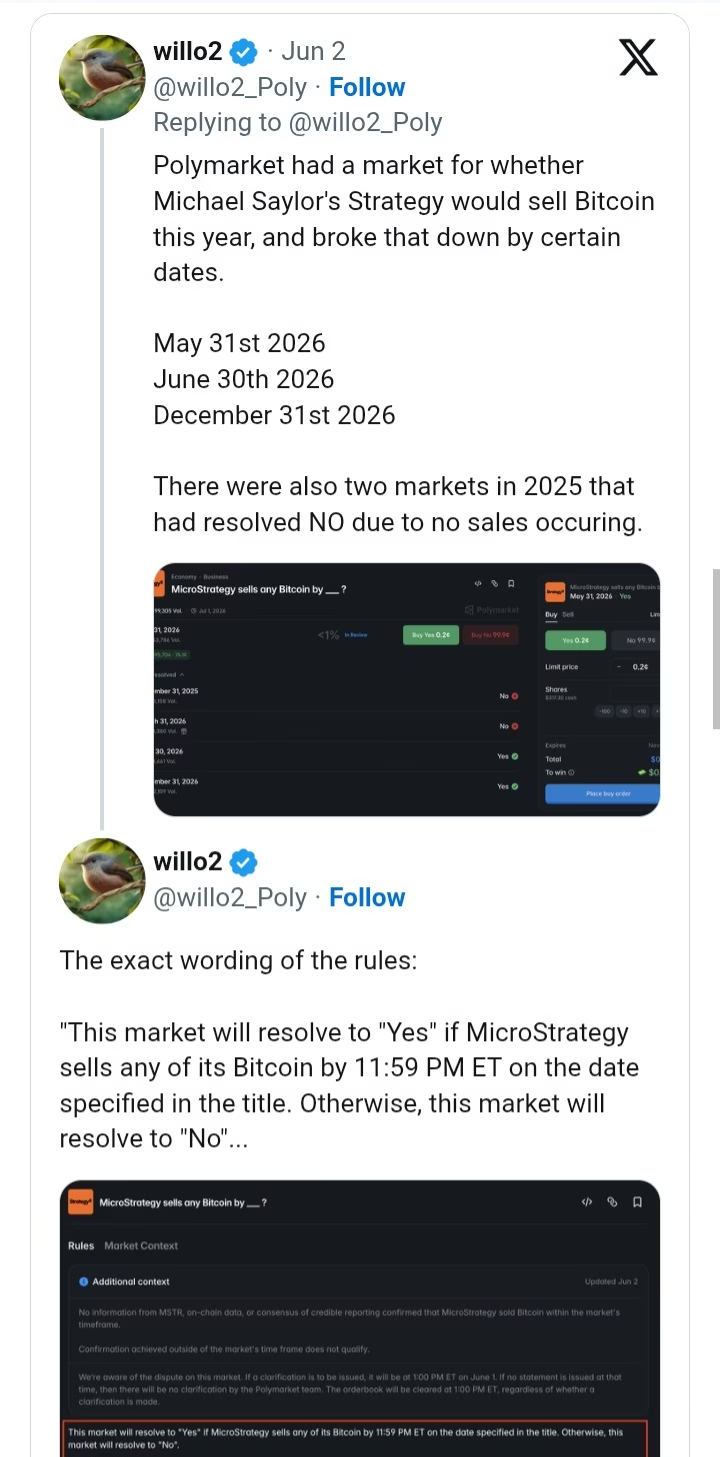
After Strategy’s disclosure became public, Polymarket reportedly issued additional clarification regarding how the market would be settled.
According to the platform’s interpretation, the determining factor was not simply whether the sale occurred, but whether the sale had been publicly confirmed before the deadline.
Polymarket argued that no official statement from Strategy, no credible reporting, and no on-chain evidence had confirmed the transaction before May 31.
Because the confirmation arrived through a June 1 filing, the platform determined that the market conditions had not been satisfied within the required timeframe.
This decision sparked the latest wave of Polymarket manipulation allegations, with critics arguing that the distinction between the event occurring and the event being publicly confirmed was not clearly communicated in the original market description.
The growing Polymarket manipulation allegations highlight a recurring challenge for prediction markets: how to interpret ambiguous events and communicate settlement criteria clearly.
Prediction markets derive much of their value from transparency and trust. Participants rely on written rules when committing capital and expect outcomes to be determined according to those rules.
When clarification arrives after trading activity has already occurred, some traders argue that confidence in the market can be undermined.
Several users commenting on the dispute suggested that the issue may not necessarily be malicious conduct but rather a failure to define settlement standards with sufficient precision before trading began.
Nevertheless, Polymarket manipulation allegations continue to gain visibility because many participants believe the platform’s later clarification materially altered the market’s original interpretation.
The incident arrives at a time when prediction markets are already facing increased scrutiny from regulators and market observers.
Platforms such as Polymarket have experienced explosive growth over the past year as traders wager on elections, economic indicators, corporate events, and cryptocurrency developments.
However, rapid expansion has also brought greater attention to governance procedures, dispute resolution mechanisms, and market integrity safeguards.
The latest Polymarket manipulation allegations underscore how even a single disputed settlement can spark broader questions about operational transparency.
Industry observers note that trust is one of the most valuable assets for prediction markets. If traders believe outcomes can be reinterpreted after positions are established, participation could suffer over time.
At the time of writing, Polymarket has not issued a comprehensive public response addressing the specific Polymarket manipulation allegations raised by Willo2.
Meanwhile, the trader’s account of events has spread widely across crypto social media, attracting support from some market participants and skepticism from others.
Whether the controversy fades or evolves into a larger debate about prediction market governance remains to be seen.



Copyright © 2025 - The Bit Gazette.