
- Trending
- Comments
- Latest

The Trump administration is putting $5 million toward helping Pacific island nations trace crypto linked to organized crime, training police and rewriting cybercrime laws.
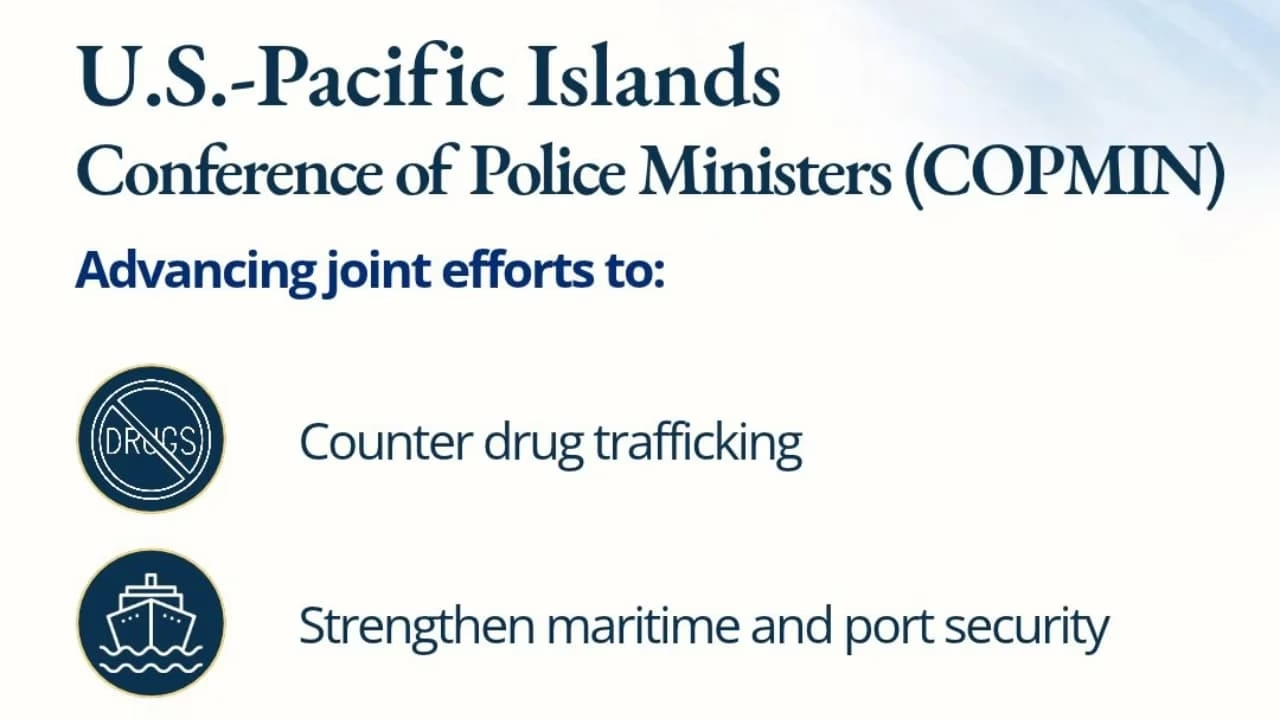
The money, announced at the first U.S.-Pacific Islands Conference of Police Ministers, is part of a regional security package worth more than $44 million aimed at drug trafficking and its financing.
The Pacific Alliance for Combating Illicit Finance and Cybercrime, formally abbreviated PACIFIC, will equip regional authorities with investigative tools to detect digital assets used in criminal operations.
Its $5 million allocation sits within nearly $18.2 million intended to improve Pacific nations’ preparedness and their ability to detect and disrupt the financial flows supporting narcotics groups. That funding, in turn, belongs to the broader commitment of more than $44 million.
The distinction separates the funding specifically assigned to the Pacific program from the larger investments in regional law enforcement, maritime security and cooperation.
Explaining the administration’s approach, the U.S. Department of State described the threats facing Pacific communities as parts of an interconnected operation.
“Each link in this chain depends on the others. Breaking the enterprise requires action at every link, starting where drugs and precursors first enter legitimate trade,” the department said.
The initiative therefore addresses the financing behind organized crime alongside efforts to intercept trafficking activity. Its focus extends beyond identifying suspicious transfers to strengthening authorities’ ability to investigate the people and structures behind them.
Under the Pacific program, U.S. federal agencies will train regional officers in cryptocurrency tracing, beneficial-ownership investigations and digital forensics.
These three areas bring together the examination of digital asset movements, the identification of people behind ownership structures and the analysis of digital evidence. Together, they reflect an investigative approach that looks beyond a transaction to the broader financial activity surrounding it.
“U.S. federal agencies will train officers in cryptocurrency tracing, beneficial-ownership investigations, and digital forensics,” the U.S. Department of State’s Office of the Spokesman said.
The Pacific program places those capabilities at the centre of the regional response to illicit digital finance. The stated purpose is to help officers detect criminal use of digital assets and follow the money supporting organized networks.
The announcement outlines the subjects officers will study, although the supplied account does not specify how many investigators will receive training or provide a country-by-country breakdown of the allocation. Those operational details remain outside the information disclosed in the report.
Training is only one component of the Pacific program. U.S. agencies will also assist with revisions to regional anti-money laundering and cybercrime laws.
The State Department said that assistance would support alignment with Financial Action Task Force and Budapest Convention standards. The proposed work pairs investigative training with changes to the legal frameworks under which authorities address illicit finance and cybercrime.
For the Pacific program, this means the planned support extends beyond technical instruction. Officers’ ability to trace cryptocurrency and examine digital evidence will be accompanied by assistance intended to strengthen the laws governing those investigations.
The announcement describes legal assistance as planned work, rather than completed reform. It does not identify particular legislation already amended or provide deadlines for individual jurisdictions to adopt changes.
That leaves implementation as a key part of the initiative’s next phase: the funding commitment establishes the scope of support, while the training and legislative work still need to be carried out.
The Pacific program also fits the Trump administration’s wider focus on criminal organizations and cartels using digital assets to launder narcotics proceeds. The supplied report cites Mexico’s Sinaloa cartel as an example of that broader enforcement concern, without identifying a specific cartel investigation funded by this allocation.
U.S. officials also framed the initiative as support for legitimate digital activity across the region.
“PACIFIC protects the trusted digital economy that U.S. cloud and telecommunications programs are helping build across the region,” the State Department’s Office of the Spokesman said.
The Pacific program consequently combines two stated objectives: disrupting criminal financing and protecting the digital infrastructure used for lawful economic activity. Its progress will depend on turning the announced funding into investigative capacity and legal reforms across participating Pacific jurisdictions.



Copyright © 2025 - The Bit Gazette.