







- Trending
- Comments
- Latest


Volo Protocol has confirmed a $3.5 million exploit across three vaults on the Sui blockchain holding WBTC, XAUm, and USDC, with the team reporting it froze approximately $2 million in stolen funds, including blocking the attacker from bridging 19.6 WBTC, while pledging to absorb losses without passing costs to users.
“We detected the attack, immediately notified partners, and froze the vaults to prevent further exposure,” the protocol said, describing its initial response to the Volo vault attack.
While the headline loss stands at roughly $3.5 million, the broader system appears largely intact. Volo stated that around $28 million in total value locked across unaffected vaults remains secure.
The Volo vault attack was confined to three isolated vaults, with no evidence of a shared vulnerability across the platform. This distinction is critical, as it suggests the breach may not reflect a systemic flaw—but it does little to ease investor concerns about recurring exploits in DeFi.
The protocol has also pledged to absorb the losses internally rather than passing them on to users, a move that could help preserve trust in the wake of the Volo vault attack. However, details of any compensation or recovery framework have yet to be finalized.
Efforts to recover stolen funds are already in motion. According to updates from the team, approximately $2 million linked to the Volo vault attack has been frozen or blocked.
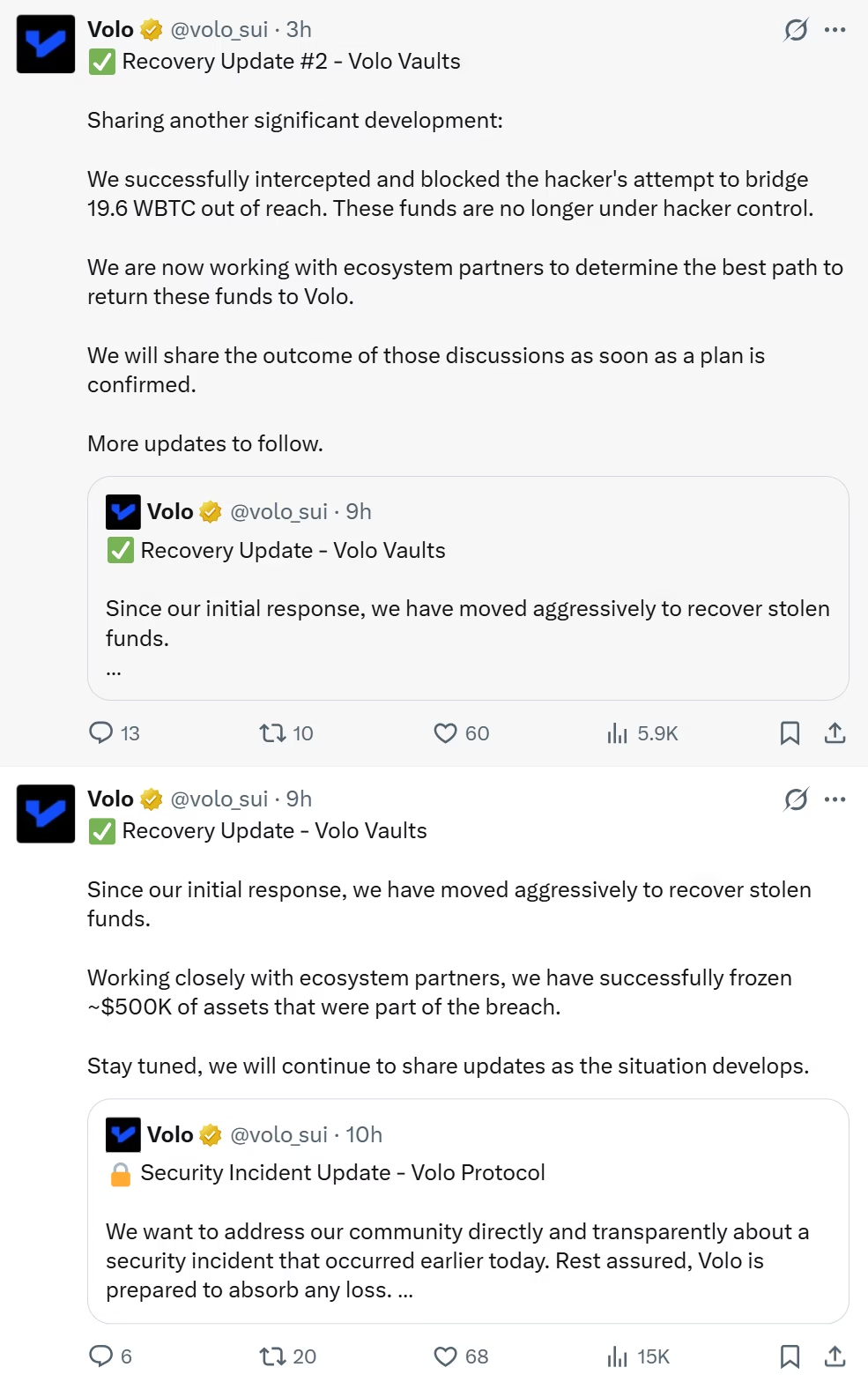
In one instance, around $500,000 was successfully immobilized shortly after the breach was detected. In a subsequent update, Volo reported that it had prevented the attacker from bridging 19.6 WBTC, effectively cutting off access to a portion of the stolen assets.
“We are working closely with ecosystem partners to determine the best path to return these funds,” the team said, highlighting ongoing collaboration following the Volo vault attack.
The Volo vault attack comes at a time when the DeFi sector is already under strain from a series of high-profile security incidents.
Just days earlier, another liquid restaking protocol suffered a significantly larger breach, with losses approaching $293 million. That incident sent shockwaves through the market, amplifying concerns about systemic risk.
Together, these events reinforce a troubling pattern: even as DeFi platforms evolve, attackers continue to find new entry points. The Volo vault attack is the latest reminder that security remains one of the sector’s most persistent challenges.
Built on the Sui network, Volo operates as a liquid staking platform, allowing users to stake tokens and receive derivative assets in return. This model depends heavily on smart contract integrity and cross-platform coordination.
The Volo vault attack highlights how quickly vulnerabilities—or misconfigurations—can be exploited in such environments, even when the broader system appears secure.

Notably, the protocol’s ability to freeze assets and coordinate with partners may have limited the scale of losses. Still, the incident raises questions about how quickly DeFi ecosystems can respond to threats in real time.
The Volo vault attack also adds to a growing tally of crypto-related losses. According to data from DeFiLlama, more than $17 billion has been stolen across the crypto industry over the past decade.
Research shows that many attacks stem not from complex protocol failures but from more basic vulnerabilities. Private key compromises account for a significant portion of incidents, with brute-force attacks, phishing schemes, and unknown vectors all contributing to losses.
These findings suggest that while the Volo vault attack may appear isolated, it is part of a much larger issue affecting the entire ecosystem.
Repeated exploits are beginning to take a toll on user confidence. Each new incident, including the Volo vault attack, reinforces the perception that DeFi remains a high-risk environment despite its promise of decentralization and financial innovation.
Protocols are increasingly expected to go beyond basic security measures implementing real-time monitoring, rapid response systems, and transparent communication strategies.
In the case of the Volo vault attack, the protocol’s swift disclosure and containment efforts may help mitigate reputational damage. But the broader challenge remains: convincing users that their assets are safe in an evolving threat landscape.
For now, the focus remains on recovery and investigation. Volo has indicated that it will continue working with partners to trace and potentially reclaim stolen funds, while also strengthening its security framework to prevent future incidents.
The Volo vault attack may ultimately be remembered not for its size, but for what it represents a continuation of the security challenges that have defined DeFi’s growth.
As the industry matures, incidents like the Volo vault attack will likely shape how protocols design systems, manage risk, and rebuild trust with users.
For investors and developers alike, the message is clear: innovation in DeFi must be matched by equally robust security practices or the cycle of exploits will continue.



Copyright © 2025 - The Bit Gazette.

