


- Trending
- Comments
- Latest

Coinbase-backed x402 has launched a batch settlement feature that lets AI agents process thousands of microtransactions offchain before consolidating them into a single blockchain settlement, a development the protocol’s developers say could make sub-cent machine-to-machine payments economically viable at scale.
The feature arrives as crypto firms race to build infrastructure capable of supporting autonomous AI systems that can purchase services, access computing power, and interact with decentralized applications without constant human involvement.
According to x402, the new functionality supports ultra-small AI agents payments worth less than $0.0001 while reducing blockchain settlement costs that would otherwise make such transactions impractical.
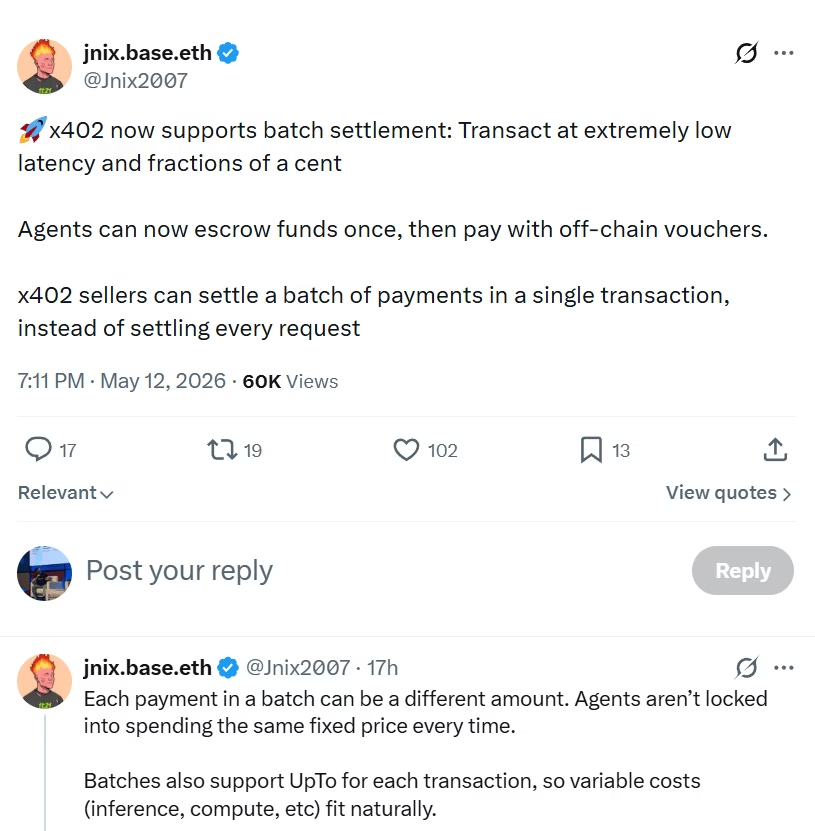
The latest upgrade was highlighted Wednesday by Jesse Pollak, creator of Base, who said x402 now supports batched settlement for AI agents payments involving on-demand compute resources and AI inference requests.
Under the system, users deposit ERC-20 tokens into an onchain escrow account while AI agents exchange signed payment vouchers offchain for each completed request.
Sellers can verify the vouchers instantly, provide the requested service, and later combine multiple transactions into a single blockchain settlement.
The approach dramatically lowers transaction costs by avoiding repeated onchain interactions for every individual request.
Developers working on AI agents payments have increasingly argued that traditional blockchain settlement methods are too expensive and inefficient for the high-speed interactions expected between autonomous systems.
Batch settlement attempts to solve that problem by separating payment authorization from final settlement.
The growing focus on AI agents payments reflects broader efforts across the crypto industry to prepare for a future where software agents transact independently.
The x402 protocol itself is built around the HTTP 402 “Payment Required” status code, allowing automated systems to natively handle machine-to-machine payments across digital services.
Coinbase said the protocol processed more than 169 million payments involving approximately 590,000 buyers and over 100,000 sellers during its first year.
That activity suggests increasing interest in AI agents payments infrastructure as developers explore commercial use cases for autonomous software systems.
The latest feature also follows a series of major announcements linking artificial intelligence and blockchain payment rails.
Just last week, Amazon Web Services integrated Coinbase’s x402 payment infrastructure and wallet technology, enabling AI agents to make USDC payments on Base and Solana without direct access to private keys.
The partnership signaled growing institutional interest in AI agents payments as cloud providers and crypto firms begin building interoperable infrastructure together.
According to Coinbase Developer Platform product lead Joshua Nickerson, the new system allows transaction facilitators to sponsor deposits, refunds, and settlement costs for AI agents payments.
That effectively creates a gasless user experience for developers and service providers interacting with autonomous agents.
The infrastructure currently supports Ethereum-native ERC-20 assets, expanding payment flexibility beyond stablecoins alone.
At launch, the feature is available in TypeScript and Go, with Python support expected soon.
Developers say flexibility will be critical if AI agents payments are to become a core component of decentralized digital economies.
The documented transaction flow shows buyers depositing funds into escrow while AI agents generate signed cumulative vouchers for each paid interaction.

Later, sellers can redeem many vouchers together in a single transaction and transfer funds efficiently to final recipients.
The design attempts to balance blockchain security with the speed required for automated commercial activity.
The growing importance of AI agents payments also aligns with broader strategic changes underway at Coinbase itself.
Earlier this month, Coinbase CEO Brian Armstrong announced the company would cut roughly 14% of its workforce while reorganizing around smaller AI-focused teams and automation systems.
The restructuring highlighted how seriously major crypto firms now view artificial intelligence as part of their long-term infrastructure strategy.
Industry analysts increasingly see AI agents payments as a natural intersection between blockchain technology and autonomous computing systems.
Machine-to-machine commerce could eventually become one of crypto’s largest transaction categories if AI adoption continues accelerating.
Coinbase is not alone in targeting the emerging AI agents payments sector. On Monday, Circle unveiled a new suite of tools designed to help AI agents manage wallets, discover services, and execute programmable payments using USDC.
Meanwhile, Aptos Foundation and Aptos Labs recently committed $50 million toward AI-related infrastructure development across the Aptos ecosystem.
The funding initiative includes support for AI-powered decentralized exchanges, autonomous trading systems, and decentralized storage protocols.
The surge in investment underscores how quickly AI agents payments are becoming a competitive focus across the crypto sector.
Rather than viewing artificial intelligence as separate from blockchain technology, many firms now see autonomous agents as future users of decentralized financial infrastructure.
The appeal of crypto-based AI agents payments lies partly in automation. Traditional payment systems typically require manual approvals, banking integrations, or identity verification processes that are difficult to scale across autonomous software systems.
Blockchain infrastructure offers programmable settlement, global accessibility, and continuous uptime — characteristics many developers believe fit naturally with AI-driven commerce.
Microtransactions are especially important because AI agents may eventually pay for tiny bursts of computing power, API access, storage, or real-time data feeds thousands of times per day.
Without efficient payment rails, many of those economic interactions would become too costly to process.
Batch settlement therefore represents a practical infrastructure improvement rather than merely a technical experiment.
The rapid development of AI agents payments suggests the crypto industry is preparing for a broader machine economy where software agents transact continuously across decentralized networks.
Supporters believe autonomous systems could eventually negotiate prices, purchase services, manage resources, and coordinate workflows independently using blockchain-based financial rails.
Skeptics, however, warn that security, regulation, and fraud prevention remain major unresolved challenges.
Even so, the momentum behind AI agents payments continues building as crypto firms compete to establish themselves as foundational infrastructure providers for the next phase of AI-driven digital commerce.



Copyright © 2025 - The Bit Gazette.