

- Trending
- Comments
- Latest

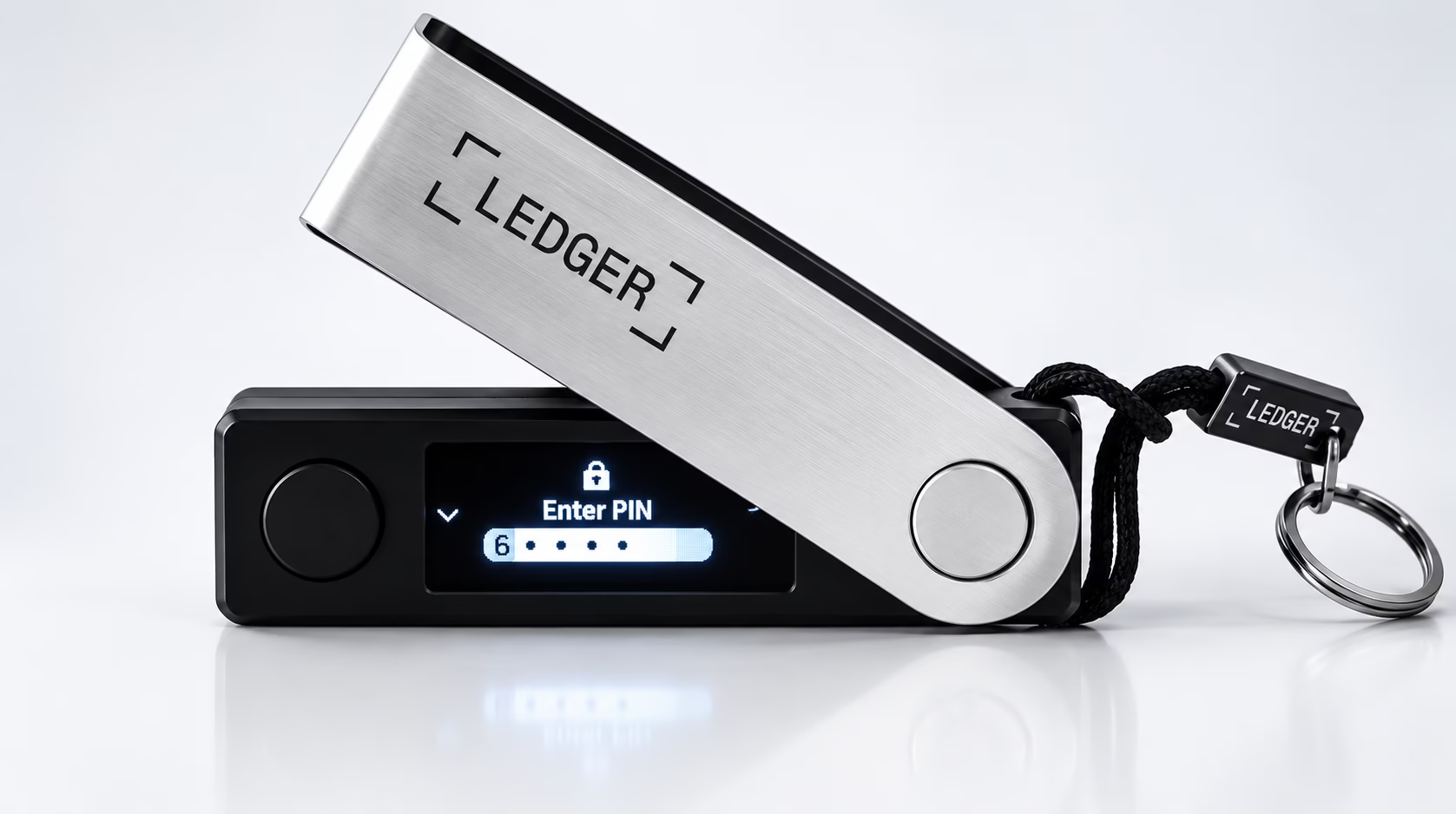
Two cryptocurrency users in Singapore have lost about $3.5 million after buying Ledger hardware wallets that police say may have contained hidden components capable of capturing recovery phrases. The Singapore Police Force published the advisory on October 28, weeks after Ledger asked Southeast Asian resellers to pause sales over a suspected hardware implant.
Hardware wallets are physical devices that allow cryptocurrency users to store and manage their private keys. Unlike software wallets, which operate through applications, hardware wallets are designed to keep sensitive credentials isolated from internet-connected devices during key operations.
However, the reported Singapore cases suggest that the security of a hardware wallet can be undermined if the device has been tampered with before reaching its intended owner.
According to the police, preliminary findings indicate that certain Ledger devices purchased from retail stores in Singapore contained malicious hardware components. These components could potentially collect recovery phrases or private keys, providing unauthorised individuals with the information needed to access victims’ cryptocurrency holdings.
A recovery phrase is a sequence of words used to restore access to a cryptocurrency wallet. Anyone who obtains the phrase may be able to recreate the wallet on another compatible device and control the associated assets, depending on the wallet’s configuration and any additional security protections.
Private keys serve a related purpose by enabling users to authorise transactions involving their cryptocurrency holdings. If malicious components expose these credentials, attackers may be able to transfer assets without physically possessing the original device.
The reported losses total $3.5 million across two victims, although the police advisory did not specify which cryptocurrencies were stolen or whether the funds had been traced.
The Singapore cases follow an earlier warning from Ledger concerning devices distributed by CryptoBilis, a Southeast Asian reseller.
On October 13, Ledger said on X, formerly Twitter, that it had asked resellers and distributors across Southeast Asia, including those in Singapore and Hong Kong, to suspend sales of its devices.
The company had previously disclosed that it was investigating Ledger wallets sold through CryptoBilis after identifying an unauthorised hardware implant. Ledger said it confirmed an incident involving one affected user on October 10.
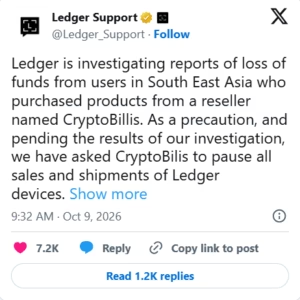
The developments indicate that the reported security problem extends beyond the two cases subsequently highlighted by Singapore police, although the available information does not establish how many devices were affected across the region.
The police did not publicly confirm that every device involved in the Singapore cases came from CryptoBilis. The relationship between the reported losses and the reseller’s distribution network therefore remains subject to further clarification.
Ledger is reviewing the affected cases and remains in contact with Singapore authorities. Neither the police advisory nor the information provided in the original report established the full technical scope of the suspected hardware compromise.
The suspension of sales requested by Ledger’s management represents a precautionary response while the company investigates the reported implant and the circumstances surrounding the affected products.
For cryptocurrency users, the episode highlights the importance of considering a device’s origin alongside its security features. Hardware wallets are commonly marketed as a way to reduce exposure to online threats, but their effectiveness depends on the integrity of the device and the protection of the credentials used to control the wallet.
The investigation also raises broader questions for the hardware wallet industry about reseller oversight, product verification and the ability to detect unauthorised modifications before devices reach consumers.
Singapore police have urged members of the public to exercise caution when holding or transacting in cryptocurrencies as investigations continue.
The authorities advised users to monitor security advisories issued by their hardware wallet providers and avoid storing cryptocurrency on devices suspected of being tampered with.
They also recommended taking appropriate measures to safeguard digital assets if users believe their devices or credentials may have been compromised.
Anyone who suspects that their recovery phrase or private keys have been exposed should consider transferring remaining funds to a new, trusted wallet with a newly generated recovery phrase, using a device that is not compromised.
This precaution is important because creating a new wallet on a potentially affected device may not adequately address the underlying risk. Users should ensure that the replacement wallet and the device used to establish it are trustworthy before moving assets.
A compromised recovery phrase should not be reused for the new wallet. If an attacker already possesses the original phrase, transferring funds without generating new wallet credentials could leave the assets vulnerable to further theft.
The authorities have not announced any arrests or disclosed whether the stolen cryptocurrency has been recovered. The investigation remains ongoing as police work with Ledger to establish the circumstances of the reported incidents.
Anyone with information relating to the cases can contact the Singapore Police Force hotline at 1800-255-0000 or submit information through its official I-Witness reporting service.
For users of Ledger crypto wallets and other hardware storage products, the incident serves as a reminder that safeguarding cryptocurrency requires more than selecting a device marketed for security. Users must also consider where their devices come from, protect their recovery phrases and respond promptly to credible warnings about potential compromises.
The investigation’s findings may provide further clarity on the scale of the suspected hardware tampering and whether additional users face similar risks.



Copyright © 2025 - The Bit Gazette.