

- Trending
- Comments
- Latest

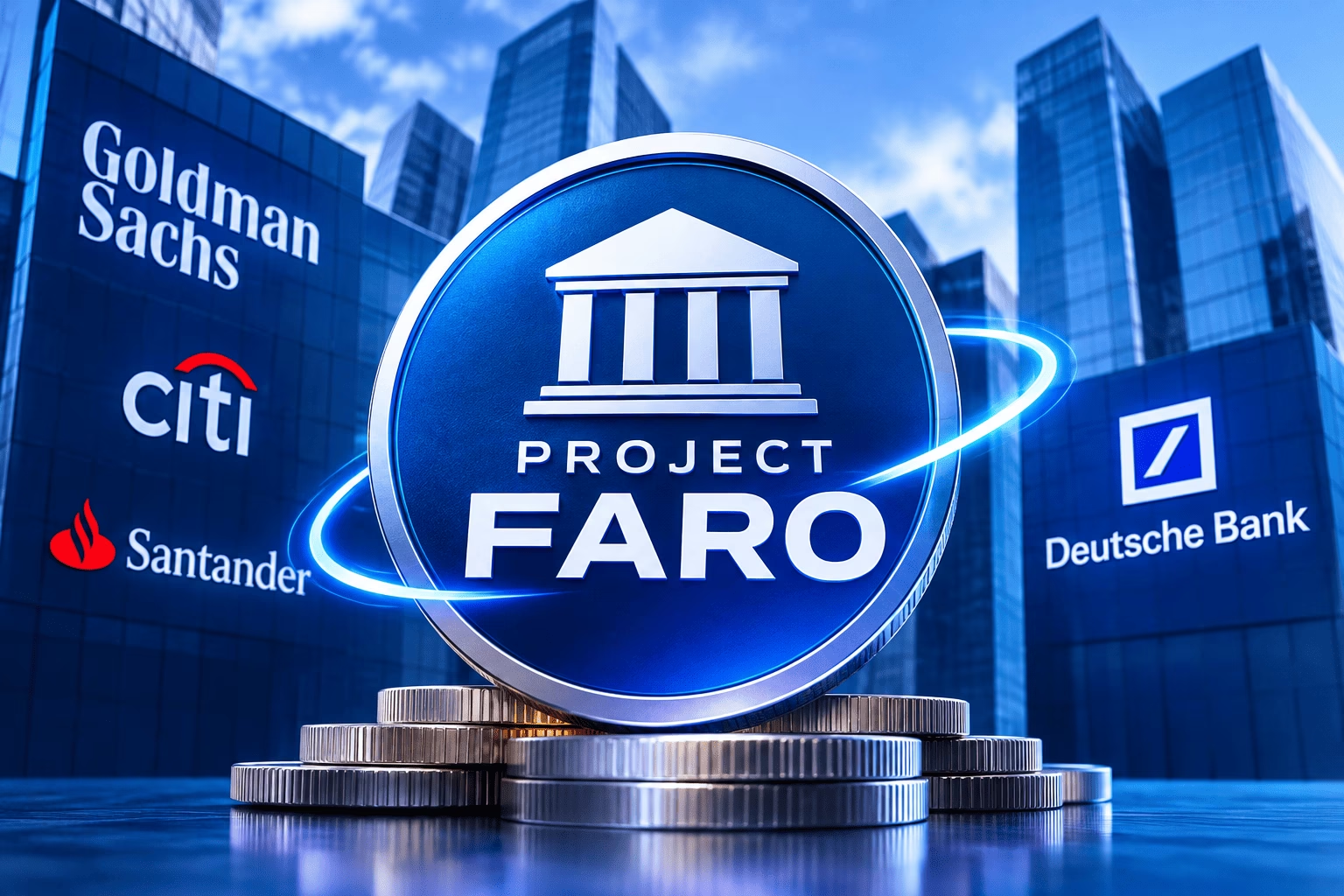
Twenty-one of the world’s biggest banks have reportedly committed about $270 million to build a dollar stablecoin that would take on Tether and Circle, according to Bloomberg. The money would cover the issuer’s first five years of operating costs ahead of a US launch targeted for the first half of 2027, though the consortium has not confirmed the figure.
The latest development takes the initiative beyond its initial planning stage, highlighting how established financial institutions are positioning themselves to compete in an increasingly important segment of the digital asset industry.
The initiative brings together an international network of financial institutions spanning North America, Europe, East Asia, the Middle East and Africa.
The September 1 announcement confirmed that 21 institutions had committed to establishing a new company during the second half of 2026, subject to closing conditions. Bloomberg’s latest reporting adds the substantial funding commitment and the project’s internal name.
The consortium includes Bank of America, Capital One, Citi, Fidelity Investments, Goldman Sachs, PNC Financial Services, Scotiabank, TD Bank Group, Wells Fargo and WisdomTree from North America.
European participants include Banco Santander, BBVA, Commerzbank, Crédit Agricole, Deutsche Bank, Lloyds Banking Group, Rabobank and UBS. MUFG Bank represents East Asia, while Sirius International Holding and Standard Bank represent the Middle East and Africa, respectively.
The group’s initial objective is to introduce a dollar-pegged digital asset before expanding into other major currencies, with a euro-denominated stablecoin identified as its immediate expansion priority.
In its September announcement, the consortium said the initiative would combine “bank-grade compliance, strong governance, distribution and institutional risk management.”
The institutions also identified cross-border payments and digital asset settlements as potential applications, alongside services for wholesale, institutional and retail customers.
For Project Faro, the combined experience and distribution networks of its participants could provide an advantage over smaller stablecoin issuers. However, its commercial success will ultimately depend on adoption, competitive transaction costs and confidence in its reserve arrangements.
Regulatory compliance is expected to be central to the venture’s development, particularly as governments introduce clearer requirements for companies issuing digital currencies.
In the United States, the GENIUS Act, signed into law on July 18, 2025, established a federal framework for payment stablecoins. It sets requirements for permitted issuers, reserve backing, redemption policies and regulatory supervision.
Under the legislation, permitted payment stablecoin issuers must maintain qualifying reserves on a one-to-one basis and provide monthly disclosures detailing their reserves. These requirements are intended to strengthen consumer protection and reduce risks associated with privately issued digital money.
Europe presents another regulatory consideration through its Markets in Crypto-Assets Regulation (MiCA), which establishes rules for crypto-asset issuers and service providers operating within the European Union.
The consortium has indicated that its proposed stablecoin solution will comply with the GENIUS Act and MiCA where applicable. Nevertheless, the exact regulatory structure, issuing entity, supervisory authority and reserve arrangements have not yet been publicly identified.
European Central Bank President Christine Lagarde has also highlighted the potential risks associated with privately issued stablecoins.
Speaking at the Banco de España LatAm Economic Forum in May 2026, Lagarde cautioned that their growing connection to the financial system raises concerns about financial stability. She also questioned the economic case for euro-denominated stablecoins, stating: “If we want to strengthen the international appeal of the euro, stablecoins are not an efficient way of doing so.”
Her remarks underline the regulatory and monetary policy questions that Project Faro and other bank-backed digital currency initiatives will need to address before expanding into European markets.
The banking consortium is entering a market where established cryptocurrency companies already have considerable influence. Tether and Circle remain dominant players in dollar-backed stablecoins, benefiting from established liquidity, exchange integrations and widespread use across cryptocurrency markets.
However, traditional financial institutions are not relying exclusively on a single stablecoin strategy.
Some consortium members, including BBVA and Rabobank, are also associated with other digital currency initiatives. Meanwhile, a separate stablecoin project, Open USD, has attracted support from major payments and financial technology companies, including Visa, Mastercard and Stripe.
Open USD went live in October, with support for multiple blockchain networks and established payment industry participants. Its development demonstrates that competition is expanding beyond cryptocurrency-native businesses to include payment processors and established financial services companies.
Several banks are also exploring tokenized deposits, which represent commercial bank deposits on blockchain infrastructure rather than privately issued stablecoins.
JPMorgan, Citi and other US financial institutions have previously explored a shared tokenized deposit network targeted for 2027. Although tokenized deposits and stablecoins have different legal and operational structures, both approaches reflect growing institutional interest in blockchain-based financial settlement.
For Project Faro, competing initiatives could create pressure to establish strong partnerships, reliable infrastructure and practical use cases before entering the market. The consortium will need to demonstrate why customers should choose its proposed digital dollar over existing alternatives.
Market conditions also present a challenge. According to Crypto.com’s November 9 market update, total stablecoin supply declined to approximately $300 billion, its lowest level since October 2025. The report attributed the contraction to declining supply across several major dollar-pegged assets.
However, declining supply does not necessarily mean that stablecoin adoption is collapsing. CoinDesk reported that stablecoin payment activity continued expanding even as the overall supply growth slowed, illustrating the difference between the amount of tokens outstanding and how frequently they are used.
This distinction could become important for Project Faro, particularly if its backers intend to generate demand through institutional settlements and cross-border transactions rather than cryptocurrency trading alone.
The consortium’s international membership also raises questions about how its proposed digital dollar could serve markets outside the United States and Europe.
MUFG Bank is particularly significant because it is the group’s only East Asian participant. The Japanese financial institution has been involved in separate discussions surrounding joint stablecoin issuance alongside other major Japanese banks.
Its participation in Project Faro creates an opportunity to connect international banking networks with Japan’s developing digital asset infrastructure. However, the consortium has not explained whether MUFG’s involvement will extend to a future yen-denominated stablecoin or remain focused on the initial dollar offering.
A yen-backed product could eventually become relevant to the group’s longer-term ambition of expanding into additional G7 currencies. For now, however, the euro remains the only explicitly identified priority beyond the US dollar.
The immediate milestones are more straightforward. Investors and market participants will be watching for confirmation of the reported $270 million commitment, the formal incorporation of the issuing company and the appointment of its leadership.
Further disclosures about the stablecoin’s name, blockchain network, reserve composition, custody arrangements and redemption procedures will also be important.
The consortium must additionally establish the regulatory framework under which its issuer will operate before bringing the product to market. Although the first half of 2027 remains the stated launch target, regulatory approvals and operational preparations could affect that timeline.
Ultimately, Project Faro represents an important attempt by traditional financial institutions to establish a collective presence in the stablecoin industry. Its $270 million reported funding commitment demonstrates the scale of resources being directed towards the initiative, although funding alone does not guarantee market adoption.
With established issuers already commanding significant liquidity and newer competitors entering the payments sector, the proposed bank-backed stablecoin will face considerable pressure to prove its usefulness.
For Project Faro, the defining challenge will be turning the combined influence of 21 financial institutions into a reliable, widely accepted digital payment network.



Copyright © 2025 - The Bit Gazette.