





- Trending
- Comments
- Latest


Solana-based automated market maker Aquifer is offering its hacker a deal, return at least 80% of the roughly $2.5 million stolen by Sept. 3 at 14:00 UTC, and keep the rest as a bounty.
It’s become an oddly familiar script in DeFi, when the code holds up but a wallet doesn’t, sometimes the fastest way to get money back is simply to ask, politely, with a countdown clock attached.
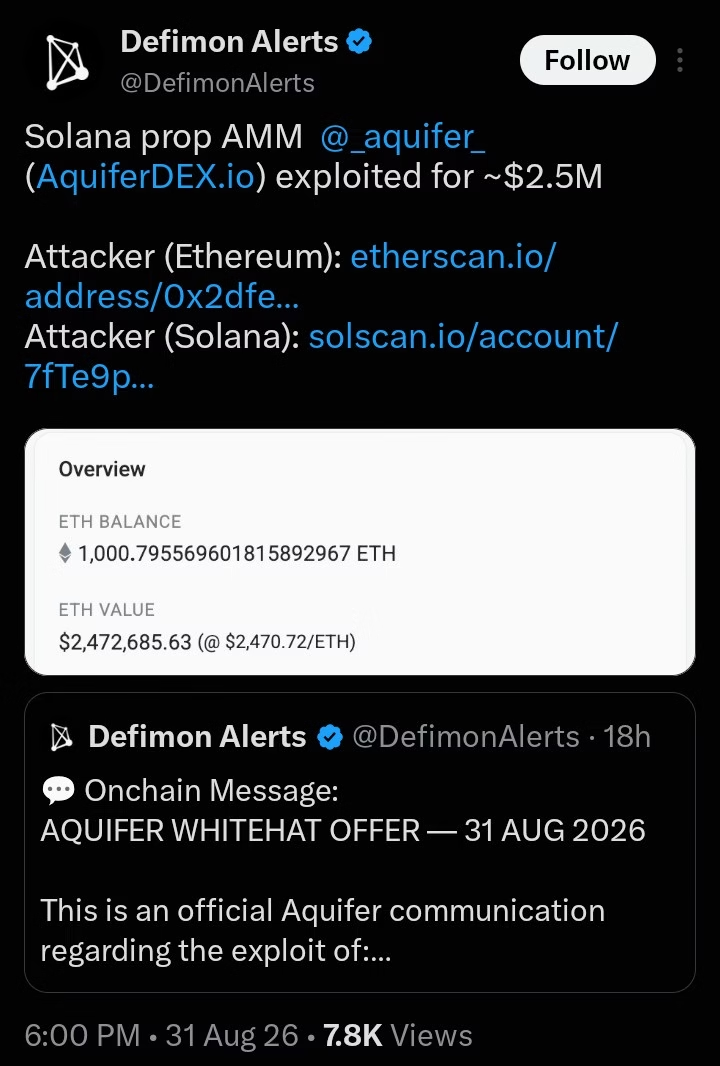
DefiLlama lists Aquifer’s total value locked at roughly $2.8 million, meaning this Aquifer Solana exploit wiped out nearly all of the protocol’s liquidity in one afternoon. Defimon traced a Solana address and a separate Ethereum address back to the attacker, and moving stolen funds across two chains right away is a classic obfuscation play, not evidence of anything more sophisticated.
Here’s the detail worth sitting with: nothing published so far suggests Aquifer’s smart contracts were touched, which is a small mercy given how much damage a genuine code exploit could have done to a protocol this size. The real question is how someone got hold of a wallet in the first place, a leaked private key, compromised admin credentials, something else entirely, and nobody’s said yet. Until a post-mortem lands, every other Solana protocol is left wondering whether it shares the same blind spot.
Aquifer’s offer, authorized through its own Solana upgrade authority and posted on-chain, gives the attacker a firm window: return 80% of the stolen assets to designated recovery addresses on either chain before the deadline, and Aquifer says it won’t chase civil claims tied to the incident.
That promise only covers Aquifer itself, though, it doesn’t bind law enforcement, regulators, or sanctions authorities, so taking the deal doesn’t make every legal risk disappear. Whitehat offers like this have become a familiar move in DeFi when the odds of a full recovery look thin. Sometimes asking nicely, with a deadline attached, beats chasing a ghost across two blockchains.
Aquifer’s breach fits a pattern security researchers have been flagging all year. CertiK’s own Hack3D report for the first half of 2026 found that wallet compromise, not phishing, not buggy code, was the single costliest attack category industry-wide, responsible for more than $444 million across just 33 incidents, averaging more than $13 million per hit. Attackers, in other words, are increasingly going after the people holding the keys instead of hunting for flaws in the code protecting them, since one leaked credential can be worth more than months spent picking apart a smart contract.
Aquifer’s loss barely registers next to the Kelp DAO and Drift Protocol breaches that drove most of CertiK’s numbers, but it’s the exact same failure mode playing out smaller, proof that a protocol doesn’t need eye-watering TVL to become worth someone’s time.
Aquifer still hasn’t said whether it’s found the root cause of the breach, so the full lesson from this Aquifer Solana exploit remains unfinished business for every team watching from the sidelines.
What’s doing the actual work right now isn’t a lawsuit or a bounty hunter, it’s a countdown clock and an offer to let the attacker keep a fifth of the take and disappear quietly. Whether that gamble pays off will be obvious within days of Sept. 3, one way or another.



Copyright © 2025 - The Bit Gazette.

