


- Trending
- Comments
- Latest

Bitcoin’s supply of new coins just got cut in half. In April 2024, the network’s halving event reduced miner rewards from 6.25 BTC to 3.125 BTC, tightening an already scarce asset.
Historically, halvings have triggered spectacular bull runs—but this time, a maturing market and institutional inflows are reshaping expectations. For miners, the pressure is immediate; for investors, the playbook has changed.
The Bitcoin halving is a pre-programmed event in the Bitcoin network that reduces the reward miners receive for validating transactions by 50%.
It occurs roughly every four years, or after every 210,000 blocks are mined. The most recent halving took place in April 2024, cutting block rewards from 6.25 BTC to 3.125 BTC.
This event is critical because it directly affects supply. With fewer new coins entering circulation, Bitcoin becomes more scarce over time. Historically, halvings have preceded major bull runs, though past performance does not guarantee future results.
At its core, the halving creates a supply shock. While demand for Bitcoin may remain constant or even grow, especially with rising institutional interest, the rate of new supply is suddenly reduced.
Bitcoin’s annual inflation rate drops significantly after each halving. Before the 2024 event, it hovered around 1.7%, but post-halving, it fell closer to 0.8%, making Bitcoin scarcer than many traditional assets.
This tightening supply has historically influenced price cycles:
However, analysts warn that the market is maturing, and returns may diminish over time.
“Each halving has a smaller relative impact because Bitcoin is becoming a more efficient and liquid market.” Lyn Alden, Macro Analyst, Lyn Alden Investment Strategy.
For investors, this means expectations should be grounded in current market realities rather than historical hype.
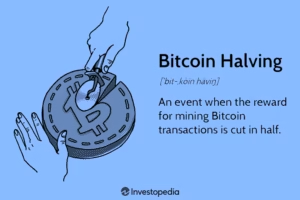
While investors often focus on price, the halving has immediate consequences for Bitcoin miners.
With rewards cut in half, mining becomes less profitable, especially for smaller operators with higher energy costs.
Miners must now rely more on transaction fees, operational efficiency, and economies of scale.
This can lead to consolidation in the mining industry, where only the most efficient players survive.
“Post-halving periods typically force weaker miners out, strengthening the network overall.” Jaran Mellerud, Mining Analyst, Hashrate Index.
However, reduced mining rewards can temporarily impact network hash rate (the total computational power securing Bitcoin), although it has historically recovered as prices rise.
For crypto investors, the Bitcoin halving is not a guaranteed price catalyst but it remains a powerful narrative driver in the market.
Key factors to monitor post-halving include:
The rise of Bitcoin ETFs and institutional inflows could amplify the effects of reduced supply.
Interest rates, inflation, and global liquidity all influence investor appetite for risk assets like Bitcoin.
If miners sell less Bitcoin due to reduced rewards, it could further constrain supply in the market.
The halving often aligns with renewed retail interest, but timing varies.
The Bitcoin halving remains one of the most important structural events in the crypto market.
By reducing supply issuance, it reinforces Bitcoin’s scarcity narrative while simultaneously reshaping miner economics and investor expectations.
The real opportunity lies not just in the event itself but in understanding how it interacts with broader market forces.
In a market increasingly driven by institutional capital and macro trends, the halving is no longer the only story but it is still a foundational one.



Copyright © 2025 - The Bit Gazette.