

- Trending
- Comments
- Latest

Crypto-linked donors gave about $471 million to US campaigns and committees in the 2026 midterm cycle, nearly double the 2024 total, with roughly $302 million going to Republican-aligned recipients, according to a Breadcrumbs analysis of Federal Election Commission filings published on November 11, 2026.
The reported $471 million represents a substantial increase from the approximately $250 million attributed to the cryptocurrency industry during the 2024 election cycle.
According to the analysis, Republican-aligned candidates and political committees received approximately $302 million, accounting for 65% of the overall amount. Democratic-aligned recipients received around $96 million, representing approximately 21%.
An important part of this spending went beyond direct candidate contributions. More than $250 million reportedly flowed into political committees without an exclusive cryptocurrency focus, including organizations supporting broader Republican, Democratic, artificial intelligence and other policy interests.
Among the largest recipients was MAGA Inc., which received approximately $94 million in cryptocurrency-linked contributions.
Leading the Future, a political committee supporting artificial intelligence initiatives, received $50 million. Other beneficiaries included Lone Star Rising with $18 million, HMP with $17 million and the Congressional Leadership Fund with $15 million.
These figures illustrate the increasing importance of political engagement within the digital asset industry. The sector is investing considerable resources in building relationships with policymakers who could influence future legislation affecting exchanges, stablecoins, tokenization and institutional cryptocurrency adoption.
Cryptocurrency-focused political action committees played another major role in distributing election funding.
Fairshake emerged as a central organization in the industry’s political financing structure. It directed substantial resources through its affiliated committees, Protect Progress and Defend American Jobs, which supported different political candidates and interests.
Together with other crypto-focused political organizations, these committees recorded approximately $163 million in spending during the election cycle.
Defend American Jobs accounted for the largest reported share, spending approximately $102 million in support of Republican candidates or against Democratic opponents. Protect Progress recorded $29 million in spending, while Fairshake reported $18.4 million.
Other organizations included the Digital Freedom Fund, which spent approximately $8.3 million, and Fellowship, which recorded around $4.8 million.
The overall spending pattern was strongly Republican-oriented. Approximately 82% of crypto PAC expenditure supported Republican candidates or opposed Democrats, while the remaining 18% supported Democrats or opposed Republicans.
The financial commitment reflects the industry’s growing willingness to participate directly in the political process rather than relying solely on traditional lobbying and public advocacy.
A relatively small group of prominent cryptocurrency businesses, investment firms and wealthy individuals accounted for a considerable portion of the reported contributions.
Andreessen Horowitz, commonly known as a16z, topped the list of corporate and investment-related contributors with approximately $117 million. Coinbase followed with $61 million, while Ripple contributed around $50 million.
Crypto.com was also among the major contributors, with approximately $39 million, followed by Winklevoss Capital Fund at $21 million.
Collectively, the five leading entities accounted for approximately $288 million, representing around 61% of the total reported contributions.
Reid Hoffman emerged as the largest individual contributor in the analysis, with approximately $28 million. Cameron Winklevoss and Tyler Winklevoss contributed around $18 million each, while Ripple co-founder Chris Larsen accounted for approximately $17 million.
However, the analysis distinguishes between crypto-native contributors and crypto-affiliated contributors. The former primarily operate within the digital asset industry, while the latter include diversified businesses, investors and individuals with significant cryptocurrency connections.
Despite the scale of the industry’s political investment, the election results revealed that financial support did not translate into success in every contest.
Of the 90 candidates who received backing from cryptocurrency-focused super PACs, 73 reportedly won their elections, while 14 lost. Three races remained undecided in the reported figures.
However, the financial outcome was less encouraging. Approximately $88.2 million of the $163 million spent by crypto-focused PACs went toward unsuccessful campaigns.
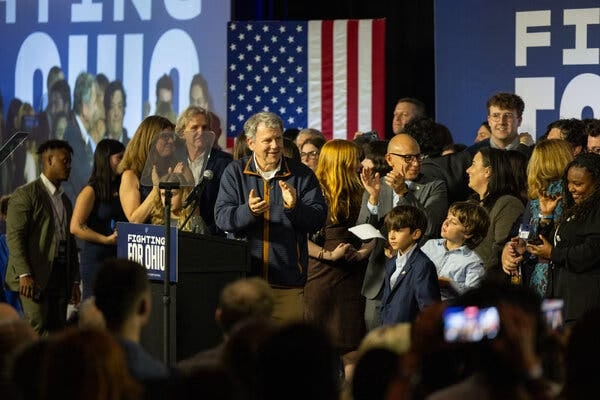
The Ohio Senate race represented the most expensive setback. Crypto-backed political organizations reportedly spent approximately $64 million supporting Jon Husted and opposing Sherrod Brown, but the effort failed to produce the desired result.
Other major investments delivered more favourable outcomes. Crypto PACs reportedly spent $14 million in Nebraska, $13 million in Alabama and $8 million in Kentucky, backing candidates who ultimately won their respective contests.
The record contributions made by Crypto donors could strengthen the industry’s access to political decision-makers, but the long-term benefits will depend on whether that influence produces meaningful legislative outcomes.
With hundreds of millions of dollars committed to political campaigns, the sector has established itself as a major financial participant in American electoral politics.



Copyright © 2025 - The Bit Gazette.