

- Trending
- Comments
- Latest

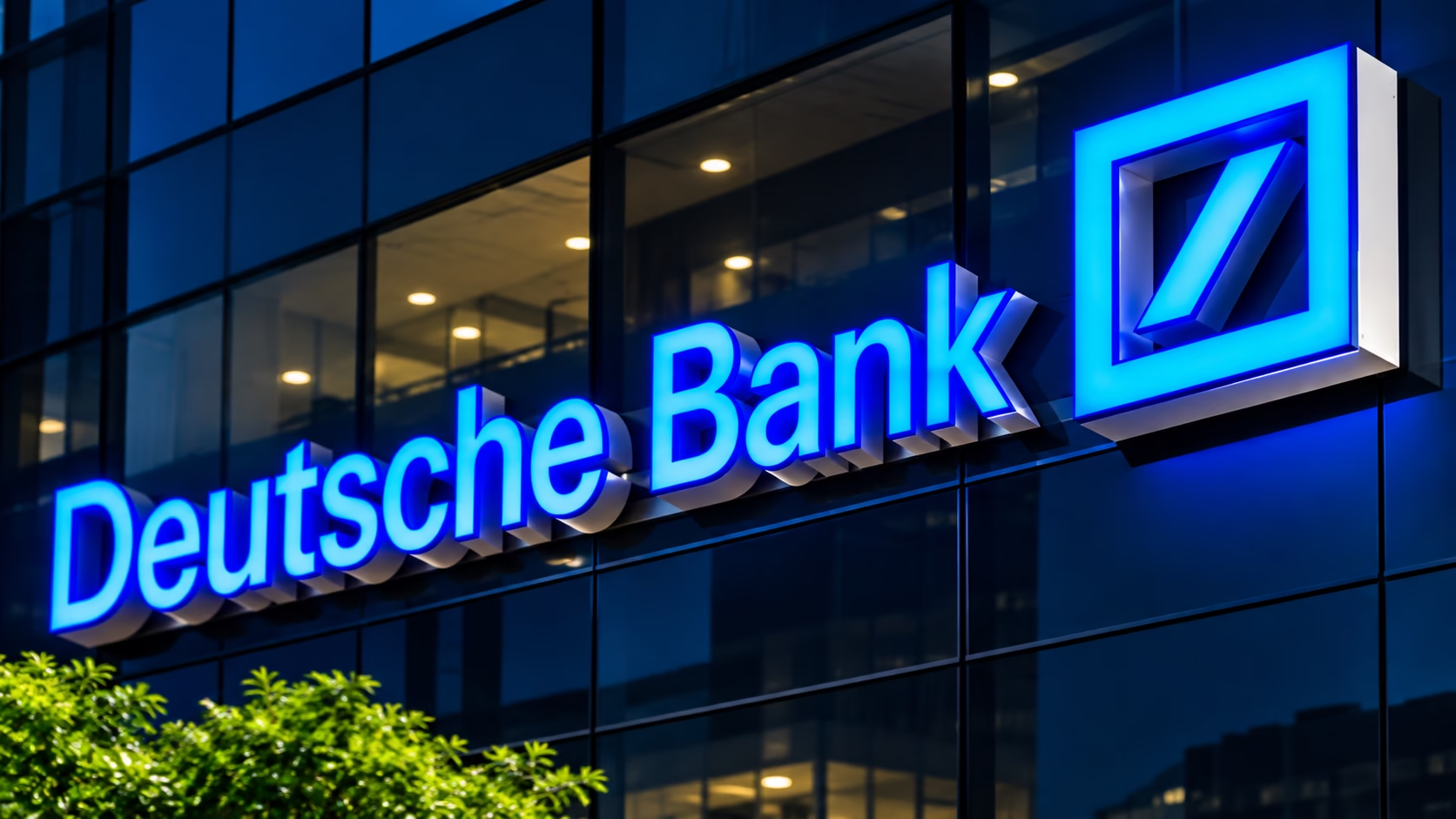
Deutsche Bank has gone live with its digital asset custody service for paying institutional clients in Europe, the lender said on November 11, 2026, putting Bitcoin, Ether and select stablecoins under the control of Germany’s largest bank.
The development comes as established financial institutions increasingly explore blockchain technology and digital asset products to meet changing client demands. Rather than requiring companies to build their own cryptocurrency storage infrastructure, Deutsche Bank will manage digital wallets and private keys on their behalf.
Its initial offering covers Bitcoin (BTC), Ethereum (ETH), and selected stablecoins and electronic money tokens, including USDC, EURC and EURAU.
The service is designed for corporate customers, asset managers, hedge funds, custodians, brokers and sovereign institutions. Retail cryptocurrency investors are not the primary target market.
The launch follows regulatory approval from Germany’s Federal Financial Supervisory Authority (BaFin), allowing the bank to move beyond its earlier announcement and begin serving eligible institutional customers.
Security is central to Deutsche Bank’s new Crypto custody service, particularly as institutional investors seek dependable ways to protect digital assets against cyberattacks, unauthorised transactions and operational failures.
The platform uses multiple security mechanisms to safeguard clients’ holdings. These include hardware-protected private keys, separate warm and cold wallet environments, multiple approval requirements and controlled backup and recovery arrangements.
The system also separates responsibilities among personnel, ensuring that critical transactions require approval from more than one individual. This approach is intended to reduce the possibility of unauthorised access and limit operational risks.
Private keys are particularly important in cryptocurrency ownership because they provide the cryptographic authority needed to control and transfer digital assets. Losing access to these keys or allowing malicious actors to obtain them can result in significant financial losses.
Deutsche Bank’s infrastructure is therefore designed to give institutional customers access to professional digital asset management without requiring them to independently operate complex custody systems.
The bank has also indicated that its solution will rely on selected external technology and infrastructure providers for specific technical components.
However, institutional-grade security does not eliminate every risk associated with cryptocurrencies. Market volatility, fraud, cyber incidents and the failure of other market participants remain potential threats. Digital assets also do not receive the same deposit-guarantee protection available to eligible traditional bank deposits.
The launch of Deutsche Bank’s Crypto custody service arrives during a period of heightened attention to cryptocurrency security following a major incident involving Binance, the world’s largest cryptocurrency exchange.
On October 29, Binance suffered a security breach involving its internet-connected hot wallets. The exchange subsequently disclosed that approximately $6.3 billion in digital assets had been affected by unauthorised withdrawals.
In its October 30 security update, Binance explained that its initial investigation pointed towards a potentially compromised laptop, although subsequent investigations identified additional points of intrusion.
The exchange also said it had found no evidence that wallet private keys had been leaked at that stage of its investigation.
Binance committed to absorbing the financial impact rather than passing the losses to customers. It also reported working with law enforcement agencies, blockchain intelligence companies and industry partners to trace and freeze affected assets.
According to the exchange’s November 3 update, approximately $2.85 billion had been frozen or intercepted, while the company had replenished approximately 98% of the affected token assets as of October 31.
The incident has renewed discussions about the security arrangements used by cryptocurrency platforms and the importance of independent custody infrastructure.
For institutional investors, the incident reinforces the importance of understanding who controls private keys, how transactions are authorised and what protections exist when security systems are compromised.
This is where Deutsche Bank’s Crypto custody service could become relevant. By offering custody through an established banking institution, the platform provides an alternative to relying exclusively on cryptocurrency exchanges or independently maintained storage systems.
Nevertheless, using a traditional bank does not automatically make digital assets risk-free. Investors must still assess the custodian’s operational controls, contractual protections and exposure to external threats.
Beyond cryptocurrency storage, Deutsche Bank’s Crypto custody service forms part of a wider strategy to explore blockchain-based financial products and services.
The bank has indicated that tokenised financial instruments are part of its longer-term development roadmap. These products could include financial assets represented digitally on blockchain networks, potentially creating new ways to issue, transfer and manage investments.
On November 11, Deutsche Bank also announced an agreement with its asset management business to explore opportunities involving tokenised money market funds, cryptocurrency exchange-traded commodities and stablecoins.
This development suggests that the institution sees digital asset custody as more than an isolated banking product. Instead, it could provide the infrastructure needed to support a broader range of blockchain-enabled financial activities.
Gerald Podobnik, Co-Head of Deutsche Bank’s Corporate Bank, previously described digital assets as complementary to the traditional financial system rather than replacements for it.
He explained that the bank wants to provide customers with a secure and regulated gateway into the developing digital asset market.
Meanwhile, Paul Maley, Deutsche Bank’s global head of trust and securities services, has highlighted the importance of secure private-key management and institutional controls in the custody offering.
The bank’s Crypto custody service could therefore become an important foundation for its future blockchain initiatives, particularly as demand for tokenised investment products and regulated digital asset infrastructure increases.
Deutsche Bank’s entry into the operational cryptocurrency custody market represents another sign that traditional financial institutions are becoming more comfortable providing services connected to digital assets.
For institutional investors, the involvement of established banks could help address concerns about private-key management, operational transparency and security standards. It could also make it easier for companies that already maintain banking relationships to explore cryptocurrency investments without developing entirely separate custody arrangements.
However, competition in the institutional custody market is already developing, with specialist digital asset custodians and other major financial institutions offering services to professional investors.
Deutsche Bank will need to demonstrate that its platform can deliver reliable security, efficient transaction processing and competitive pricing to attract more institutional customers.
The bank has not publicly disclosed its custody fees or identified its initial paying customers. These details could provide a clearer picture of how quickly the platform is gaining traction.
Ultimately, the success of its Crypto custody service will depend on institutional adoption, regulatory developments and its ability to maintain confidence in the security of assets held on behalf of clients.
As traditional finance and blockchain technology become increasingly interconnected, Deutsche Bank’s latest move places it among the established banking institutions seeking a larger role in the evolving digital asset economy.



Copyright © 2025 - The Bit Gazette.