

- Trending
- Comments
- Latest

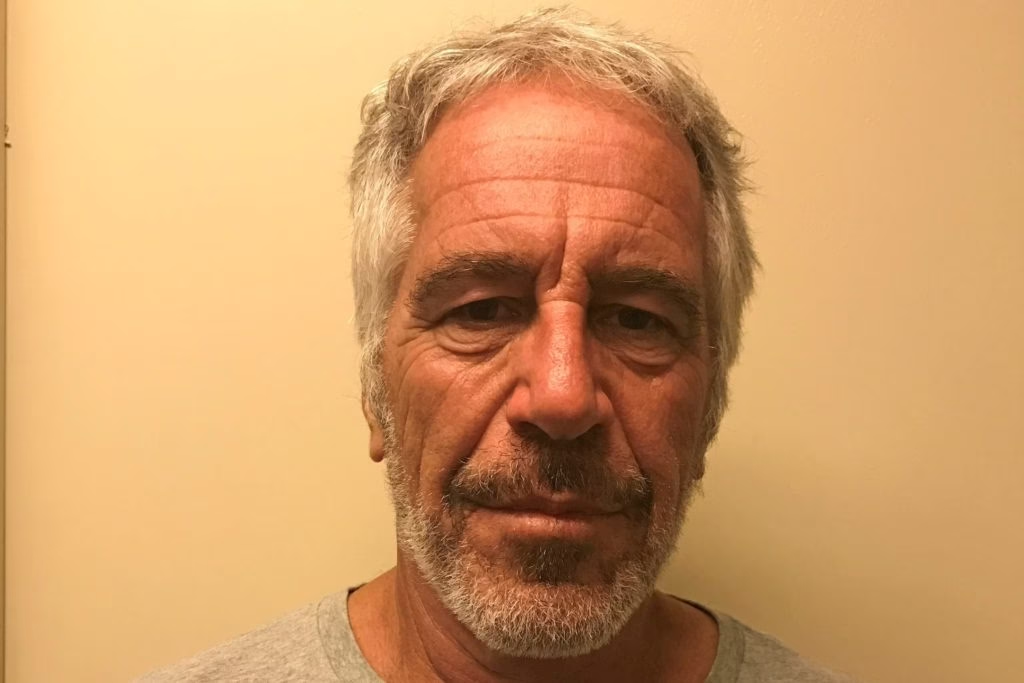
Jeffrey Epstein publicly dismissed crypto as a “Ponzi scheme.” Privately, US Department of Justice records show, he floated state-backed digital currencies to Russia, Saudi Arabia, Qatar and Dubai, funded MIT bitcoin research and held a $3 million Coinbase stake, the Miami Herald reported on November 12, 2026. The report does not show any of the proposals were adopted.
One of the most significant revelations concerns Epstein’s early investment in Coinbase, one of the cryptocurrency industry’s best-known companies.
According to the Miami Herald’s report, Epstein invested $3 million in the cryptocurrency exchange in late 2014 through an arrangement brokered by Brock Pierce.
Pierce, a former child actor who became involved in the cryptocurrency industry, was identified in the report as a Trump ally. He recently attracted attention after unveiling a golden statue of the US president at Trump National Doral in Florida.
The investment proved financially significant for Epstein. By 2018, he had reportedly sold half of his Coinbase stake for approximately 10 times his original investment.
The transaction illustrates how Epstein gained exposure to the expanding cryptocurrency market several years before digital assets became a more prominent part of mainstream financial discussions.
However, the records described in the report do not establish that Epstein had an operational role in Coinbase or that the exchange was aware of the full extent of his activities.
The investment remains an important part of the broader picture of Epstein’s secret crypto ties, particularly because of the involvement of intermediaries and his efforts to maintain a low profile in certain financial transactions.
Epstein’s connections extended beyond direct cryptocurrency investments into academic research and discussions with prominent figures working on Bitcoin technology.
The newly released records indicate that he helped fund MIT’s Digital Currency Initiative, a programme associated with research and development in digital currencies.
He also corresponded with Jeremy Rubin, an MIT researcher known for his work on Bitcoin.
Their exchanges reportedly included discussions about concealing Epstein’s identity in business transactions. At one point, Epstein considered using a pseudonym or identifying himself simply as “Jeff” to avoid making potential investors uncomfortable.
The correspondence offers further insight into how Epstein approached his involvement in the cryptocurrency sector, particularly his apparent concern that his identity could affect business relationships.
Epstein’s secret crypto ties therefore involved more than capital investment. His financial support and communications placed him in contact with researchers and individuals working on the development of digital currency technologies.
The records also show that he met with US Treasury officials in 2014 to discuss virtual currencies, suggesting that his interest extended to regulatory and policy discussions surrounding the emerging industry.
The available report, however, does not establish that these meetings resulted in any formal government appointment, regulatory influence or policy agreement.
Between 2014 and 2017, Epstein reportedly explored opportunities to introduce government-backed cryptocurrencies in several countries.
The records indicate that he pitched state-run digital currency projects to Russia, Saudi Arabia, Qatar and Dubai.
One of the reported approaches involved former Norwegian Prime Minister Thorbjørn Jagland. Epstein encouraged Jagland to suggest that Russian President Vladimir Putin consider creating a Russian version of Bitcoin.
The proposal reflected an effort to bring cryptocurrency technology into government-controlled financial systems rather than relying exclusively on privately developed digital assets.
Epstein also promoted the idea of a “Sharia compliant” digital currency to Saudi Crown Prince Mohammed bin Salman.
The proposal suggested an attempt to connect digital currency development with Islamic financial principles, although the report does not establish whether the Saudi leadership formally considered or adopted the idea.
These international approaches further demonstrate the geographical reach of Epstein’s secret crypto ties.
His reported engagements covered several governments and political figures, with proposals that sought to position digital currencies within national financial systems.
However, the Miami Herald’s account does not indicate that any of the proposed government-backed cryptocurrency projects ultimately materialised.
Epstein’s financial activities also extended into the traditional banking sector shortly before his arrest in 2019.
Weeks before his arrest, he was reportedly in discussions about investing in Medici Bank, a financial institution based in San Juan, Puerto Rico.
The bank was founded by Lorenzo de Medici, whose business proposal apparently failed to impress Epstein.
In text messages referenced in the report, Epstein described the founder as “silly” and said he “knows zero about money.”
The exchange provides another glimpse into his assessment of potential business partners and investment opportunities during the final weeks before his arrest.
Although the Medici Bank discussions did not feature the same cryptocurrency focus as his Coinbase investment or government-backed digital currency proposals, they form part of the wider financial network documented in the released records.
The disclosures collectively reveal a previously underreported dimension of Epstein’s business activities, spanning cryptocurrency investments, academic research, government engagement and international financial proposals.
His public dismissal of cryptocurrency as a “Ponzi scheme” stands in contrast to the investments and relationships described in the Justice Department records.



Copyright © 2025 - The Bit Gazette.