







- Trending
- Comments
- Latest

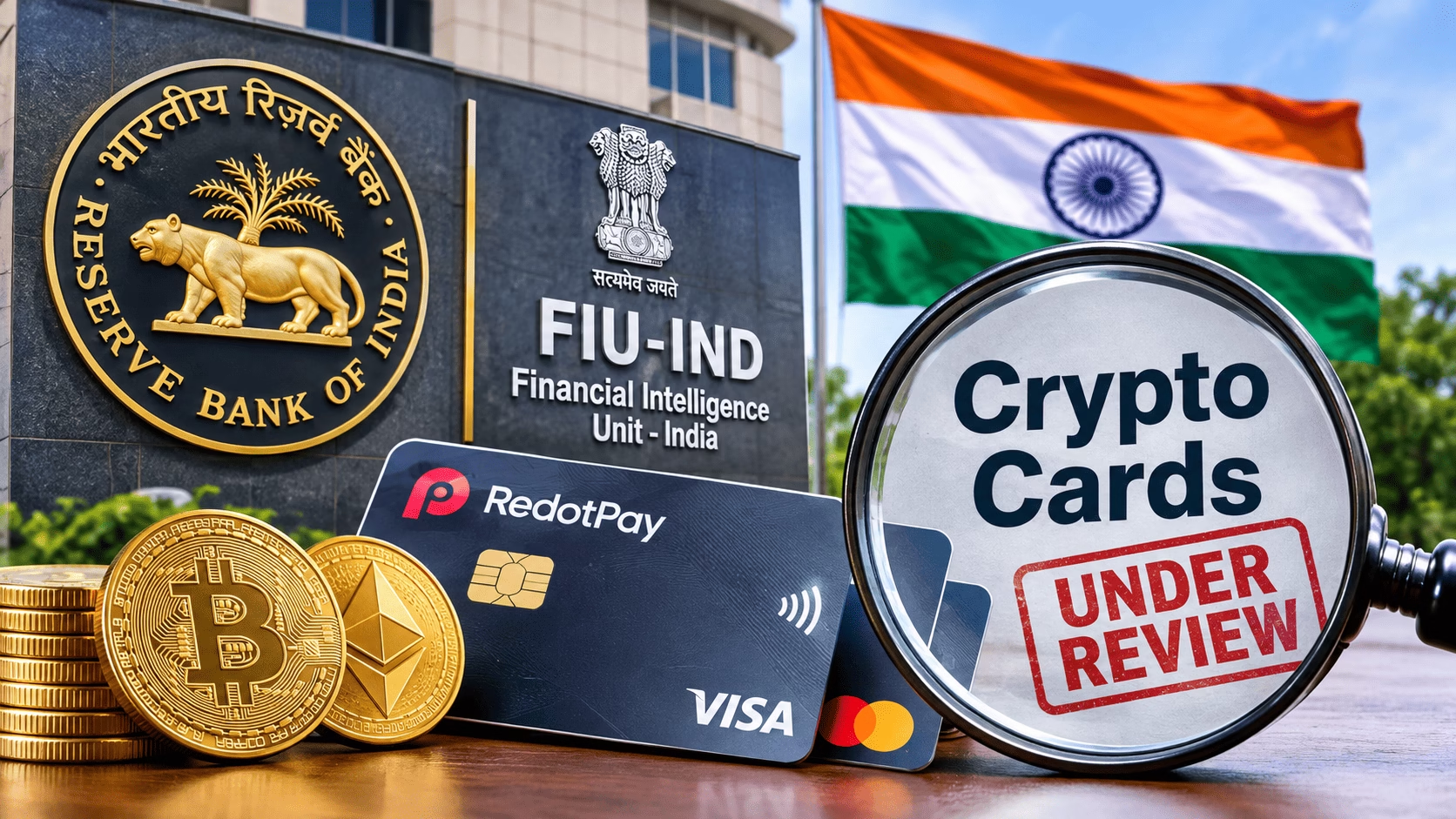
Indian regulators are reportedly examining offshore crypto payment cards that let residents spend digital assets in rupees, with RedotPay among the providers under review, according to a November 2, 2026 report by The Economic Times.
Neither the Reserve Bank of India nor the Financial Intelligence Unit-India has confirmed any enforcement action, but users say their cards have stopped working.
Offshore cryptocurrency payment cards allow customers to spend digital assets without first manually converting their holdings into traditional currency. Instead, the service provider facilitates the conversion when a transaction takes place.
For example, a customer holding Bitcoin, Ethereum, USDT or USDC can use a linked payment card to purchase goods from a merchant. The necessary cryptocurrency is converted into the relevant fiat currency, allowing the merchant to receive payment through conventional card-processing infrastructure.
Companies such as RedotPay provide virtual and physical cards connected to established payment networks. These products have become attractive to cryptocurrency holders seeking alternatives to conventional banking arrangements.
According to The Economic Times, Indian residents have reportedly used the services for online shopping, mobile phone recharges, flight bookings and other everyday purchases. Some physical cards have also been used to withdraw rupees from automated teller machines operated by major Indian banks.
The newspaper reported that certain prepaid products cost between $40 and $50 and offer approximately three years of validity.
The investigation may have followed findings submitted by Digital South Trust, a Bengaluru-based blockchain research organisation. Its founder, Sudhakar Lakshmanaraja, disclosed that the organisation obtained a virtual Visa-backed RedotPay card in August and successfully conducted several domestic online transactions.
Explaining the organisation’s concerns, Lakshmanaraja told The Economic Times: “We independently examined multiple crypto-card programmes, documented their use for everyday payments in India, and submitted the findings to relevant authorities.”
He also highlighted concerns about offshore payment programmes advertising limited or no know-your-customer (KYC) requirements, potentially making it difficult for financial institutions to establish customer identities and monitor suspicious activity.
The regulatory concerns are becoming more visible as customers report interruptions to services they previously used for domestic transactions.
Several users began complaining on social media in late October that their prepaid cards were no longer processing payments in India. Others reported difficulties accessing the websites of offshore service providers.
These reports have raised concerns about the possibility of restrictions being introduced through international payment networks rather than through a publicly announced government directive.
According to sources cited by The Economic Times, Visa and Mastercard may have been contacted by Indian authorities regarding the payment arrangements. However, neither company confirmed that it had received instructions to suspend the services.
The distinction is important because an individual card becoming inactive does not necessarily mean that every offshore provider has been blocked. The precise scope of the reported restrictions remains unclear.
RedotPay’s product documentation describes a payment system that allows customers to spend supported digital assets through virtual and physical cards. Its services include cryptocurrency conversion during payment processing and ATM withdrawals where supported.
The reported disruptions could therefore affect customers who depend on these services for everyday spending, particularly those holding stablecoins rather than maintaining traditional bank balances.
For the wider industry, the situation highlights the vulnerability of Crypto cards that depend on conventional payment networks while operating through overseas financial service providers.
India’s Foreign Exchange Management Act (FEMA) is central to the concerns surrounding these payment products.
The legislation establishes rules governing foreign exchange transactions and cross-border financial activities. Regulators are reportedly examining whether offshore cryptocurrency payment arrangements comply with these requirements when Indian residents use foreign-held digital assets to settle domestic purchases.
Manavendra Mishra, a white-collar crime and investigations partner at Khaitan & Co, warned that users could face compliance concerns even when they believe they are simply making ordinary purchases.
“The risk is cross-border, not just domestic,” Mishra told The Economic Times.
He also explained that blockchain analysis tools can help investigators trace cryptocurrency movements and examine the origins and ownership of digital assets.
Harshal Bhuta, co-founder and international tax and FEMA specialist at Ascentium India, similarly questioned whether foreign-issued cryptocurrency cards align with India’s prepaid payment instrument and payment settlement regulations.
His concerns centre on the involvement of overseas custodians, cryptocurrency balances and automatic conversion into fiat currency when transactions occur.
The scrutiny also follows wider enforcement efforts against offshore cryptocurrency businesses. On September 9, 2026, India’s FIU-IND announced notices to 15 virtual digital asset service providers over alleged non-compliance with anti-money laundering requirements.
The government has maintained that qualifying offshore cryptocurrency businesses serving Indian customers must meet applicable reporting and compliance obligations.
These developments suggest that authorities are increasingly interested in how international digital asset companies interact with India’s financial system.
The investigation comes at a significant time for RedotPay, which has been expanding its stablecoin payment business and preparing for a potential listing in the United States.
The company completed financial auditing and a separate review of its anti-money laundering and counter-terrorist financing controls in September as part of its IPO preparations.
According to CoinDesk, RedotPay reported approximately 8.5 million users as of July 2026. The company has also been associated with a potential valuation exceeding $5 billion.
CEO and co-founder Michael Gao said the audits were intended to strengthen confidence in the company’s financial reporting and compliance standards.
“We undertook these audits to build confidence and trust in our financial reporting and compliance standards,” Gao said, according to CoinDesk.
RedotPay also rejected earlier suggestions that its IPO had been postponed, stating that it remained committed to working with its partners on the listing process.
The broader market opportunity remains substantial. Stablecoin payments are increasingly being integrated into conventional financial infrastructure, allowing users to access digital dollar balances through familiar payment channels.
Reuters reported in August that RedotPay had more than eight million users worldwide and that global stablecoin card spending exceeded $1 billion in July, based on Paymentscan data. The company also projected that annual stablecoin card spending could reach $50 billion by 2028.
For the cryptocurrency payment industry, India’s regulatory response could become an important test of how offshore payment providers operate in markets with strict foreign exchange and financial monitoring requirements.
Although the reported examination has not produced a publicly confirmed enforcement action, providers may face increasing pressure to demonstrate that their products meet local compliance standards.
The future of Crypto cards in India will likely depend on how regulators address the relationship between foreign cryptocurrency wallets, international payment networks and domestic financial regulations. Until authorities provide further clarification, Indian users and offshore providers will have to navigate an increasingly uncertain regulatory environment.



Copyright © 2025 - The Bit Gazette.