




- Trending
- Comments
- Latest

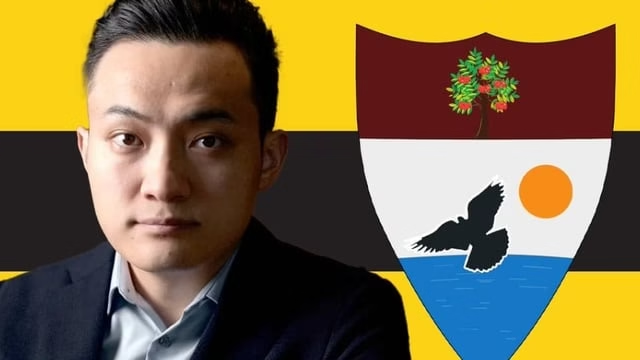
A BBC Two documentary has found that Liberland, a self-declared micronation on disputed Danube River territory, runs a governance system where political influence is bought directly with a crypto token called Liberland Merits, and its prime minister is Tron founder Justin Sun, an investor who has poured more than $75 million into the Trump family’s World Liberty Financial.
The project has attracted support from entrepreneurs including Tron founder Justin Sun, while also drawing criticism over whether wealth-based political participation can coexist with democratic principles.
Founded in 2015 by Czech politician Vít Jedlička, Liberland seeks to establish a libertarian society that minimizes government intervention and relies on blockchain technology to administer public affairs. Situated on a disputed stretch of land along the Danube River, the micronation remains unrecognized internationally but has continued to promote itself as a digital-first state.
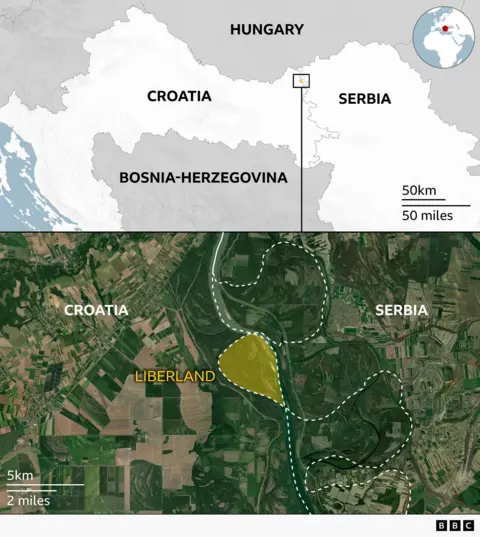
At the heart of Liberland is a blockchain-based governance system powered by “Liberland Merits,” digital tokens that determine voting influence. Unlike conventional democracies, where citizens generally receive equal voting rights, the project’s governance model allows individuals with more Merits to exercise greater influence over elections and leadership decisions.
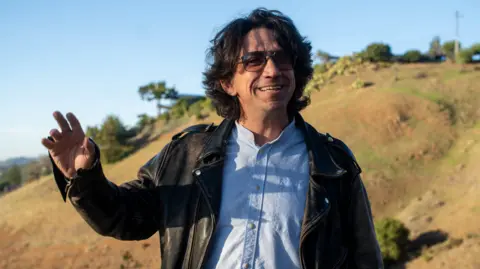
“So the people that have more Merits are able to have more say in who is going to be in the leadership of the country,” — Vít Jedlička, President of Liberland.
The country also promotes a tax-free economic model, arguing that voluntary participation and decentralized finance can replace traditional government institutions.
Supporters contend that blockchain offers greater transparency and efficiency, although many government functions still require human administration despite the use of smart contracts.
Much of Liberland’s visibility stems from its association with influential figures in the cryptocurrency industry. Among its most prominent supporters is Justin Sun, founder of the Tron blockchain, who serves as the micronation’s prime minister.
According to the BBC, Sun and roughly 30 other technology billionaires have expressed support for developing the project into a functioning digital society.
Sun’s involvement extends beyond Liberland. He has invested more than $75 million in World Liberty Financial, the Trump family’s cryptocurrency venture, alongside additional investments in Donald Trump’s memecoin. His role has intensified interest in the intersection between cryptocurrency, politics, and emerging governance models.
The blockchain infrastructure underpinning Tron also serves as the technological foundation for Liberland’s governance.
Citizens vote on laws and referendums using digital tokens, with results processed through blockchain-based systems rather than conventional electoral mechanisms.
However, Sun’s blockchain has faced scrutiny. Blockchain analytics firm TRM Labs has identified Tron as one of the major networks used in illicit cryptocurrency transactions, although Sun has stated that the company has strengthened cooperation with law enforcement agencies to combat criminal activity.
While supporters argue that Liberland demonstrates the potential of decentralized governance, critics question whether its political structure concentrates power among wealthy participants.
Former Croatian lawmaker and Liberland Interior Minister Ivan Pernar defended the project’s selective philosophy, arguing that its community is designed for individuals who support decentralized finance and personal responsibility.
“Usually, people who believe in freedom, decentralised finances and so on, they tend to be from the upper class of society,” — Ivan Pernar, Interior Minister of Liberland.
When challenged over whether wealth effectively translates into political influence, Pernar responded simply: “Of course.”
Those remarks have fueled broader concerns that token-based governance could create political systems where financial resources determine influence, departing from the principle of equal representation that underpins most modern democracies.
Beyond Liberland, the BBC investigation argues that the micronation reflects a broader movement among some technology entrepreneurs who view blockchain as a foundation for future governance.
Projects including Prospera in Honduras, Peter Thiel-backed seasteading initiatives, and Tim Draper’s Draper Nation all explore alternatives to traditional nation-states through digital governance and cryptocurrency. Venture capitalist Tim Draper believes blockchain will eventually replace many government services.
“It’s just a matter of time,” — Tim Draper, Founder of Draper University.
The report also highlights the influence of political thinker Curtis Yarvin, whose “Patchwork” concept envisions a world of privately governed microstates competing for citizens in much the same way businesses compete for customers.
While controversial, these ideas have gained attention among some figures in Silicon Valley and segments of the U.S. political landscape.
The BBC concludes that Liberland offers more than an experimental blockchain project. It serves as a case study in how cryptocurrency, digital governance, and concentrated private wealth are increasingly intersecting.
Although the micronation remains largely symbolic, its supporters see it as a prototype for future political systems, while critics argue it illustrates the risks of tying civic power to financial influence.
As blockchain technology continues to evolve, Liberland is likely to remain part of the wider debate over whether decentralized technology should supplement or fundamentally reshape traditional government.
Primary Source: BBC News


Copyright © 2025 - The Bit Gazette.