

- Trending
- Comments
- Latest

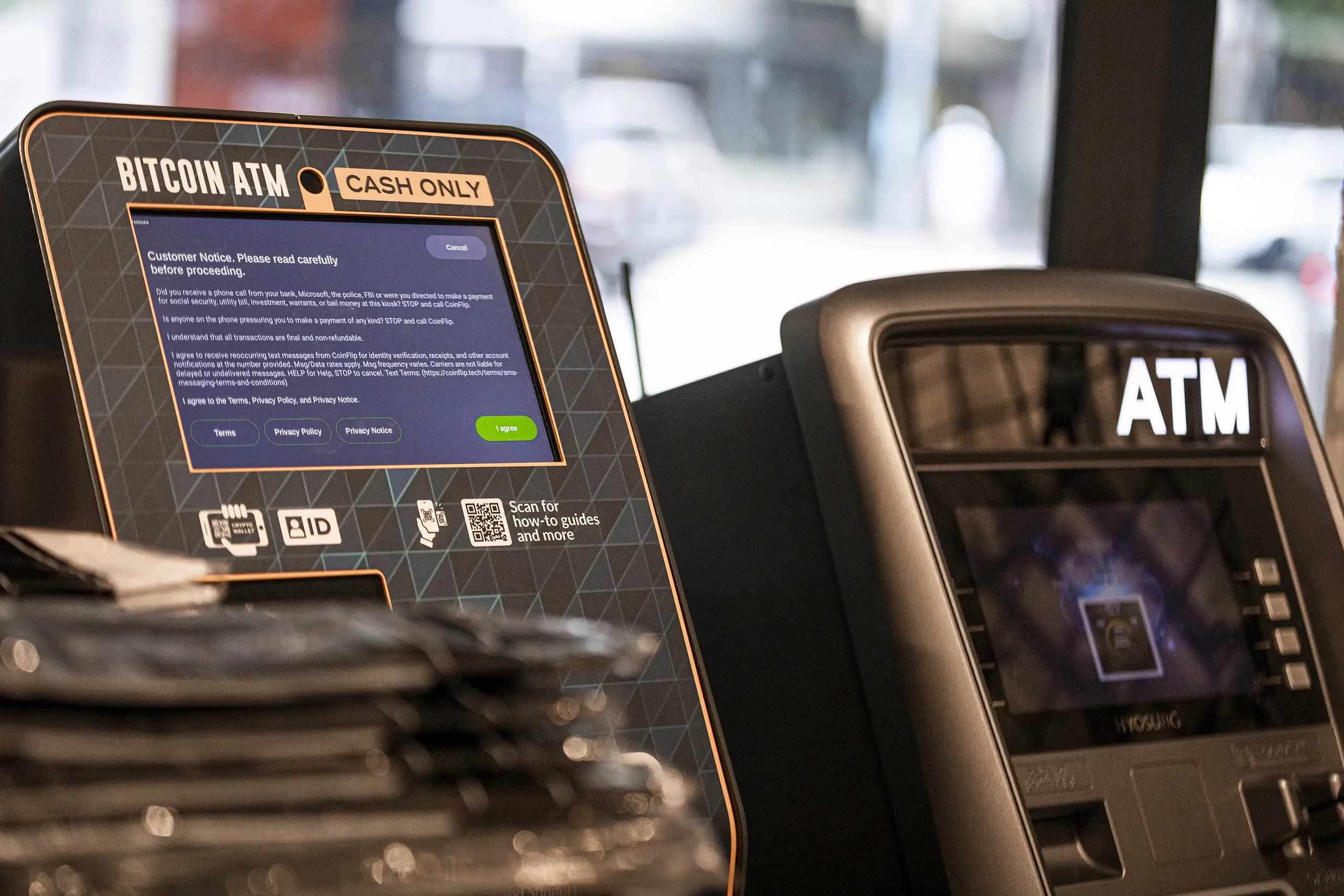
A Michigan Senate committee has unanimously backed a bill to ban Bitcoin kiosks statewide, after FBI data showed crypto ATM scams cost residents nearly $12 million in 2025.
Nationally, the FBI’s Internet Crime Complaint Center (IC3) received 13,460 complaints involving cryptocurrency kiosks, representing nearly $389 million in reported losses.
The figures have intensified pressure on lawmakers to strengthen consumer protections, particularly as older Americans account for a substantial proportion of reported losses.
The proposed legislation, Senate Bill 980, was introduced by Irwin on May 19, 2026, and seeks to establish the Cryptocurrency Kiosk Fraud Prevention Act.
The proposal would prohibit individuals and businesses from installing or operating cryptocurrency kiosks or allowing the machines to operate on properties they own, lease or control.
The bill received unanimous support from Michigan’s Senate Finance, Insurance and Consumer Protection Committee in October and was reported favourably without amendments on October 27. It was subsequently referred to the Committee of the Whole, where it awaits further legislative action.
Irwin has argued that the machines make it easier for criminals to collect money from unsuspecting victims while making recovery difficult.
“Are often untraceable, untrackable, the money is then unretrievable. Scammers love this,” Irwin told a Senate committee in October.
The legislation reflects growing concern that Bitcoin kiosks can provide scammers with a convenient way to convert victims’ cash into cryptocurrency before directing the funds into wallets controlled by criminals.
According to Michigan’s Consumer Protection Team, which operates under Attorney General Dana Nessel’s office, fraudsters frequently exploit public unfamiliarity with cryptocurrency to persuade victims to transfer money.
A typical scheme begins with a fraudulent phone call or message from someone impersonating a recognised company, financial institution or government agency.
Victims are instructed to withdraw substantial amounts of cash from their bank accounts and locate a cryptocurrency kiosk. They then deposit the cash into the machine, which converts it into Bitcoin or another cryptocurrency.
The scammers subsequently instruct victims to send a transaction receipt or QR code, allowing the cryptocurrency to be transferred to wallets under their control.
Unlike conventional banking transactions, which may involve fraud detection and intervention mechanisms, cryptocurrency kiosk transfers can be extremely difficult to reverse once completed.
The Michigan Consumer Protection Team warned that traditional bank transactions have fraud prevention measures, while kiosk transactions can leave consumers with limited protection after funds have been transferred.
The problem has also created challenges for investigators attempting to identify the individuals behind fraudulent transactions.
Michigan State Police have reported difficulties investigating scams involving cryptocurrency kiosks, particularly when criminals use false identities and multiple digital wallets.
Torey Johns, a detective sergeant with the Michigan State Police Cryptocurrency Investigation Unit, described a case involving a victim who believed she was speaking with the FBI.
“Recently, I worked on a case where the victim thought they were receiving a call from the FBI and they had a warrant out for her arrest. She was instructed to give them thousands of dollars through one of these kiosks, and it is almost always impossible to get the victims money back,” Johns said.
He added: “The scams are always evolving, and it’s getting harder and harder to catch them.”
Thomas Holt, a professor at Oakland University and director of its Center for Cybercrime Investigation and Training, explained that cryptocurrency transactions can make it difficult for investigators to connect wallet addresses to real individuals.
Although blockchain transactions are publicly recorded, the identities behind wallet addresses are not necessarily visible.
Police may be able to establish that cryptocurrency moved from one wallet to another without immediately identifying who controls either account. Criminals further complicate investigations by using fabricated names and locations.
Consumer protection advocates have also raised concerns about the disproportionate impact of these scams on older Americans.
Jason Lachowski, associate director of advocacy at AARP, said more than 75% of reported losses involved people aged 60 and above.
“Over 75% of all reported losses were by people 60 years or older,” Lachowski said.
AARP supports legislation to restrict the machines, with Lachowski citing estimates that approximately 90% of Bitcoin kiosk transactions in 2025 involved some form of fraud.
Similar legislative efforts are emerging across the United States. According to Lachowski, Indiana and Minnesota became the first states to ban Bitcoin kiosks in 2026, while lawmakers in 35 states introduced proposals to prohibit or heavily regulate the machines.
Michigan has also seen a separate proposal in its Republican-controlled House, where Democratic and Republican lawmakers introduced legislation seeking to prohibit cryptocurrency kiosks. However, that proposal has not advanced through committee.



Copyright © 2025 - The Bit Gazette.