

- Trending
- Comments
- Latest

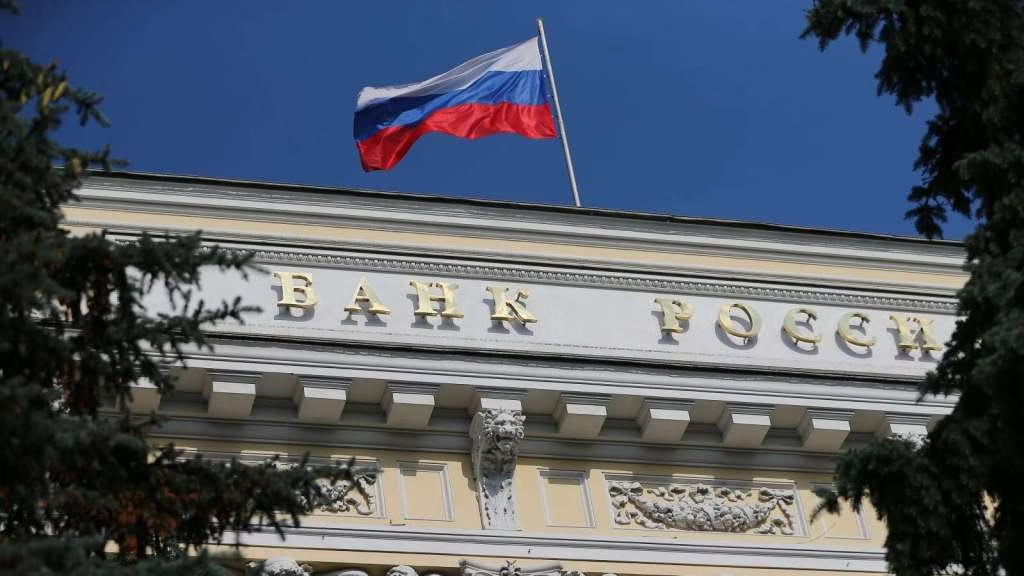
Russia will ban peer-to-peer crypto trading between individuals from July 1, 2027, forcing residents to buy and sell only through licensed brokers and registered exchange operators, the Bank of Russia said on October 12, 2026.
The central bank also barred transfers from regulated digital accounts to users’ own noncustodial wallets.
The Bank of Russia’s updated guidance distinguishes between transactions conducted privately between individuals and those facilitated by regulated financial market participants. Once the deadline passes, residents will need to use authorized intermediaries to buy or sell cryptocurrency within the domestic regulatory framework.
The approved channels include brokers licensed by the central bank and cryptocurrency exchange organizations listed in its official register. The regulator provides online registers and a financial-market participant verification service to help users check whether a provider is authorized to operate.
The end of direct P2P crypto trading represents a significant change for individuals who currently arrange cryptocurrency purchases and sales without using an approved intermediary. Under the new framework, access to the market will increasingly depend on regulated providers that must satisfy licensing, registration, transaction-monitoring, and recordkeeping requirements.
Russia’s principal cryptocurrency regulatory framework took effect on September 1, establishing a supervised structure for digital asset trading and custody. The legislation also provides a transition period for existing businesses to secure the necessary approvals and adapt their operations.
Progress toward implementing the rules became clearer in October, when Russia registered its first cryptocurrency exchange operators and digital depositories. According to earlier reporting by crypto.news, four exchange operators and five digital depositories initially entered the supervised market.
The exchange operators included VTB, Zefir, Sistema Crypto, and T Invest Lab. Sberbank, VTB, Atomyze, Voltari, and Cloud Infrastructure were identified among the registered digital depositories.
Businesses operating under transitional provisions have until September 1, 2027, to satisfy the remaining operational requirements. However, registered firms are already subject to applicable transaction and recordkeeping obligations.
The central bank’s guidance is available through its official cryptocurrency regulatory information page.
Beyond the restrictions on P2P crypto trading, the Bank of Russia has clarified the rules governing transfers from regulated digital accounts to personal noncustodial wallets.
Citing part 9 of Article 31, the regulator states that transfers from a regulated digital account to a noncustodial wallet belonging to the same individual are not permitted under the specified framework. Such wallets allow users to control their cryptocurrency through private keys rather than relying on a regulated custodian to manage access.
The guidance also references part 5 of Article 31, which prohibits certain transfers between individuals through address identifiers administered by a digital depository, including transfers arising from transactions between account holders.
These provisions address particular transfer methods within the regulated system. They should not be interpreted as a blanket prohibition on owning a personal cryptocurrency wallet.
Digital depositories and exchange operators perform different functions under the framework. Depositories record cryptocurrency holdings and transfers and administer customer access to associated digital addresses. Exchange operators, meanwhile, can purchase and sell digital currencies in their own names and with their own funds outside organized trading venues, subject to the applicable rules.
The distinction is important because Russia’s approach combines restrictions on particular transaction channels with continued access to cryptocurrency services through regulated institutions.
For individuals accustomed to arranging P2P crypto trading directly with another person, the new rules mean that the method of acquiring or transferring assets may become as important as the assets themselves. Users will need to understand which providers are authorized and which transfers are permitted before moving cryptocurrency between accounts and wallets.
Russia’s framework also establishes different requirements for qualified and non-qualified investors seeking exposure to eligible cryptocurrencies.
Non-qualified investors must complete an assessment before purchasing eligible digital assets through authorized providers. Their annual purchases are capped at 300,000 rubles through each intermediary, creating a defined limit on the amount they can acquire through an individual provider.
Qualified investors must also complete testing, but they are not subject to the same annual purchase ceiling under the framework described in the report.
These distinctions suggest that access to the regulated cryptocurrency market will depend partly on an investor’s classification and compliance with the applicable assessment requirements.
The rules follow earlier proposals covering cryptocurrency exchanges and digital depositories. In July, crypto.news reported on draft operating standards that included minimum equity requirements for digital depositories ranging from 50 million to 250 million rubles, depending on the services offered. The proposals also called for capital to remain liquid and consist of financial assets with high credit quality.
The broader regulatory framework also distinguishes domestic cryptocurrency use from cross-border activity. Russian exporters and importers may use cryptocurrency wallets for international trade under the applicable rules, while cryptocurrency payments for ordinary goods and services within Russia remain prohibited.
Residents undertaking overseas transactions must also observe relevant reporting requirements, including obligations concerning cryptocurrency assets held abroad.
International sanctions create an additional layer of compliance for transactions involving Russia. The U.S. Treasury Department’s Office of Foreign Assets Control states in its Russia-related sanctions guidance that cryptocurrency transactions can fall within the scope of sanctions restrictions, just as transactions involving traditional currencies can.
U.S. persons, including businesses processing cryptocurrency payments, must avoid prohibited transactions and attempts to circumvent applicable sanctions. Consequently, authorized access under Russian domestic rules does not automatically mean that a transaction is permissible under other jurisdictions’ regulations.
As Russia prepares to phase out direct P2P crypto trading, established financial institutions are moving to introduce services within the regulated market.
Sberbank received approval to provide cryptocurrency exchange services, according to October reporting citing Interfax and the central bank’s register. That coverage placed the number of registered exchange organizations at nine, while the digital depository register contained five organizations.
Sberbank plans to launch its first cryptocurrency products on December 1 through existing customer-facing platforms. Earlier reports identified SberBank Online, SberInvestments, and SberBusiness as potential access channels, with Bitcoin, Ether, and USDT among the assets expected to be supported initially.
The planned services could give customers access to cryptocurrency through familiar banking and investment interfaces, subject to the bank’s final product arrangements and applicable regulatory requirements.
Moscow Exchange is also preparing to enter the market. Senior managing director Boris Blokhin told reporters on October 8 that the exchange planned to enable cryptocurrency transactions from December 1 and was testing its operations with professional market participants, according to Interfax.
Blokhin said participants would open accounts with a partner settlement digital depository. He also indicated that Moscow Exchange would not require additional permits or licenses to launch the service.
The planned launches point to a gradual shift toward institutionally mediated cryptocurrency activity. Rather than relying on direct P2P crypto trading, investors are expected to increasingly use approved financial organizations and registered service providers.
However, the practical impact will depend on how quickly authorized services become available, which cryptocurrencies they support, and how providers implement the rules governing investor eligibility and transfers.
For Russian residents, the July 2027 deadline creates a clear transition period. Individuals who currently trade directly with other users will need to review their options before June 30, 2027, while those using regulated services will need to understand the applicable purchase limits, account restrictions, and wallet-transfer requirements.
The central bank’s policy does not eliminate every avenue for cryptocurrency ownership or trading. Instead, it redirects eligible activity toward supervised intermediaries while restricting specified transfer routes and imposing additional conditions on market access.
As Sberbank and Moscow Exchange prepare their services, Russia’s cryptocurrency market is moving toward a more institutionally controlled model in which regulatory approval, investor classification, and transaction compliance will play an increasingly central role.



Copyright © 2025 - The Bit Gazette.