
- Trending
- Comments
- Latest
- Trending
- Comments
- Latest

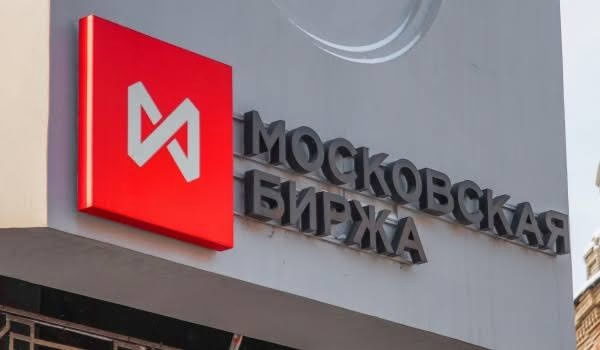
The US-sanctioned Moscow Exchange will start trading Bitcoin, Ethereum and Tether’s USDT on December 1, giving Russia its first regulated crypto market run on traditional stock market infrastructure.
Retail investors must pass a knowledge test and can buy no more than 300,000 rubles, about $3,700, a year through one broker. Whether Tether would freeze USDT cleared through a sanctioned institution is still unanswered.
Russia is preparing to expand its regulated digital asset market as the Moscow Exchange announces plans to introduce trading in Bitcoin (BTC), Ethereum (ETH) and Tether’s USDT from December 1, 2026.
The development, announced in early November, represents a significant step in the country’s efforts to bring cryptocurrency transactions into established financial market infrastructure despite continuing Western sanctions against the exchange and its clearing institution.
The proposed launch will allow eligible investors to access digital assets through the same financial market infrastructure traditionally used for trading securities, including shares of major Russian companies.
Under the proposed arrangement, the National Clearing Centre (NCC), which operates within the Moscow Exchange Group, will handle transaction clearing.
The exchange intends to provide same-day and next-day settlement options, alongside swap transactions designed to support liquidity management.
The introduction of an established exchange platform could provide a more structured environment for investors seeking exposure to digital assets. It could also make cryptocurrency transactions more accessible to traditional financial market participants who already operate through licensed brokers.
However, the planned expansion comes with considerable complications. The Moscow Exchange and its clearing institution remain subject to US sanctions, raising questions about international financial relationships, settlement arrangements and the extent to which the new trading service can attract participants beyond Russia’s domestic market.
Although the Moscow Exchange intends to broaden access to cryptocurrencies, ordinary investors will not receive unrestricted purchasing privileges under the proposed framework.
Non-qualified investors must first complete a knowledge assessment before purchasing digital assets. They will also face an annual purchase ceiling of 300,000 Russian rubles through a single broker, equivalent to approximately $3,700 at the exchange rate cited in the report.
The restrictions demonstrate Russia’s intention to develop its cryptocurrency market while maintaining regulatory safeguards around investor participation.
The proposed trading schedule will run from 6:50 a.m. to 11:50 p.m. Moscow time, aligning with the exchange’s established stock market operating hours.
Liquidity, custody arrangements, broker participation and confidence in the exchange’s ability to operate under international restrictions will all influence its long-term performance.
One of the most important aspects of the announcement is the regulatory and geopolitical environment surrounding the exchange.
The United States imposed sanctions on Moscow Exchange and the National Clearing Centre in June 2024. The restrictions affected the exchange’s international financial operations and resulted in changes to certain currency trading and settlement arrangements.
The planned cryptocurrency service therefore introduces an additional layer of complexity, particularly because one of its proposed assets is USDT, the dollar-pegged stablecoin issued by Tether.
USDT plays an important role in the global cryptocurrency market because traders frequently use it to move between digital assets without directly converting their holdings into traditional currencies.
However, Tether maintains the ability to freeze wallets associated with sanctioned entities or addresses identified under applicable restrictions.
This creates an important consideration for investors using USDT through a trading platform whose exchange and clearing institutions are subject to US sanctions.
The central question is how Tether’s compliance policies would apply to USDT transactions conducted through the Moscow Exchange’s clearing infrastructure.
According to the original CoinDesk report, the publication had requested clarification from Tether regarding how its wallet-freezing policies would apply to USDT held through the exchange’s clearing arrangements. No response was included in the supplied report.
The availability of USDT on a domestic exchange does not automatically guarantee that every transaction will operate without restrictions or international compliance complications.
The Moscow Exchange’s planned expansion comes amid ambitious projections for the country’s regulated cryptocurrency industry.
In August 2026, Sberbank Deputy Chairman Anatoly Popov estimated that cryptocurrency trading on regulated Russian exchanges could reach approximately 4 trillion rubles, or around $49 billion at the exchange rate cited in the original report, during the first year under the country’s new regulatory framework.
However, the projected turnover should not be interpreted as guaranteed trading activity for the Moscow Exchange. The estimate concerns the broader regulated market, rather than the expected performance of one particular exchange.
Another important figure comes from Deputy Finance Minister Ivan Chebeskov, who reportedly placed Russia’s daily cryptocurrency transaction volume at approximately 50 billion rubles in February 2026.
When compared with Sberbank’s projected annual exchange activity, the figures suggest that a substantial proportion of cryptocurrency transactions could remain outside organised domestic exchange platforms.
Even if Russia crypto trading continues to grow, the country’s established offshore trading channels and peer-to-peer networks may retain a significant share of market activity.
The Moscow Exchange will therefore need to demonstrate that its platform offers meaningful advantages in terms of liquidity, security, settlement efficiency and regulatory certainty.
The development provides another example of traditional financial institutions gradually incorporating digital assets into established market structures.
The success of the December launch will depend on whether investors, brokers and institutional participants are willing to use a regulated domestic platform operating under international sanctions.



Copyright © 2025 - The Bit Gazette.