
- Trending
- Comments
- Latest

BearingPoint’s July 30, 2026 survey of 4,035 adults across Germany, Austria, and Switzerland found that 23% of Swiss respondents use cryptocurrency at least occasionally, compared with 11% in Germany and 18% in Austria. YouGov ran the poll between June 18 and June 29, 2026, weighting the sample by age, gender, and region across the three countries.
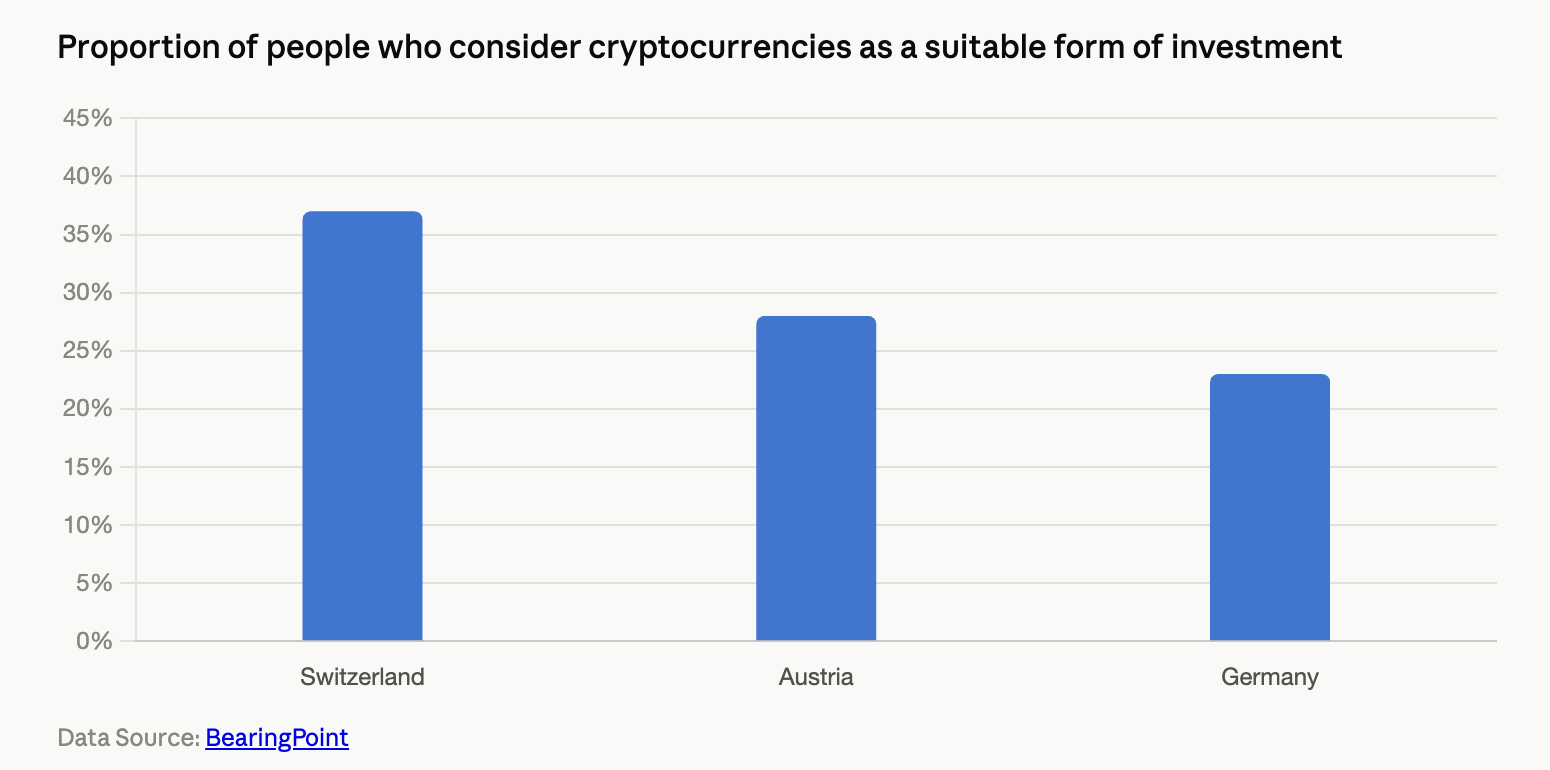
The gap extends beyond ownership. Thirty-seven percent of Swiss respondents called cryptocurrency a worthwhile investment, against 28% in Austria and 23% in Germany. Forty-five percent of Swiss adults said they expect digital assets to eventually function as international trade or reserve currencies, compared with 36% in Austria and 32% in Germany.
Switzerland’s parliament passed the country’s Distributed Ledger Technology Act in September 2020, and the law took full effect on August 1, 2021. Rather than draft new cryptocurrency-specific legislation, regulators amended existing financial and civil law to clarify how tokenized assets fit into established structures, including bankruptcy treatment and licensing for DLT trading venues.
Switzerland’s regulator, FINMA, has applied a “same risks, same rules” approach to digital assets, and the country sits outside the European Union’s Markets in Crypto-Assets Regulation (MiCA), which only reached full enforcement in July 2026.
That timing gave Swiss banks and blockchain firms years to build products and track records that German banks are only now able to pursue under a finalized EU framework.
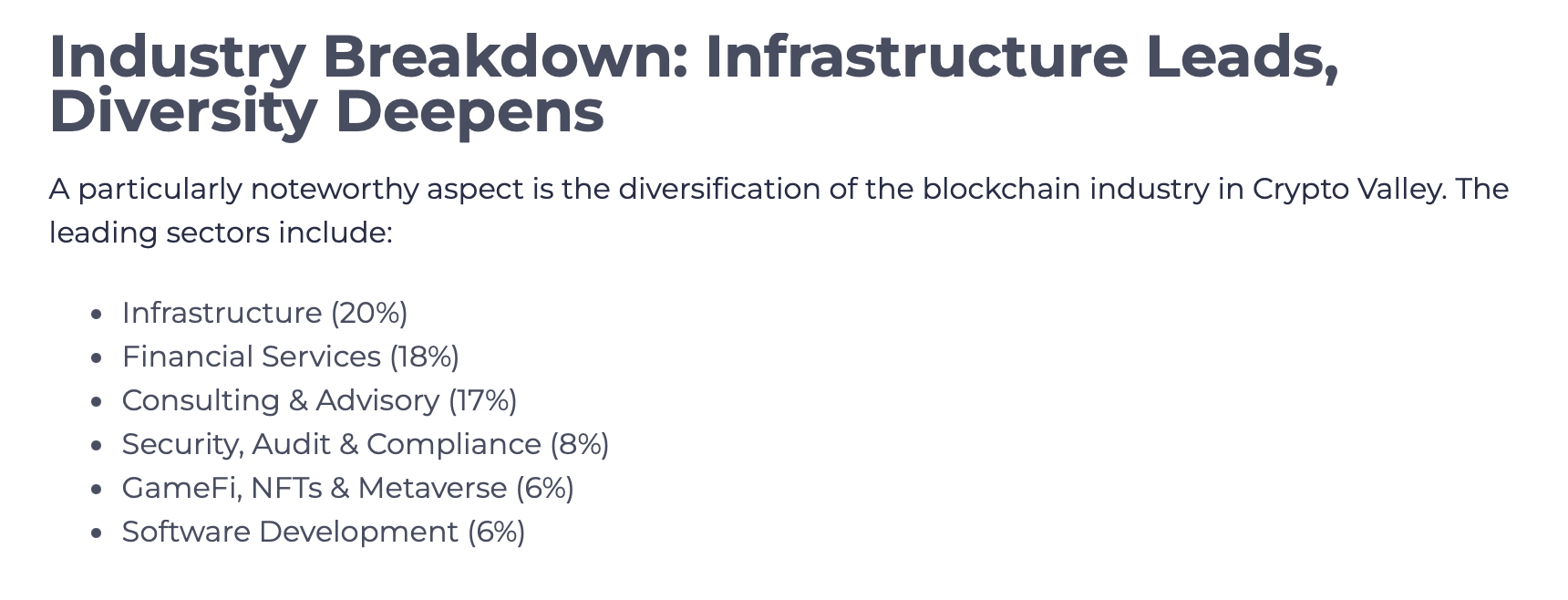
The Canton of Zug’s Crypto Valley, which spans Switzerland and Liechtenstein, has hosted blockchain and DLT firms since the early 2010s. A 2024 industry report counted 1,749 active companies in the ecosystem, with Zug alone home to roughly 719 of them.
Germany’s cooperative and savings bank networks are now pushing into retail crypto access at a scale few standalone platforms can match. DZ Bank’s cooperative banks and Dekabank’s Sparkassen network together serve close to 80 million customers.
DZ Bank received authorization in late December 2025 for its “meinkrypto” platform, which is being folded into the existing VR Banking App with bitcoin, ether, litecoin, and cardano available at launch; custody runs through Börse Stuttgart Digital.
Individual cooperative banks still have to opt in before the feature goes live for their customers. Dekabank is building a comparable platform for the roughly 50-million-customer Sparkassen network, with a rollout expected to continue through 2026 starting with bitcoin and ether.
Switzerland built its lead through years of regulatory clarity and ecosystem density. Germany is now betting that distribution through trusted, already-open bank accounts can close the adoption gap faster than Switzerland’s organic growth continued on its own.
Whether that bet pays off will depend on how many of DZ Bank’s and Dekabank’s combined customer base actually activate the new crypto features once they go live, a question BearingPoint’s next annual survey, run alongside adoption data from the banks themselves, should start to answer.



Copyright © 2025 - The Bit Gazette.