

- Trending
- Comments
- Latest

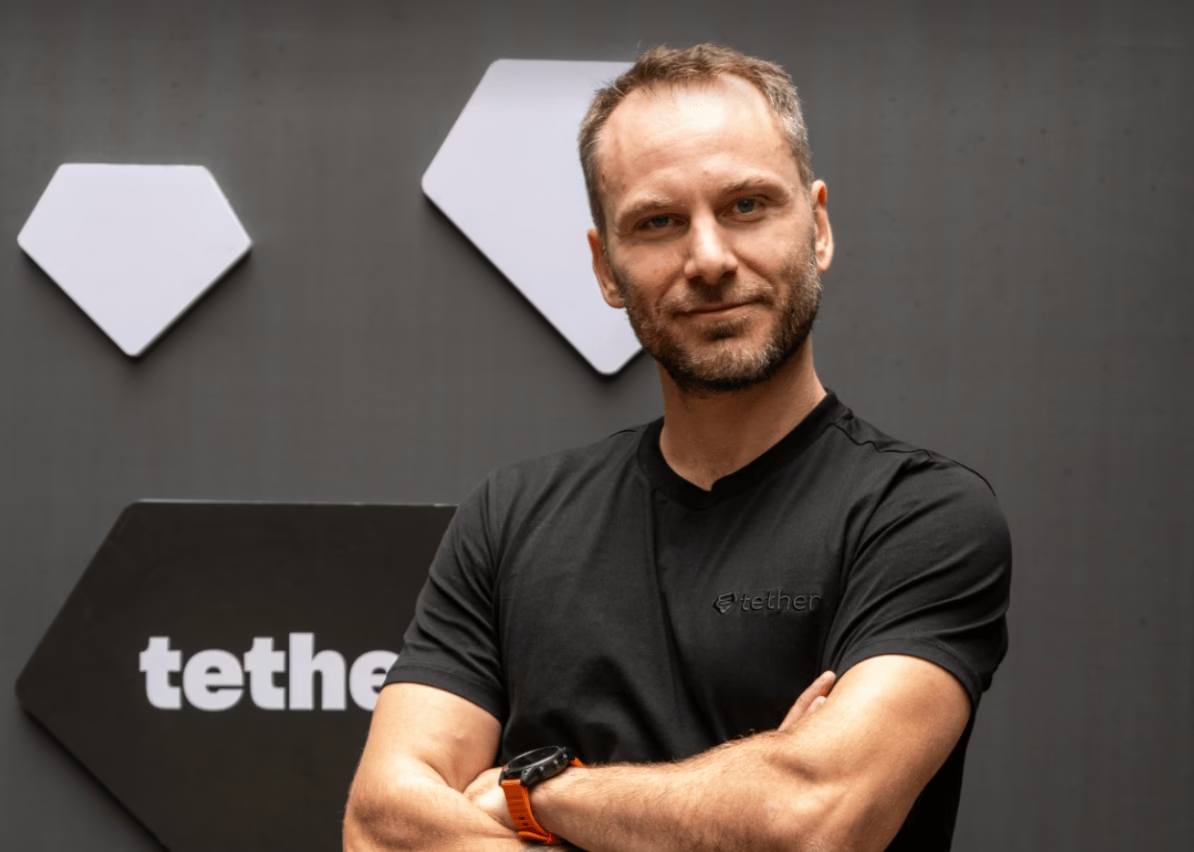
Tether holds “give or take 150,000 Bitcoin” on its corporate balance sheet, CEO Paolo Ardoino told the Plan ₿ Forum in Lugano, Switzerland, in a keynote this October 2026.
The figure is an executive estimate rather than an audited count, and Tether’s third-quarter 2026 attestation, published October 30, 2026, reports a Bitcoin value of about $8.37 billion as of September 30, 2026.
During his presentation at the Lugano Bitcoin forum, Ardoino estimated that Tether holds approximately 150,000 BTC. The executive described the figure as “give or take 150,000 Bitcoin,” indicating that the number was an approximation rather than a detailed audited breakdown of the company’s Bitcoin position.
However, investors should distinguish between the CEO’s estimate of Tether’s overall corporate Bitcoin holdings and the Bitcoin assets reported in its stablecoin reserve disclosures.
According to the company’s third-quarter 2026 financial report, Bitcoin reserves backing its operations were valued at approximately $8.37 billion as of September 30. This represented an increase from roughly $5.8 billion recorded at the end of June.
The difference between these reported figures and Ardoino’s broader estimate is important. The financial disclosure does not provide a complete reconciliation of every Bitcoin holding across the company’s corporate balance sheet and reserve-related accounts.
Consequently, the announcement provides investors with an indication of Tether’s Bitcoin exposure without establishing a complete breakdown of its wallet addresses, purchase history or acquisition prices.
Beyond its Bitcoin investments, Tether’s financial position received additional attention following the publication of its third-quarter attestation on October 30, 2026.
The report, prepared by independent accounting firm BDO, showed that Tether had approximately $191.45 billion in total reserve assets against liabilities of around $183.50 billion.
This left the company with excess reserves of approximately $7.95 billion at the end of September, compared with $4.1 billion recorded at the end of June.
One of the most notable figures was the company’s exposure to US government debt. Tether reported approximately $122.84 billion in directly held US Treasury bills, while overnight reverse repurchase agreements contributed another $9.52 billion.
Combined, these investments brought its direct and indirect Treasury bill exposure to approximately $132.4 billion.
The company’s financial report also identified $19.08 billion in gold holdings and approximately $14.18 billion in secured loans.
Tether’s profitability remains another important consideration for investors monitoring its financial position. The company generated approximately $1.5 billion in net operating profit during the third quarter, bringing its total operating profit for the first nine months of 2026 to $4.5 billion.
These figures demonstrate how income from its financial asset portfolio continues to support the company’s operations and wider investment activities.
For USDT holders, the size and composition of Tether’s reserves remain particularly important because the stablecoin’s credibility depends heavily on confidence in the assets supporting its issuance.
Ardoino also used his Lugano presentation to introduce Tether’s Independence Stack, a technology initiative designed to support greater independence from centralised infrastructure providers.
The initiative brings together several areas, including Bitcoin mining, energy production, communications technology, self-custody wallets and artificial intelligence.
Tether is positioning itself as a company seeking to develop infrastructure that could support financial access and technology adoption across different regions. One example is its investment in solar-powered battery kiosks, which are being deployed in communities across Africa.
According to Ardoino, approximately 5,000 kiosks currently serve around two million users and support 30,000 women working within the network.
The company reportedly intends to increase the number of kiosks to 100,000 over the next five years, with the potential to serve approximately 200 million people.
Bitcoin mining is another component of the initiative. In October, Tether secured support from 15 mining companies, manufacturers and mining pools for its open-source Mining Development Kit.
Participating organisations include Bitmain, Bitdeer, Canaan, MicroBT, Foundry Digital and F2Pool.
The initiative reflects Tether’s interest in developing mining infrastructure and making relevant technology more accessible to industry participants.
Tether’s ambitions also extend into communications and artificial intelligence.
Through Holepunch, the company is supporting peer-to-peer communication technology designed to allow applications to operate without relying entirely on conventional centralised servers.
Its Wallet Development Kit is another important part of the strategy. The software allows developers to build self-custodial wallets across different blockchain networks, potentially expanding access to digital assets without requiring users to depend entirely on third-party custodians.
In September 2026, Tether and Shiga announced plans to develop wallet services targeting individuals and institutions across Africa and the Gulf Cooperation Council region.
The proposed products are expected to support USDT, Bitcoin and Tether Gold, although a specific launch date was not provided.
Artificial intelligence is also becoming an increasingly important area of investment through QVAC, Tether’s platform for running AI applications directly on personal devices.
In October, the company released an offline speech recognition model designed for applications involving smartphones, smart glasses and robotics.
Ardoino also discussed additional AI development covering translation, medical assistance, speech processing and computer vision. The company’s research includes translation tools supporting 19 African languages.
These developments suggest that Tether intends to use its financial strength to establish a broader presence across several emerging technology sectors.
The disclosure of approximately 150,000 Bitcoin holdings is therefore only one part of a much larger corporate strategy.
The company’s growing Treasury exposure, substantial excess reserves and investments in decentralised infrastructure could influence how it competes in the digital asset industry over the coming years.
The precise distribution of its Bitcoin holdings, the performance of its wider investments and the execution of its technology expansion plans remain important factors to monitor.



Copyright © 2025 - The Bit Gazette.