
- Trending
- Comments
- Latest

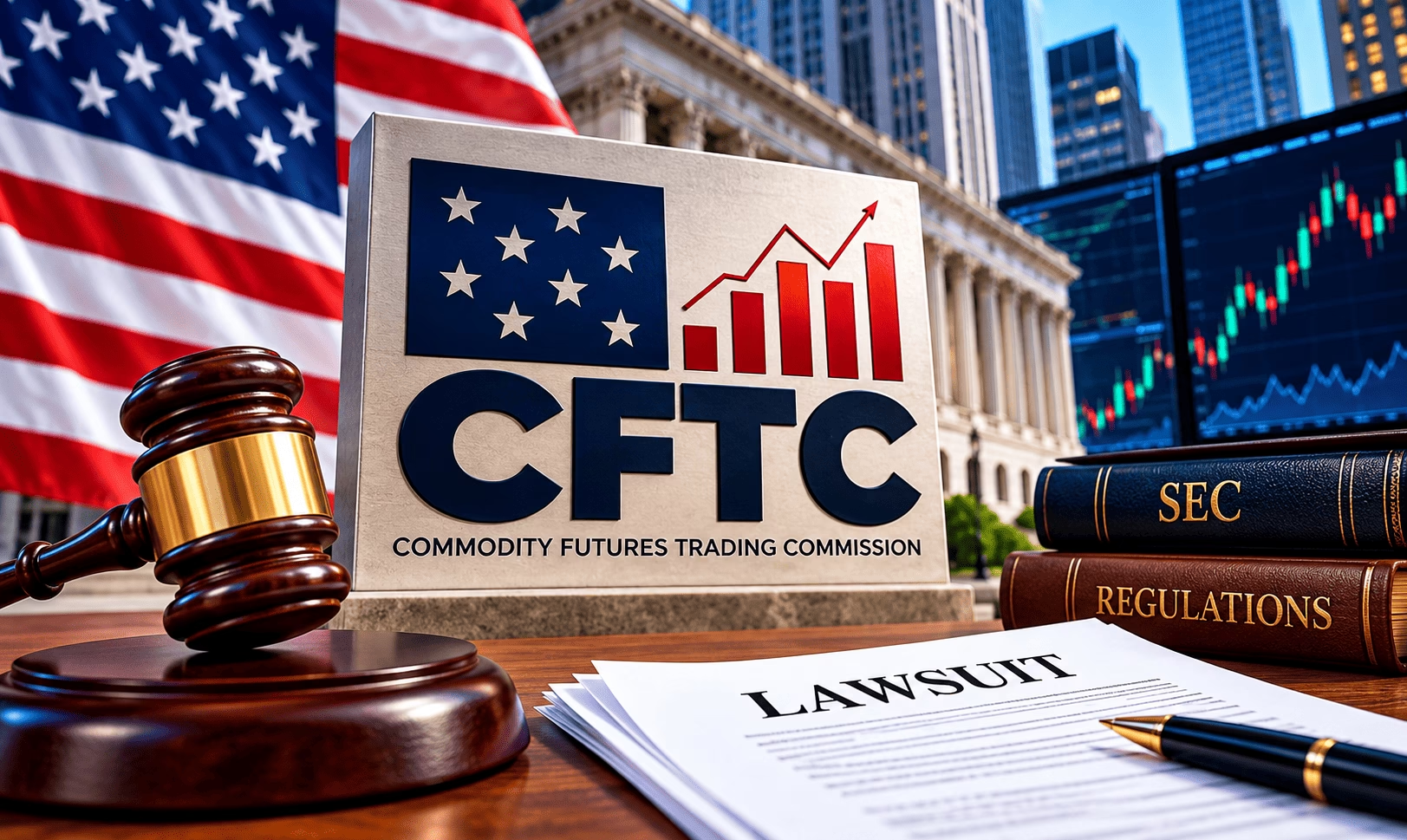
The Capital Markets Alliance, whose members include Cboe Global Markets and Citadel Securities, sued the Commodity Futures Trading Commission (CFTC) on November 3, 2026, hours after the regulator cleared U.S. exchanges to list perpetual futures on individual stocks.
The group asks a Manhattan federal court to void the approvals, arguing the contracts are security-based swaps under SEC authority, not security futures.
The Capital Markets Alliance argues that the CFTC incorrectly classified single-stock perpetual contracts as security futures. According to the group, derivatives tied directly to individual company shares should instead be classified as security-based swaps, which Congress placed under the SEC’s authority.
The complaint also accuses the regulator of violating the Administrative Procedure Act by failing to adequately explain its decision, consider potential investor risks and address its departure from previous regulatory interpretations.
The group is asking the court to invalidate the approvals, declare the contracts security-based swaps and prevent the CFTC from implementing its decision while the lawsuit remains unresolved.
Cboe, Citadel Securities and the Healthy Markets Association are among the organizations supporting the legal challenge.
Cboe CEO Craig Donohue maintained that the disagreement extends beyond competition between financial institutions. He argued that securities-related derivatives should remain subject to the investor protections established by Congress.
“This issue, however, is about investor protection for securities trading and the rule of law,” Donohue said in a company statement.
American Securities Association CEO Chris Iacovella also criticized the regulator’s decision, accusing the CFTC of having “sidestepped the SEC’s jurisdiction and Congress’ ban” on offering security-based swaps to retail investors.
The lawsuit therefore places investor protection and regulatory authority at the center of the growing debate surrounding perpetual futures trading in the United States.
The legal challenge emerged on the same day CFTC Chairman Michael Selig announced that perpetual futures linked to individual stocks could begin trading on eligible U.S. exchanges.
According to Selig, the products were deemed approved under Commission Regulation 40.3 and the Commodity Futures Modernization Act of 2000.
The regulatory framework allows designated contract markets that are also registered with the SEC as national securities exchanges to trade security futures products. Consequently, the contracts must comply with applicable federal securities and commodities regulations.
Selig described the approval as an important development in bringing innovative financial products into regulated American markets.
He argued that allowing domestic exchanges to offer these instruments would give American traders access to products already widely used internationally, potentially reducing their reliance on offshore trading platforms.
The chairman also referenced the CFTC’s earlier approval of Bitcoin perpetual futures on a domestic exchange, describing the latest decision as another step toward expanding regulated derivatives markets.
The regulator has rejected the criticism surrounding its decision. A CFTC spokesperson described the lawsuit as “troubling” interference with regulated markets.
“Our markets should be governed by law, not litigation campaigns intended to block innovation,” the spokesperson said.
Meanwhile, the SEC declined to comment directly on the litigation but expressed support for introducing financial products under comprehensive regulatory oversight and investor protection requirements.
Perpetual futures are derivative contracts that allow traders to speculate on the prices of underlying assets without dealing with conventional expiration dates.
Unlike traditional futures, these instruments allow positions to remain open indefinitely, provided traders maintain sufficient margin. They typically use periodic funding payments between long and short positions to keep contract prices aligned with their underlying assets.
Leverage can increase potential returns, but it also exposes traders to substantial losses and liquidation risks.
Although these products gained popularity in cryptocurrency markets, their expansion into traditional equities is creating new competitive opportunities for established financial institutions and digital asset platforms.
Companies including Kalshi, Coinbase Derivatives and Bitnomial have pursued proposals involving stock-linked contracts. Coinbase has also submitted filings covering cash-settled derivatives tied to individual stocks and exchange-traded funds.
The latest regulatory development could accelerate competition in perpetual futures trading, although individual exchanges and products must still satisfy applicable registration, listing and compliance requirements.
The dispute also follows a separate lawsuit filed by CME Group in June challenging the CFTC’s treatment of cryptocurrency perpetual futures offered by platforms including Kalshi and Coinbase.
Beyond the courtroom, traditional financial institutions are also exploring opportunities in the sector.
On October 29, Intercontinental Exchange (ICE), the parent company of the New York Stock Exchange, announced a partnership with Trade[XYZ] to develop U.S.-regulated perpetual markets using Hyperliquid infrastructure.
The proposed platform is expected to support contracts linked to equities, commodities, currencies and cryptocurrencies, with dedicated trading and clearing operations.
However, the initiative remains subject to regulatory approvals, including permissions required for leveraged trading. The companies have not announced an official launch date.
The latest lawsuit could therefore have implications far beyond individual stock contracts. A ruling against the CFTC could delay the introduction of these products or require a different regulatory approach. Conversely, a victory for the regulator could establish a clearer pathway for exchanges seeking to introduce perpetual derivatives into American financial markets.
For now, the future of perpetual futures trading in the United States will depend on how the court interprets the competing regulatory arguments, particularly the division of authority between the CFTC and SEC.



Copyright © 2025 - The Bit Gazette.