







- Trending
- Comments
- Latest

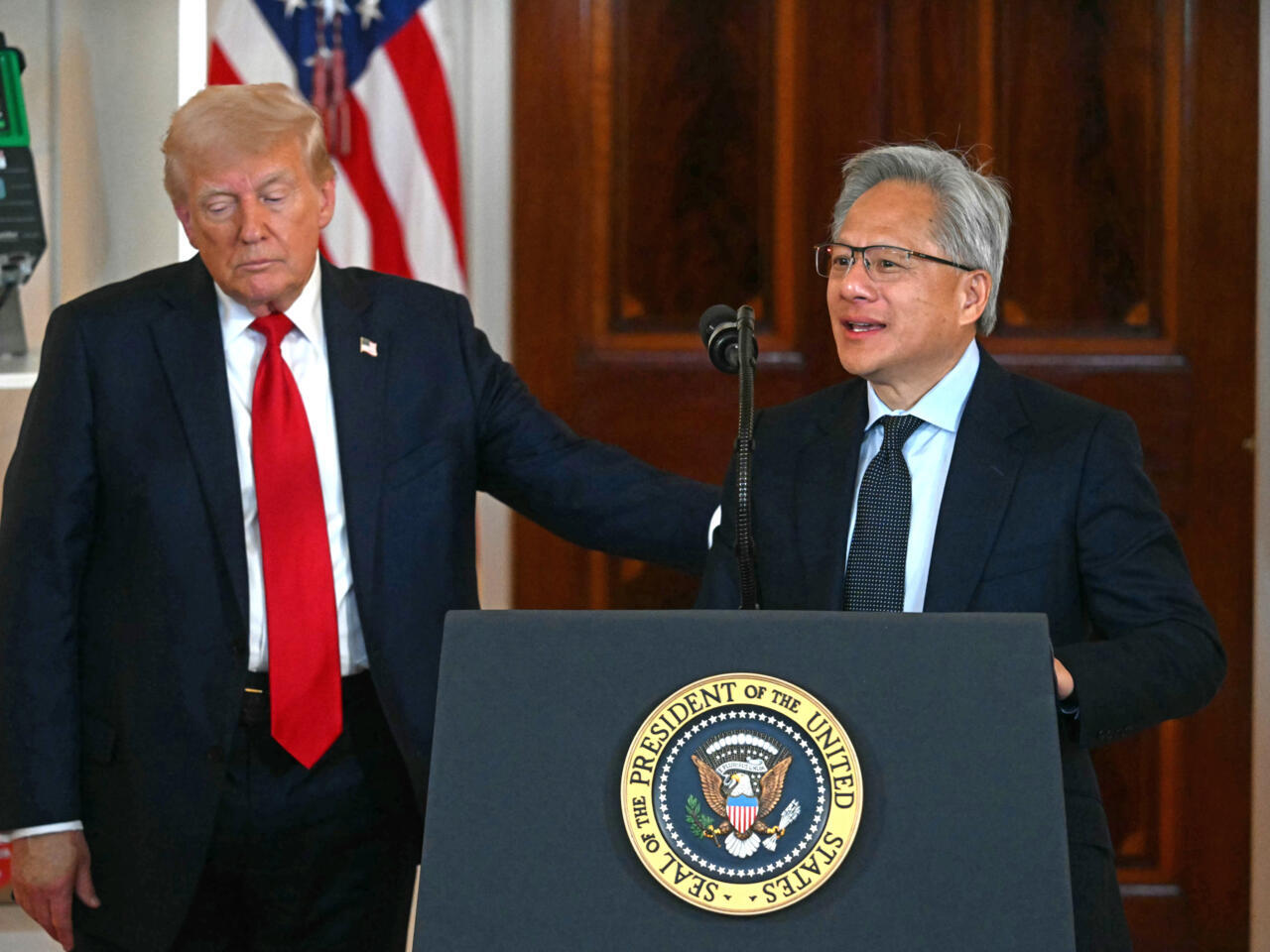
President Donald Trump has again urged Nvidia to rehire Jensen Huang, but the chipmaker’s board has already ruled it out. In a Truth Social post on Monday, Trump said a return would be “the best thing for the Company, and also, for the U.S.A.” as investigators examine whether advanced chips reached China.
US President Donald Trump has renewed his appeal for Nvidia to reinstate co-founder Jensen Huang as chief executive, intensifying an ongoing leadership dispute at the artificial intelligence chipmaker on Monday, November 23, 2026.
In a post on his Truth Social platform, Trump argued that bringing Jensen Huang back would benefit both Nvidia and the United States. His latest intervention comes just days after the company reportedly indicated that it was not considering reversing the leadership change.
Trump’s renewed position adds another political dimension to a controversy that has attracted attention from technology executives, investors and policymakers.
Nvidia occupies a central position in the global artificial intelligence industry, supplying advanced processors used to develop and operate sophisticated AI systems.
“I hope the Board of Nvidia rehires Jensen Huang. It would be the best thing for the Company, and also, for the U.S.A.,” Trump wrote in his Monday social media post.
The president had previously expressed support for Huang’s possible return during remarks to reporters following his Asian trip.
At the time, Trump suggested that the former executive should acknowledge his mistakes before returning to the company’s leadership.
The controversy surrounding Jensen Huang began after allegations involving his personal relationships and a woman reportedly suspected by US intelligence of having links to Chinese espionage.
The allegations attracted considerable scrutiny because of Nvidia’s strategic importance to America’s artificial intelligence and semiconductor industries.
Questions also emerged about the company’s handling of sensitive technology and compliance with US restrictions on advanced chip exports to China.
Huang subsequently left his position, with Nvidia’s board accepting his resignation on November 11, 2026.
The company appointed its Chief Financial Officer, Colette Kress, as interim chief executive while beginning the process of identifying permanent leadership.
Following his departure, Jensen Huang acknowledged personal mistakes and indicated that he would be willing to return if the board believed doing so would serve the company’s interests.
His willingness to reconsider the position generated support from several prominent figures in the technology industry. However, the board’s reported opposition has complicated efforts to secure his reinstatement.
US Treasury Secretary Scott Bessent has also featured prominently in the discussion surrounding Nvidia’s leadership.
Bessent previously appeared to favour a substantial restructuring of the company’s leadership, including the possibility of looking outside its existing management structure for a replacement.
However, his recent comments suggest that the administration is increasingly focused on establishing accountability for potential violations of US export regulations rather than simply changing the company’s leadership.
During a discussion about Trump’s renewed support for Jensen Huang, Bessent avoided directly endorsing the former executive’s reinstatement.
“I think we have to see where the buck stops,” Bessent said, referring to questions surrounding possible non-compliance with US export controls.
His response suggests that the administration wants greater clarity about who may have been responsible for any compliance failures involving Nvidia’s technology.
The issue is particularly important because advanced AI processors have become a major component of the broader US-China technology competition. Washington has repeatedly sought to limit China’s access to sophisticated semiconductor technology over national security concerns.
The uncertainty surrounding Jensen Huang’s future at Nvidia is attracting attention from investors who view the company as one of the most important businesses in the artificial intelligence sector.
Nvidia’s position in the AI semiconductor market means that changes in its executive leadership could influence investor confidence, corporate strategy and expectations about future growth.
The company operates in a rapidly expanding market where demand for AI computing infrastructure remains a major investment theme.
Its ability to maintain technological leadership, meet customer demand and navigate regulatory restrictions will remain important considerations for its long-term valuation.
Prediction market activity also reflects the uncertainty surrounding the situation. According to figures cited by Cointelegraph, Polymarket traders were assigning a 37% probability to Jensen Huang returning to Nvidia by December 31, 2027.
Jensen Huang’s potential return remains uncertain. Trump’s latest intervention has brought the debate back into the spotlight, but Nvidia’s board will have the final say on whether its former chief executive gets another opportunity to lead the company.



Copyright © 2025 - The Bit Gazette.

