- Trending
- Comments
- Latest

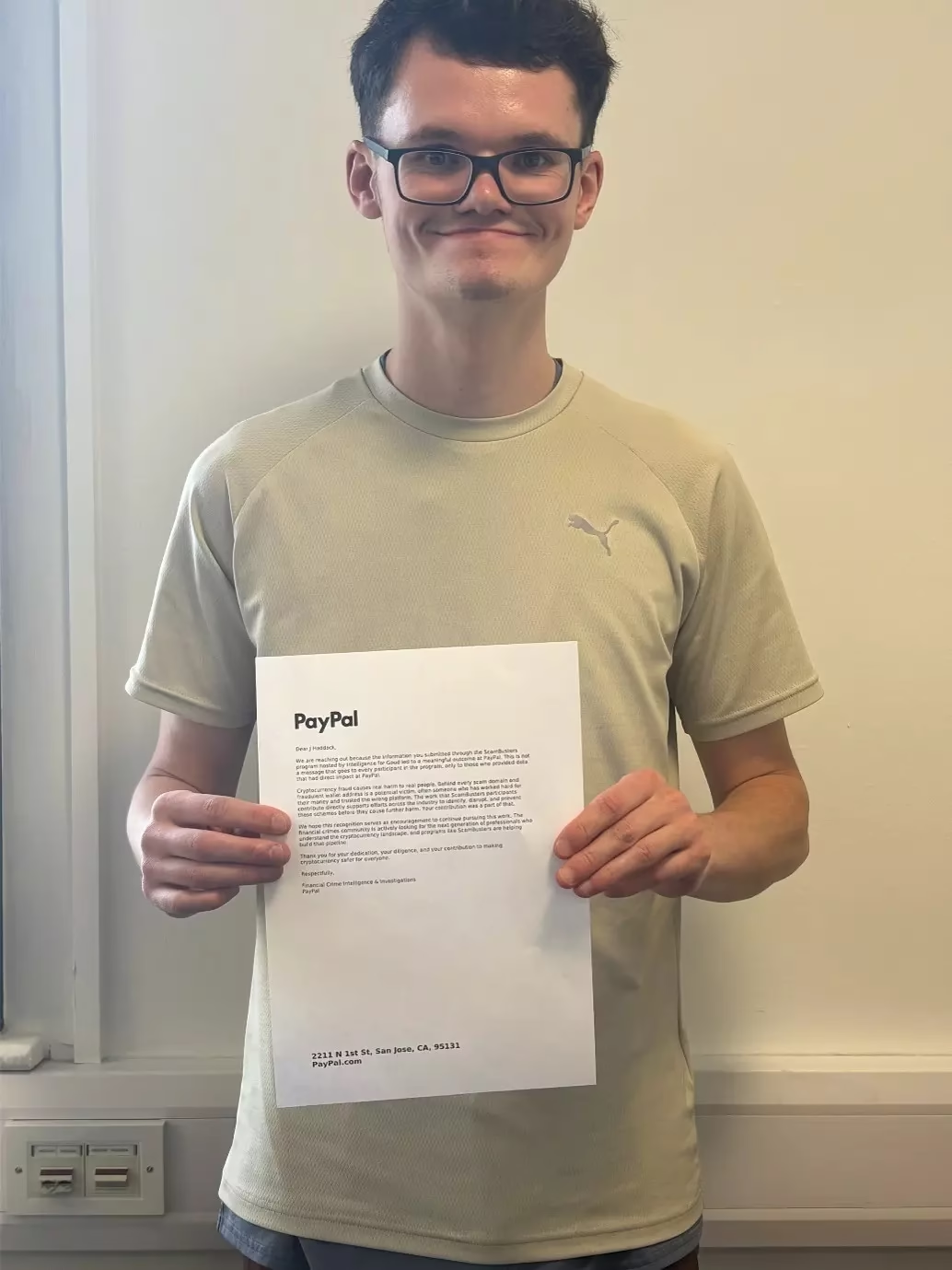
Two postgraduate students at the University of Lancashire have received recognition from PayPal after helping uncover crypto fraud linked to previously undetected cryptocurrency wallets.
The achievement, announced on July 22, 2026, highlights how students participating in the ScamBusters: University Edition program contributed intelligence that supported PayPal’s wider crypto fraud prevention efforts.
The initiative equips students with practical investigative skills while helping financial institutions identify fraudulent cryptocurrency activity before it causes further harm.
Jordan Haddock and Hannah Crosbie, students from the University of Lancashire’s School of Law and Policing, earned industry recognition after identifying cryptocurrency wallets connected to crypto fraud during their participation in the ScamBusters: University Edition program.

Working alongside fellow students enrolled in the MSc Cybercrime Investigation and MSc Financial Investigation programs, the pair analyzed suspicious blockchain activity and submitted verified intelligence to industry partners. According to the university, their findings directly contributed to PayPal’s broader crypto fraud prevention initiatives.
The program is delivered in partnership with Intelligence for Good, giving students real-world experience investigating suspicious cryptocurrency transactions, blockchain data, and open-source intelligence.
Rather than relying solely on classroom learning, participants investigate active cases involving suspected crypto fraud, preparing them for careers in cybersecurity, financial crime investigations, law enforcement, and regulatory agencies.
Jordan Haddock said the experience significantly strengthened both his technical knowledge and professional confidence.
“I’ve gained valuable hands-on experience in identifying illicit cryptocurrency wallets, which has really enhanced my confidence and professional development.” — Jordan Haddock, MSc Cybercrime Investigation student, University of Lancashire
He added:
“I’ve been able to identify fraudulent wallets linked to high-risk websites, and it’s rewarding to know this work contributes to disrupting scams and protecting potential victims. It’s especially encouraging to see this work recognised by organisations like PayPal. The Scambusters initiative has given me practical, industry-relevant skills while making a real difference.” — Jordan Haddock, MSc Cybercrime Investigation student, University of Lancashire
The ScamBusters: University Edition initiative was designed to bridge the gap between academic study and professional practice by exposing students to genuine investigations involving crypto fraud.
Participants examine suspicious cryptocurrency wallets, verify scam-related activity, and submit intelligence that can be used by organizations working to combat financial crime. Students also compete on a national leaderboard based on verified cryptocurrency scam wallets they successfully identify.
As of July 2026, the University of Lancashire ranked third on the global leaderboard, reflecting the institution’s growing contribution to crypto fraud detection through student-led investigations.
For Hannah Crosbie, the program has provided practical experience that complements her postgraduate studies while improving her employment prospects.
“Being part of the Scambusters group, in partnership with Intelligence for Good, has provided far more than academic knowledge alongside my MSc in Financial Investigation, it has delivered valuable hands-on experience. The work has also gained me recognition from organisations such as PayPal, highlighting its real-world impact. Crucially, this experience has provided a distinct advantage when applying for roles, enabling confident discussion of practical financial crime investigation in a highly competitive field.” — Hannah Crosbie, MSc Financial Investigation student, University of Lancashire
University officials say initiatives like ScamBusters ensure graduates leave with practical investigative capabilities that are increasingly valued across financial institutions, cybersecurity firms, and government agencies tackling digital financial crime.
Faculty members say the students’ achievements demonstrate how universities can play a meaningful role in addressing emerging financial crime while preparing graduates for specialized careers.
Amber Jacques, Course Leader for the MSc Cybercrime Investigation program, said cryptocurrency-related scams continue to inflict substantial financial losses worldwide.
“Cryptocurrency scams cause enormous financial harm to victims. Our students are helping to identify fraudulent activity that might otherwise go unnoticed. Their contributions demonstrate the vital role universities can play in building safer digital environments.” — Amber Jacques, Course Leader, MSc Cybercrime Investigation, University of Lancashire
Dr. John Dempsey, Director of Cyber Investigations at the School of Law and Policing, said the initiative enables students to apply classroom knowledge to real-world investigations while building professional competence.
Meanwhile, Clive Tattum, Dean of the School of Law and Policing, noted that the program aligns with the Lancashire Growth Plan by translating academic expertise into practical outcomes that strengthen regional economic resilience.
According to the university, ScamBusters participants working collectively with other universities have disrupted $234,495.77 worth of fraudulent scam activity to date. As the initiative expands, more students will have opportunities to investigate crypto fraud, contribute intelligence to industry partners, and help protect individuals and businesses from evolving cryptocurrency scams.
The university says the continued collaboration between higher education institutions and organizations such as PayPal illustrates how academic research and student-led investigations can support broader efforts to combat crypto fraud while creating a pipeline of skilled professionals equipped to tackle the rapidly changing landscape of digital financial crime.
Primary sources: University of Lancashire, ancashire Evening Post



Copyright © 2025 - The Bit Gazette.