
- Trending
- Comments
- Latest

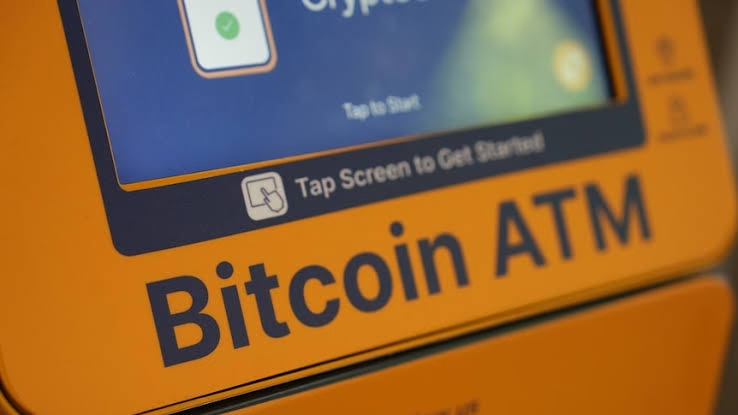
At least 20 Massachusetts communities have banned crypto ATMs, and a statewide ban the Senate approved on July 23, 2026, now awaits a six-member House-Senate committee, as the FBI counts $6.8 million in 2025 kiosk losses in the state.
The debate has gained urgency following cases involving residents who were manipulated into depositing cash into cryptocurrency kiosks under false pretences. One such case involved Mary Mbugua, a Haverhill resident undergoing cancer treatment, who lost $5,500 after scammers convinced her to transfer money through a cryptocurrency machine.
Much of the money had been given to her by members of her prayer group to support her during treatment. However, criminals frightened her with fabricated claims involving drugs and criminal activity, persuading her that making the payment would resolve an alleged emergency.
Her experience has become an example of the risks associated with cryptocurrency kiosks, particularly when inexperienced users are manipulated into making transactions they do not fully understand.
The growing number of reported scams has prompted local authorities to take action rather than wait for a comprehensive statewide regulatory framework.
Haverhill was among the communities that adopted a complete prohibition following reports of residents losing money through cryptocurrency kiosk scams. Other Massachusetts municipalities subsequently introduced similar restrictions, bringing the number of communities with bans to 20.
The scale of the problem is reflected in figures reported by the Federal Bureau of Investigation (FBI). In 2025, Massachusetts residents filed 296 complaints involving cryptocurrency kiosks, reporting more than $6.8 million in adjusted financial losses.
The situation extends beyond Massachusetts. Across the United States, complaints involving the machines exceeded 13,400 in 2025, with reported losses surpassing $388 million. More than half of the national complaints involved individuals aged above 50.
An investigation by The Boston Globe also highlighted the concentration of losses at individual machines. Five people reportedly lost approximately $128,000 through transactions conducted at a single kiosk in Haverhill.
Despite the growing evidence of financial harm, Massachusetts has yet to establish a comprehensive statewide regulatory framework governing these machines.
Consequently, municipalities have increasingly relied on local legislation to protect residents from fraudulent transactions. Their actions have also intensified pressure on lawmakers in Boston to establish consistent protections across the state.
The Massachusetts Senate has taken a significant step towards addressing the problem by passing an economic-development package that includes a provision banning predatory cryptocurrency kiosks associated with scams.
The proposal represents a broader attempt to move beyond the patchwork of municipal restrictions currently governing the machines.
However, the question of how Massachusetts should regulate cryptocurrency kiosks remains central to the debate. Lawmakers must determine whether an outright statewide prohibition is necessary or whether a strict regulatory framework could adequately protect consumers.
The distinction matters because the machines provide a way for people to purchase cryptocurrency using cash, but their accessibility has also made them attractive tools for criminals targeting unsuspecting individuals.
For communities that have already introduced prohibitions, the financial risks appear to outweigh the perceived benefits.
Any statewide framework will therefore have to address how quickly transactions can be completed, how effectively customers are warned about fraud and whether operators can intervene when suspicious activity is detected.
Most cryptocurrency kiosk scams do not begin with someone looking to invest in digital assets. Instead, criminals manipulate victims through impersonation, intimidation and carefully constructed emergencies.
Scammers commonly pose as law enforcement officers, bank representatives, government officials or technology support personnel. They contact victims through telephone calls or online pop-ups, claiming that their accounts are compromised, that criminal investigations involve them or that immediate payments are necessary to avoid serious consequences.
Once they establish fear and urgency, victims are instructed to withdraw cash and locate a cryptocurrency kiosk.
The criminals then guide them through the transaction, explaining how to deposit the money and transfer the equivalent cryptocurrency to a wallet controlled by the scammers.
Unlike conventional bank transfers, cryptocurrency transactions are generally difficult to reverse once confirmed. This makes Crypto ATMs particularly attractive to fraudsters who want to move victims’ money quickly beyond their immediate reach.
The problem is compounded by the psychological pressure placed on victims. Someone who has spent hours on the telephone with a scammer and believes their bank account or personal safety is under threat may ignore warnings displayed on a machine.
For this reason, simply displaying fraud warnings may not provide sufficient protection.
Massachusetts communities that have prohibited Crypto ATMs argue, through their actions, that existing safeguards have not adequately addressed the risks.
A stricter regulatory approach could introduce transaction limits, mandatory waiting periods, real-time human assistance, fraud detection systems and faster procedures for reporting suspicious transactions.
These measures would create additional opportunities to identify fraudulent activity before victims transfer substantial amounts of money.
The central policy question is whether the legitimate benefits of cryptocurrency kiosks justify allowing potentially vulnerable individuals to transfer thousands of dollars to unidentified digital wallets within minutes.
Massachusetts lawmakers must now consider whether residents outside the 20 communities with existing bans deserve the same level of protection.
The case involving Mary Mbugua illustrates the human consequences of inadequate safeguards. Money intended to support someone undergoing cancer treatment was redirected through a machine while a criminal controlled the conversation.
Although stronger regulations cannot prevent every fraudulent telephone call or online impersonation attempt, authorities can make it more difficult for criminals to convert intimidation into irreversible financial losses.
As the statewide debate continues, the future of Crypto ATMs in Massachusetts will depend on whether lawmakers prioritise consumer protection through comprehensive regulation or move towards removing the machines altogether.



Copyright © 2025 - The Bit Gazette.