

- Trending
- Comments
- Latest

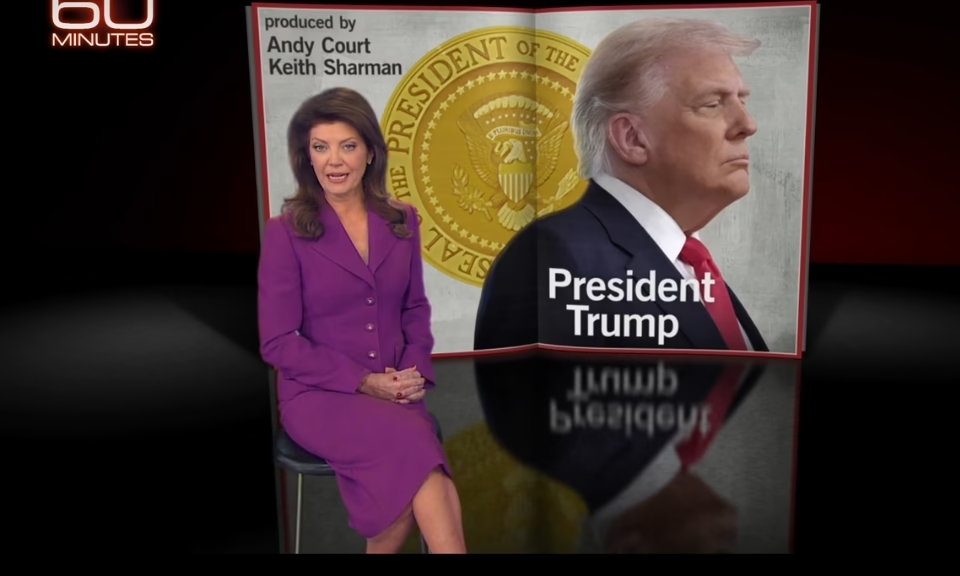
President Donald Trump said he does not know Changpeng Zhao, the Binance founder he pardoned in October for violating U.S. anti-money laundering laws, according to a 60 Minutes interview broadcast Sunday.
“I don’t know who he is,” Trump told CBS when asked about the pardon, adding that he had been told Zhao was a victim of a “Biden administration witch hunt” but did not recall meeting him personally.
During a broadcast interview with 60 Minutes, Trump was asked about his rationale for the pardon. According to reports, he responded:
“Okay, are you ready? I don’t know who he is,” — Donald Trump, during the interview about the pardon. He added that he had been “told” that Zhao was a victim of a “Biden administration witch hunt,” but that he did not recall meeting Zhao personally.
The fact that Trump publicly admitted he didn’t know a person he officially pardoned is drawing scrutiny. It raises questions about the pardon process, how the decision was reached, and whether due diligence was applied.
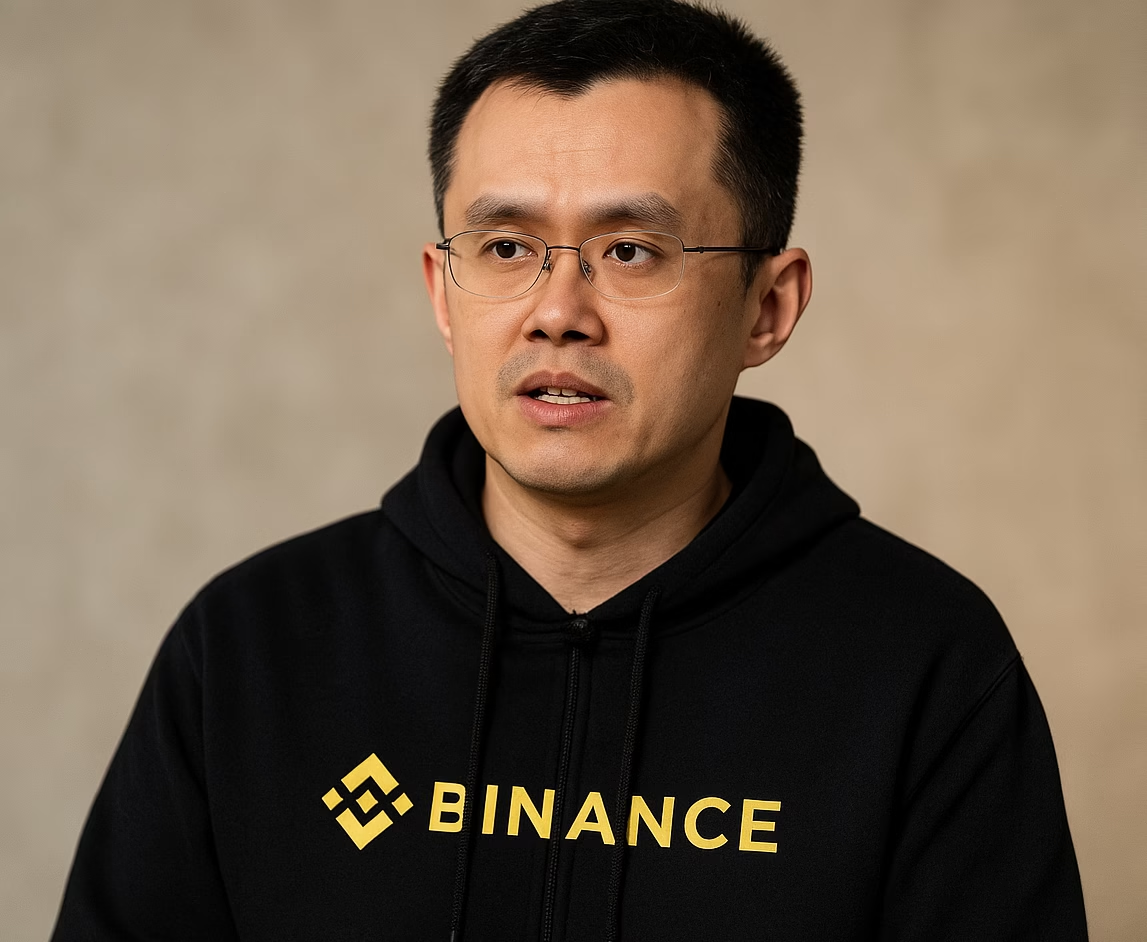
Zhao pleaded guilty in November 2023 to a violation of the U.S. Bank Secrecy Act — specifically for failing to maintain an effective anti-money-laundering (AML) program at Binance. He served a four-month prison sentence in 2024.
Trump’s pardon on October 23 followed months of reports that Binance, and Zhao in particular, were involved in business dealings tied to the Trump family’s crypto venture, World Liberty Financial.
Despite this background, Trump said he did not know Zhao:
“I don’t know the man at all,” — Donald Trump.
This blanket denial of a relationship, while simultaneously granting clemency, creates a contrast between the public record and the president’s personal statement.
Trump’s statement opens multiple lines of concern:
As summarized by the Associated Press:
“But, in explaining the pardon, Trump said of Zhao, ‘He was recommended by a lot of people.’ … The president added that he didn’t believe he’d ever met Zhao personally…”
Public and congressional scrutiny is expected to intensify. Advocates for stronger crypto regulation and government oversight are pressing for investigations into how the pardon was processed, what recommendations were made, and whether the appearance of conflicts of interest were addressed.
Meanwhile, the crypto industry will be watching closely, the pardon, combined with the admission of lacking knowledge about the subject, could set a precedent for how high-level clemency intersects with digital-asset regulation, enforcement and business interests.



Copyright © 2025 - The Bit Gazette.