







- Trending
- Comments
- Latest

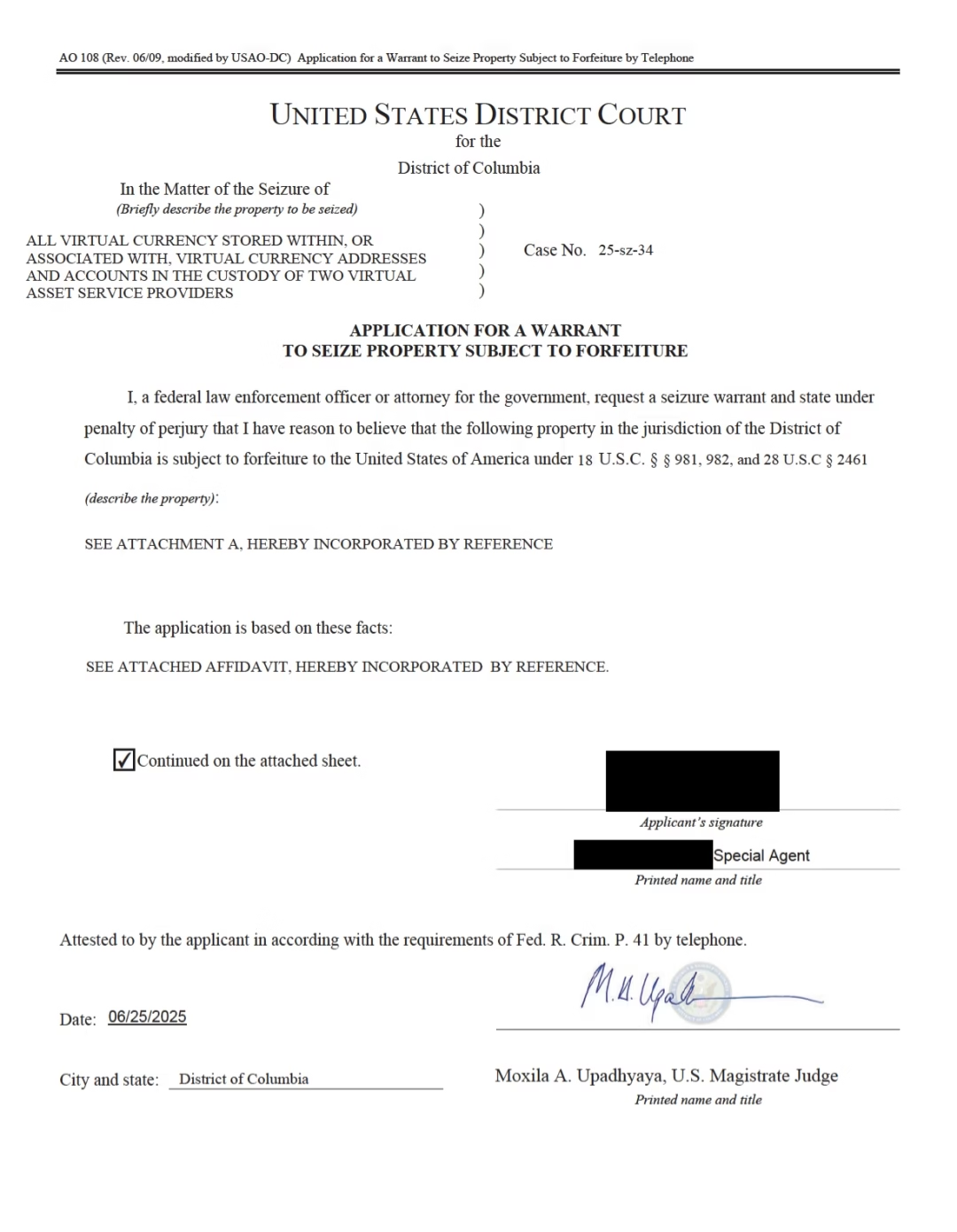
Hamas’ military wing instructed prospective donors to avoid sending crypto donations directly through Binance, according to a U.S. Department of Justice filing released September 9, 2026. The Al-Qassam Brigades letter instead recommended apps including Trust Wallet, OKX, Bybit, Kast and RedotPay to route USDT to an external TRON wallet.
According to the Justice Department filing, the Al-Qassam Brigades letter specifically discouraged potential donors from using Binance to complete their transfers.
“It is preferable not to use the ‘BINANCE’ platform to transfer support; and not to enter any data indicating our official name so that your wallet is not blocked and for your safety as well,” the letter said.
The group then listed Trust Wallet, RedotPay, OKX, Kast and Bybit as applications that could be used to complete the transfer.
The instructions did not indicate that any of those companies owned or controlled the destination wallet. Rather, the applications were presented as tools through which donors could send funds to an external TRON address.
The letter also said Binance could still be used to purchase cryptocurrency before the donor moved the assets through another application.
The guidance provides insight into the operational concerns surrounding a crypto donation, particularly the possibility that exchanges and wallets could identify, block or report transactions associated with sanctioned entities.
The filing does not establish that the companies mentioned in the letter knowingly facilitated Hamas fundraising. Their inclusion in the document, on its own, also does not demonstrate that their compliance systems are inadequate.
The disclosure comes against a broader backdrop of efforts by cryptocurrency exchanges to strengthen know-your-customer and anti-money-laundering controls.
Binance chief compliance officer Noah Perlman said the group’s apparent preference for avoiding Binance demonstrated the effectiveness of those controls.
“When terrorist groups tell people to avoid Binance, it shows our controls are working,” — Noah Perlman, Chief Compliance Officer, Binance.
Perlman added that Binance has invested in systems designed to identify illicit financial activity and works with law enforcement agencies on investigations involving terrorist financing and other financial crimes.
“Binance is not a safe place for illicit actors. We invest heavily in sanctions screening, transaction monitoring and investigations, and we work closely with law enforcement to identify, disrupt and report terrorist financing and other financial crime,” — Noah Perlman, Chief Compliance Officer, Binance.
The document does not establish why Al-Qassam Brigades specifically advised donors against using Binance. The supplied filing does not say whether the instruction was connected to changes in Binance’s compliance controls or to particular transactions being blocked.
The distinction is important because the use of an application by illicit actors does not necessarily mean that the company behind it knowingly permitted those transactions.
Cryptocurrency has become one of several mechanisms used by sanctioned groups and other illicit actors to transfer funds internationally. Stablecoins such as USDT can be particularly useful for cross-border transfers because they are designed to maintain a relatively stable value against a reference asset such as the U.S. dollar.
The U.S. Treasury said in its 2026 terrorist-financing risk assessment that groups including Hamas and ISIS continued using digital assets for donations and transfers. At the same time, Treasury said traditional financial products and services remained the preferred mechanisms for terrorist financing.
That broader assessment puts the Al-Qassam Brigades’ crypto donation instructions in context. Digital assets are part of the financial toolkit available to illicit organizations, but they are not necessarily their dominant funding mechanism.
Hamas’ use of cryptocurrency has previously drawn scrutiny from U.S. authorities and financial investigators. The Wall Street Journal reported in October 2023 that wallets linked to Hamas received approximately $41 million in cryptocurrency between 2020 and 2023. The newspaper later reported that the Treasury was investigating $165 million in cryptocurrency-linked transactions that may have helped finance Hamas before the October 2023 attacks.
The scale and effectiveness of Hamas’ cryptocurrency fundraising efforts, however, remain unclear based on the information provided in the Justice Department filing.
OKX said the wallet referenced in a February 10, 2025 communication was not associated with the exchange and had already been identified by its internal controls as linked to illicit activity.
According to OKX, attempts by its customers to send funds to the address would therefore have been flagged and prevented.
Kast similarly pointed to its compliance infrastructure, saying it operates a dedicated financial-crime compliance function supported by a wider compliance organization of more than 50 employees.
“All customers are subject to identity verification and screening before accessing our services,” — Kast spokesman, via email.
The company said it combines its own technology with third-party compliance and risk-management providers, including Elliptic, Sumsub and Sardine, for sanctions screening, customer due diligence and transaction monitoring.
Bybit declined to comment, while Redotpay had not responded to requests for comment by press time.
The Justice Department disclosure nevertheless illustrates the challenge facing cryptocurrency companies as regulators and law-enforcement agencies monitor digital-asset flows involving sanctioned groups.
For the Al-Qassam Brigades, the document shows an attempt to make a crypto donation harder to associate directly with the group’s official identity. For exchanges and wallet providers, it underscores why transaction monitoring, identity verification and sanctions screening have become central components of crypto compliance.
The case also highlights a fundamental feature of blockchain-based finance: although users can transfer digital assets across borders without relying exclusively on traditional banks, transactions recorded on public blockchains can also provide investigators with a trail for identifying and tracking suspicious activity.
The latest filing therefore offers a detailed snapshot of one crypto donation channel used by a sanctioned militant organization, while leaving open questions about how much money ultimately moved through the wallets, how many donors participated and how effective the fundraising effort was.



Copyright © 2025 - The Bit Gazette.

