
- Trending
- Comments
- Latest

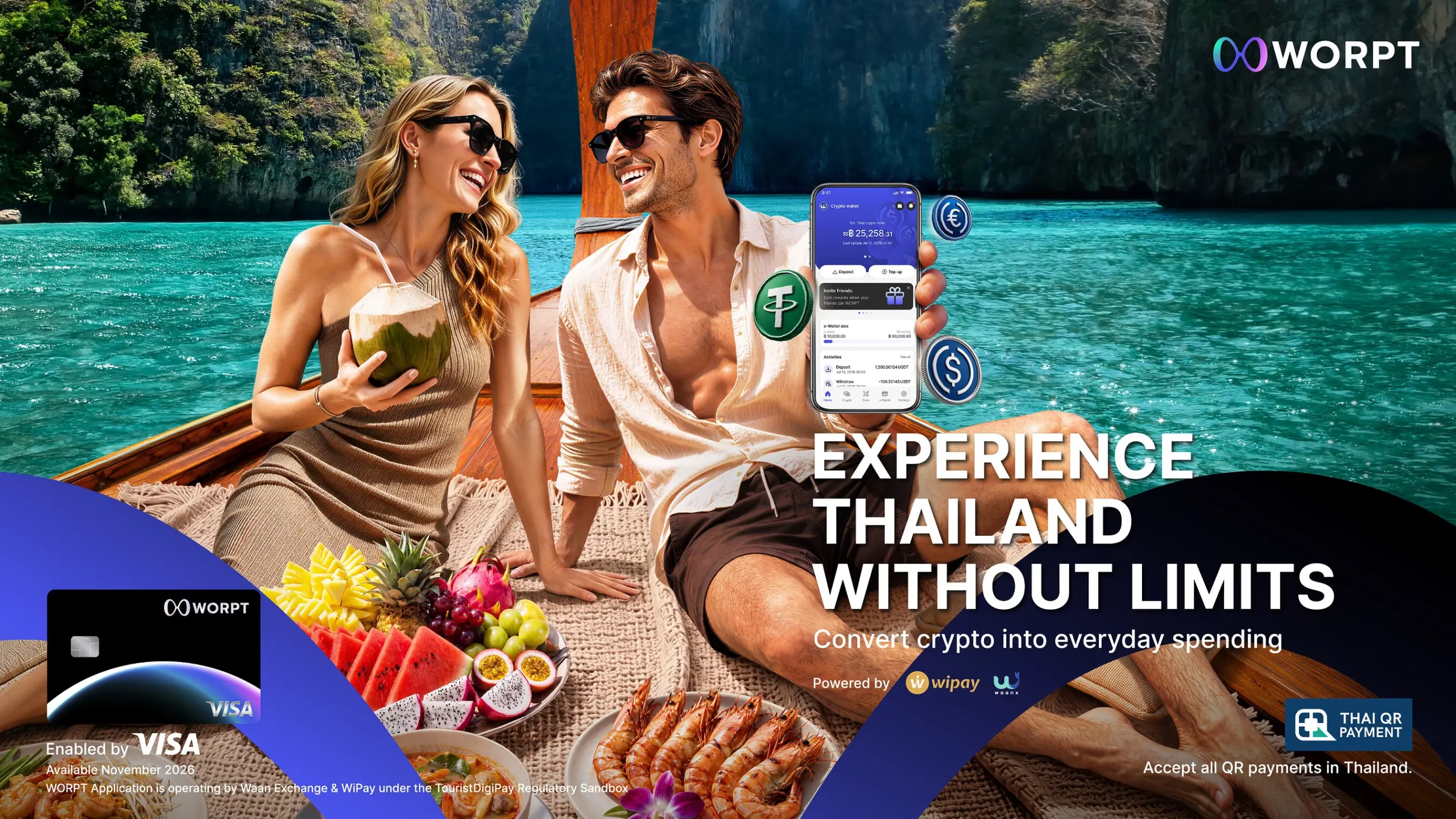
Tourists in Thailand can now spend USDT and USDC at local merchants without those merchants touching crypto. WORPT, a wallet launched under the Thai SEC’s tourist Digipay sandbox, converts stablecoins into baht and pays shops through QR Promptpay, Bitcoin.com News reported on October 27.
The service connects cryptocurrency conversion with established domestic payment infrastructure. Tourists fund their spending with supported stablecoins, while businesses receive Thai currency through standard payment channels.
WORPT brings several stages of a transaction into one platform: accepting digital token deposits, converting those assets into baht and routing payments to merchants. Its current support is limited to USDT and USDC, rather than a wider range of cryptocurrencies.
For travelers, QR Promptpay provides the local payment channel through which converted funds can be spent. The distinction matters: customers begin with digital assets, but purchases are settled in baht.
Under the sandbox’s design, merchants do not accept cryptocurrency directly. The conversion happens before settlement, allowing local businesses to receive payments through the financial infrastructure they already use.
“The key objective behind WORPT is to enable international travelers to make practical use of the cryptocurrencies they already have while visiting Thailand,” said Pavin Jittiwongsamarn, co-founder of WORPT.
That objective places the emphasis on spending convenience. By connecting stablecoin deposits with QR Promptpay payments, WORPT seeks to make the steps between holding digital assets and paying a Thai merchant part of a single service.
The platform’s role therefore extends beyond providing a wallet. Its developers have integrated the exchange and payment functions needed to move value from a traveler’s digital asset balance into local commerce.
The launch operates within Thailand’s SEC tourist Digipay regulatory sandbox. Developer executives said the platform follows the identity verification, transaction monitoring and anti-money laundering requirements mandated by that framework.
These obligations apply to a service combining digital asset conversion with conventional payments. Although travelers can use stablecoins to fund purchases, the merchant-facing transaction remains denominated and settled in local currency.
The QR Promptpay integration is central to that arrangement. It gives WORPT a route into Thailand’s existing payment network while preserving the requirement that businesses receive baht.
The supplied announcement describes a defined payment model: supported tokens enter the platform, an exchange into Thai currency takes place, and funds reach the merchant through standard payment systems. It does not describe a system in which retailers hold or trade the customer’s cryptocurrency.
That structure is a central feature of the rollout, alongside the compliance controls outlined by its developers.
WORPT is also preparing physical and virtual Visa prepaid cards, expanding its planned payment options beyond QR Promptpay. The cards have not been presented as an already available feature.
Once introduced, both card purchases and QR-code transactions would draw from the same baht balance. Users would not need separate transfers or top-ups to move funds between the two payment methods.
For travelers using QR Promptpay, the proposed cards would provide another way to spend funds already converted within WORPT. The shared balance is intended to keep the payment experience connected as users switch between supported methods.
The initiative brings together participants from digital assets, retail and payments, including Tether, The Mall Group and Visa. Their involvement reflects the service’s focus on linking cryptocurrency holdings with purchases in Thailand’s tourist economy.
WORPT’s developers frame the launch as part of a broader shift in how digital assets are used.
“Historically, cryptocurrencies have largely been viewed as assets for holding and trading,” said Janeboon Roonnaphaya, co-founder of WORPT.
“What makes the current development particularly significant is their transition toward practical utility in everyday life,” Roonnaphaya added.
The QR Promptpay connection gives that argument a specific application: tourists can use supported stablecoins to fund local purchases, with conversion and settlement handled within the service.
WORPT executives plan to hold an official launch event and panel discussion in November 2026, alongside representatives from Tether, The Mall Group and regulatory bodies. Discussions will address the future of digital asset payments in tourist economies.
For now, the announced service centres on USDT and USDC conversion into baht through QR Promptpay, with prepaid cards representing the next planned addition.



Copyright © 2025 - The Bit Gazette.