


- Trending
- Comments
- Latest

Cybercriminals are increasingly using artificial intelligence, deepfakes, and fake exchanges to target Africa’s crypto users, Interpol said in its African Cyberthreat Assessment Report 2026, published June 2026. The report, based on survey data from 36 member countries, found that AI now powers 55% of reported cybercrime across the continent.
The report highlights how artificial intelligence, deepfake technology, fake cryptocurrency exchanges, and ransomware are reshaping the continent’s cybercrime landscape as digital asset adoption accelerates. INTERPOL says criminal organizations are taking advantage of Africa’s growing crypto economy to target retail investors, businesses, and financial institutions.
Between July 2024 and July 2025, Africa processed $205 billion in cryptocurrency transactions, demonstrating the region’s growing importance in the global digital asset market. Nigeria alone accounted for $92 billion of that volume, making it the continent’s largest crypto market, while South Africa’s regulatory clarity has attracted both legitimate crypto businesses and cybercriminals.
According to INTERPOL, Africa crypto scams have evolved well beyond simple phishing attacks into sophisticated operations powered by artificial intelligence.
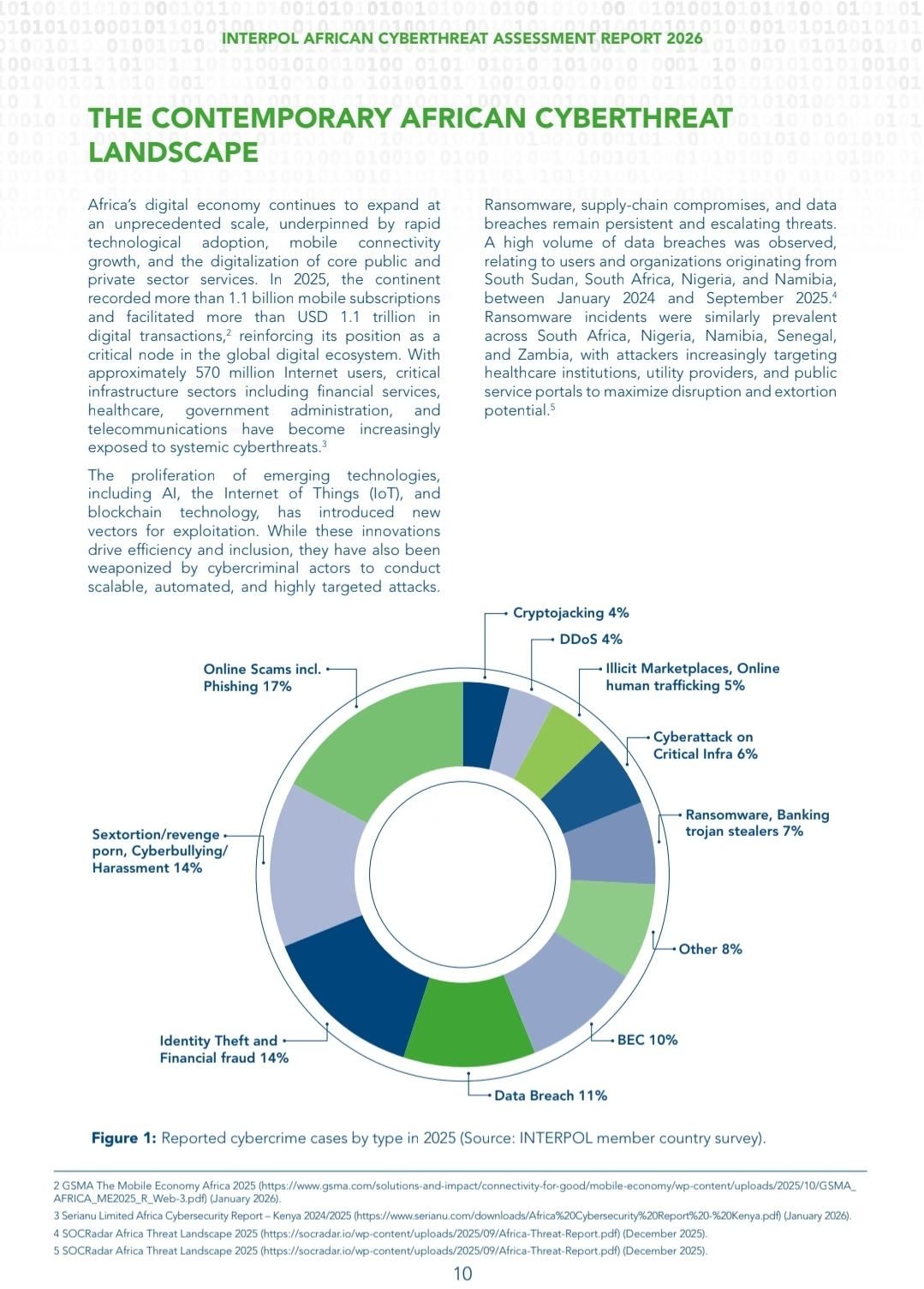
The report identifies fraudulent investment platforms, fake exchanges, and deepfake promotional campaigns as some of the fastest-growing threats facing crypto users across the continent.
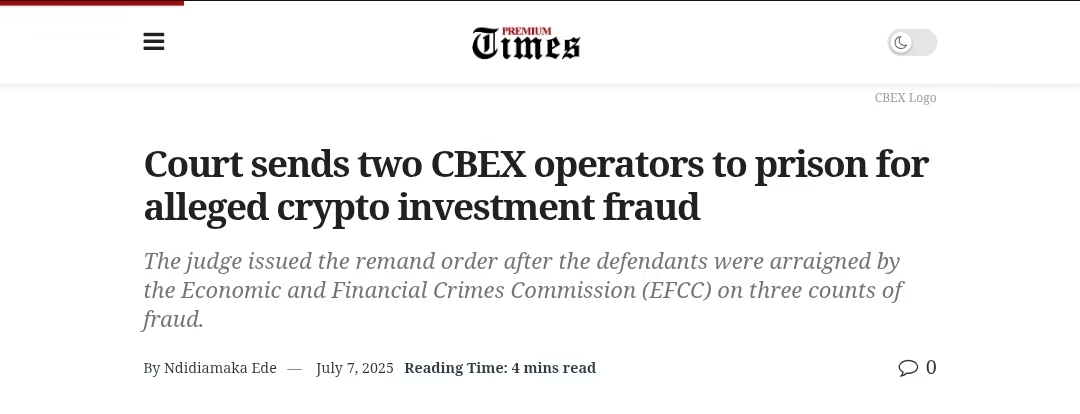
Among the cases highlighted is CryptoBridge Exchange (CBEX), which allegedly deceived African investors by falsely claiming to hold a U.S. operating license.
 INTERPOL also pointed to scams operating under the names Optcoin and AfriQuantumX, which reportedly used AI-generated videos featuring national leaders and social media influencers to promote fake cryptocurrency investment opportunities.
The agency also noted that romance-baiting scams have become increasingly sophisticated. Criminals establish relationships with victims through social media before directing them toward fraudulent cryptocurrency investments or requesting digital asset transfers. Many of these operations are linked to organized scam centres operating across multiple countries.
INTERPOL’s member country survey found that 72% of African countries reported the presence of scam centres, particularly in Southern and West Africa, describing them as structured criminal enterprises with networks dedicated to recruitment, money laundering, and technology deployment.
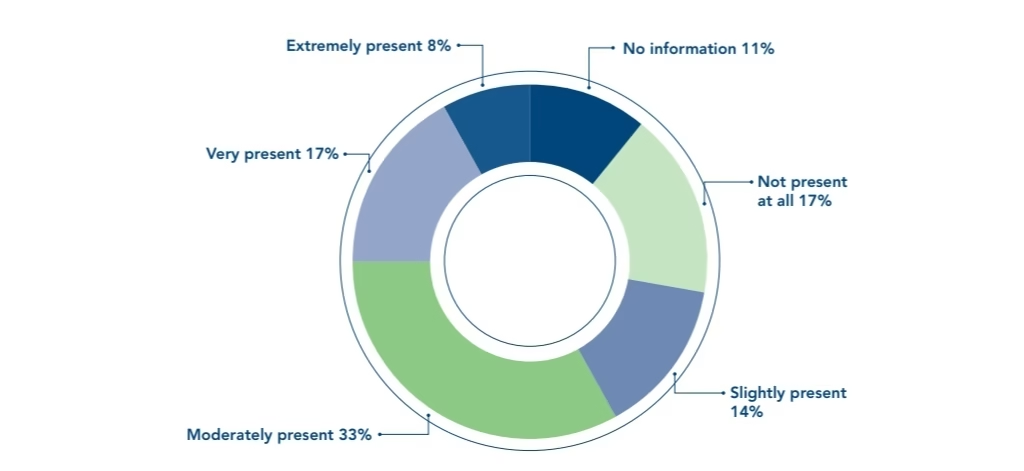
Beyond investment fraud, the report warns that cryptocurrency has become an important tool for transnational cybercriminal organizations.
Business email compromise (BEC) groups are increasingly routing illicit proceeds through crypto exchanges alongside shell companies and mobile payment platforms, making financial investigations significantly more difficult.
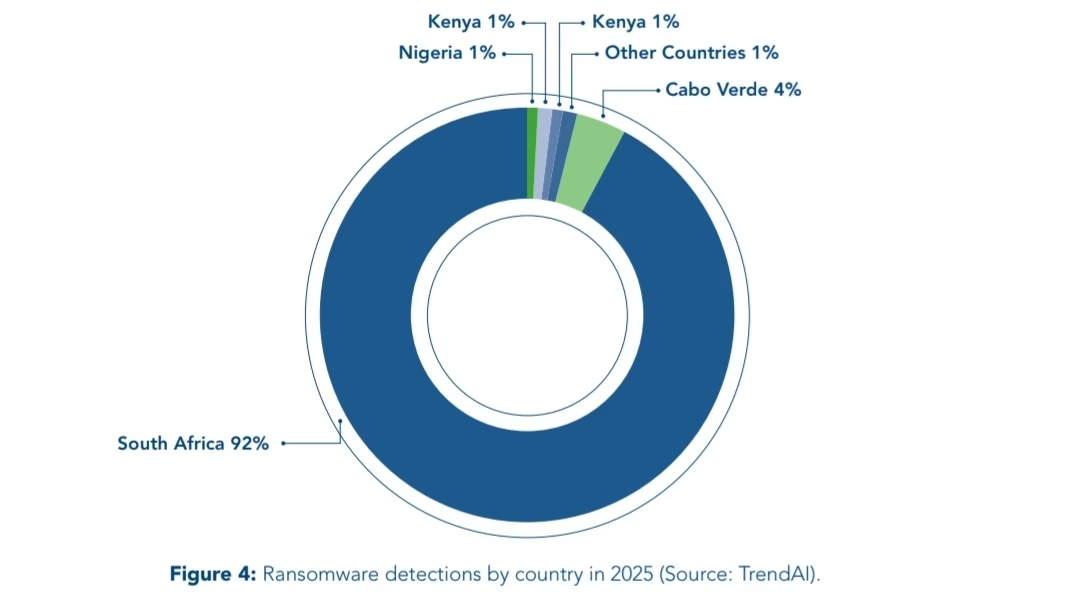
Ransomware groups have also intensified attacks against critical infrastructure, including government agencies, healthcare providers, utilities, and educational institutions, with victims often instructed to pay ransoms in cryptocurrency.
INTERPOL said attackers are now deploying AI-assisted reconnaissance tools capable of identifying vulnerable systems at scale before launching attacks.
The report further cites a case involving a customer database at a bank in Seychelles, where attackers allegedly demanded payment in cryptocurrency to prevent stolen information from being publicly released.
Nigeria’s position as Africa’s largest cryptocurrency market also places it at the centre of the continent’s evolving cyber threat landscape.
While the country’s high adoption rate reflects growing confidence in digital assets, INTERPOL says it also creates greater opportunities for fraudsters seeking to exploit unsuspecting investors. The report notes that West Africa has experienced rising cases of crypto investment fraud, Ponzi schemes, business email compromise, and money laundering activities involving digital assets.
INTERPOL’s findings suggest that the rapid expansion of the digital asset economy has outpaced cybersecurity capabilities in many jurisdictions, allowing Africa crypto scams to become more sophisticated and increasingly cross-border in nature.
The report concludes that law enforcement agencies across the continent face significant challenges investigating crimes involving cryptocurrency, encrypted communications, and AI-generated content.
INTERPOL recommends stronger regional cooperation, improved digital forensic capabilities, harmonized cybercrime legislation, and faster intelligence sharing to combat organized criminal networks exploiting Africa’s growing crypto market.
As cryptocurrency adoption continues to expand, the agency warns that tackling Africa crypto scams will require coordinated efforts from governments, regulators, exchanges, and cybersecurity firms to protect investors and preserve confidence in the continent’s digital asset ecosystem.



Copyright © 2025 - The Bit Gazette.