
- Trending
- Comments
- Latest

Blockchain intelligence firm TRM Labs has identified two fake FIFA ticketing websites and a fixed-match betting operation tied to four cryptocurrency wallet addresses, as World Cup fraud campaigns targeting fans accelerate across the United States, Canada, and Mexico.
The emergence of these World Cup crypto scams underscores a growing trend in which cybercriminals use major global events to lure victims into sending cryptocurrency payments that are often difficult to recover.
According to TRM Labs, investigators identified two fraudulent ticketing websites and a fixed-match betting operation tied to four cryptocurrency wallet addresses. The schemes appear designed to trick football fans into making payments for products or services that do not exist.
The company warned that World Cup crypto scams frequently begin weeks before a major event as criminals establish websites, social media accounts, and payment channels before public interest reaches its peak.
“Criminals always look to exploit major events and cultural moments and they don’t wait until kickoff,” said Ari Redbord, Global Head of Policy at TRM Labs, in comments shared with Cointelegraph.
Redbord explained that cybercriminals typically build their infrastructure long before the event starts and then aggressively market their scams as fan demand intensifies.
 The latest findings suggest that World Cup crypto scams are evolving beyond simple phishing attempts and now include sophisticated counterfeit ticketing platforms that closely resemble legitimate FIFA services.
The rise in World Cup crypto scams did not catch law enforcement agencies by surprise.
Weeks before the opening matches, authorities in the United States began issuing public alerts about fraudulent World Cup-related activities. On July 4, the Los Angeles County Sheriff’s Department warned fans about fake ticket offers, counterfeit hospitality packages, fraudulent merchandise promotions, and suspicious betting opportunities circulating online.
Officials noted that many World Cup crypto scams request payment through cryptocurrency, wire transfers, gift cards, or other methods that provide little protection once funds are sent.
The department urged supporters to purchase tickets only through FIFA’s official channels and to avoid clicking links distributed through unsolicited emails, text messages, messaging apps, or social media advertisements.
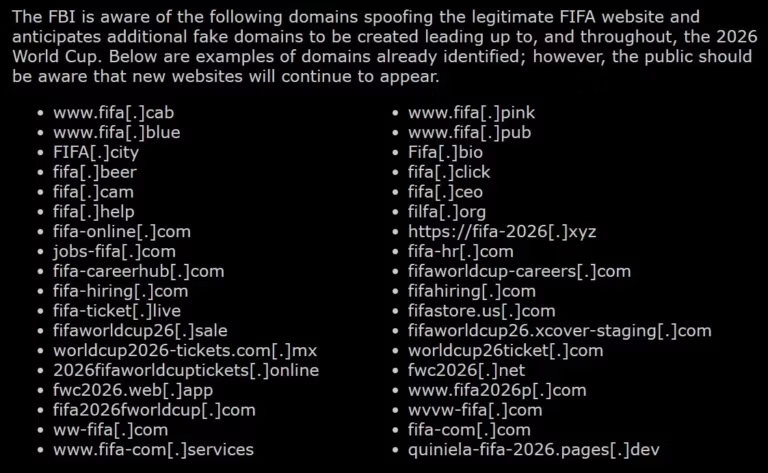
Law enforcement agencies emphasized that scammers are increasingly creating websites that mimic official FIFA branding in an effort to steal personal information, login credentials, and payment details.
The FBI also raised concerns months before the tournament began. In a warning issued in May, the agency revealed that cybercriminals were creating fake FIFA-related websites designed to deceive football fans. These operations were allegedly being used to harvest sensitive personal information, sell counterfeit tickets, and facilitate additional online fraud.
The agency’s findings further reinforce concerns that World Cup crypto scams may intensify as the tournament progresses and global attention increases.
Cybersecurity experts note that sporting events provide ideal conditions for scammers because fans often make quick purchasing decisions when tickets appear limited or prices seem attractive.
The fear of missing out can cause individuals to overlook warning signs that would otherwise raise suspicion.
The issue is particularly relevant because ticket demand remains a major talking point as the tournament begins.
According to the Council on Foreign Relations, several opening matches in North America had not yet sold out through FIFA’s official platform as of earlier this week. Meanwhile, the Financial Times reported that approximately 176,000 group-stage tickets remained available through official resale channels.
Despite the availability of legitimate tickets, World Cup crypto scams continue to attract victims by offering discounts, exclusive packages, or supposedly limited-access opportunities.
Experts warn that scammers often rely on urgency and scarcity tactics to pressure fans into making immediate purchases without verifying authenticity.
FIFA itself has repeatedly cautioned supporters against buying tickets from unofficial sellers. The organization warned that tickets acquired outside authorized channels may be canceled or invalidated without notice.
Those warnings have become increasingly important as World Cup crypto scams become more sophisticated and difficult to distinguish from legitimate offerings.
While cryptocurrency is frequently used in these schemes, blockchain technology can also assist investigators.
Redbord noted that one advantage of digital asset transactions is that they leave a permanent record on public blockchains. This transparency can help compliance teams, exchanges, and law enforcement agencies trace suspicious activity connected to World Cup crypto scams.
Unlike traditional cash payments, blockchain transactions often provide investigators with valuable clues regarding fund movements and wallet connections.
However, experts caution that recovery remains difficult once victims voluntarily send funds to fraudulent operators. That reality makes prevention the most effective defense against World Cup crypto scams.
The warning arrives amid a broader surge in cryptocurrency-related crime. According to recent data from blockchain analytics firm Chainalysis, crypto-related theft has already reached approximately $3.4 billion in 2026. Fraud campaigns, phishing attacks, investment scams, and social engineering schemes continue to represent a significant portion of these losses.
The continued growth of World Cup crypto scams demonstrates how criminals quickly adapt their tactics to capitalize on global trends and high-profile events.
For football supporters, cybersecurity experts recommend verifying website URLs carefully, purchasing tickets only through official FIFA channels, avoiding unsolicited offers, and remaining skeptical of any seller requesting cryptocurrency payments.
As the tournament unfolds over the coming weeks, investigators expect additional World Cup crypto scams to emerge. With millions of fans engaging online and billions of dollars expected to circulate throughout the event, fraudsters are likely to remain active.



Copyright © 2025 - The Bit Gazette.